
How to Choose a Genuine Nguni Hide: A Practical Buying Guide
A genuine Nguni hide is more than a floor covering. Its natural shape, colour and markings make it a one-of-a-kind piece of South African design. That individuality is part of the appeal, but it also means choosing the right hide takes more thought than ordering a conventional rectangular rug.
This practical guide explains how to choose a genuine Nguni hide for your space, from judging quality and colour to checking dimensions, placement and care.
How to choose a genuine Nguni hide: 6 checks that matter
If you are researching how to choose a genuine Nguni hide online, begin with the individual piece rather than a generic colour label. Its photographs, measurements, hair condition, leather backing and natural markings should all form part of the decision.
Nguni cattle have a long history in Southern Africa and are renowned for the remarkable variety of their coats. Research preserved by the University of KwaZulu-Natal documents more than 300 isiZulu terms associated with cattle colour patterns, horn shapes and types. Many of the names draw on images from birds, animals, plants and the surrounding landscape.
Modern genetic research describes black, brown and red as the breed’s principal base coat colours, with many variations and patterns developing from them. That natural diversity is why two Nguni hides may share a colour family while still looking completely different.
When you choose a hide, you are therefore selecting an individual piece rather than a repeated print. The most suitable option is not necessarily the busiest or most dramatic one; it is the hide whose proportions, tones and character work with your room.
1. Confirm that you are buying the actual hide shown
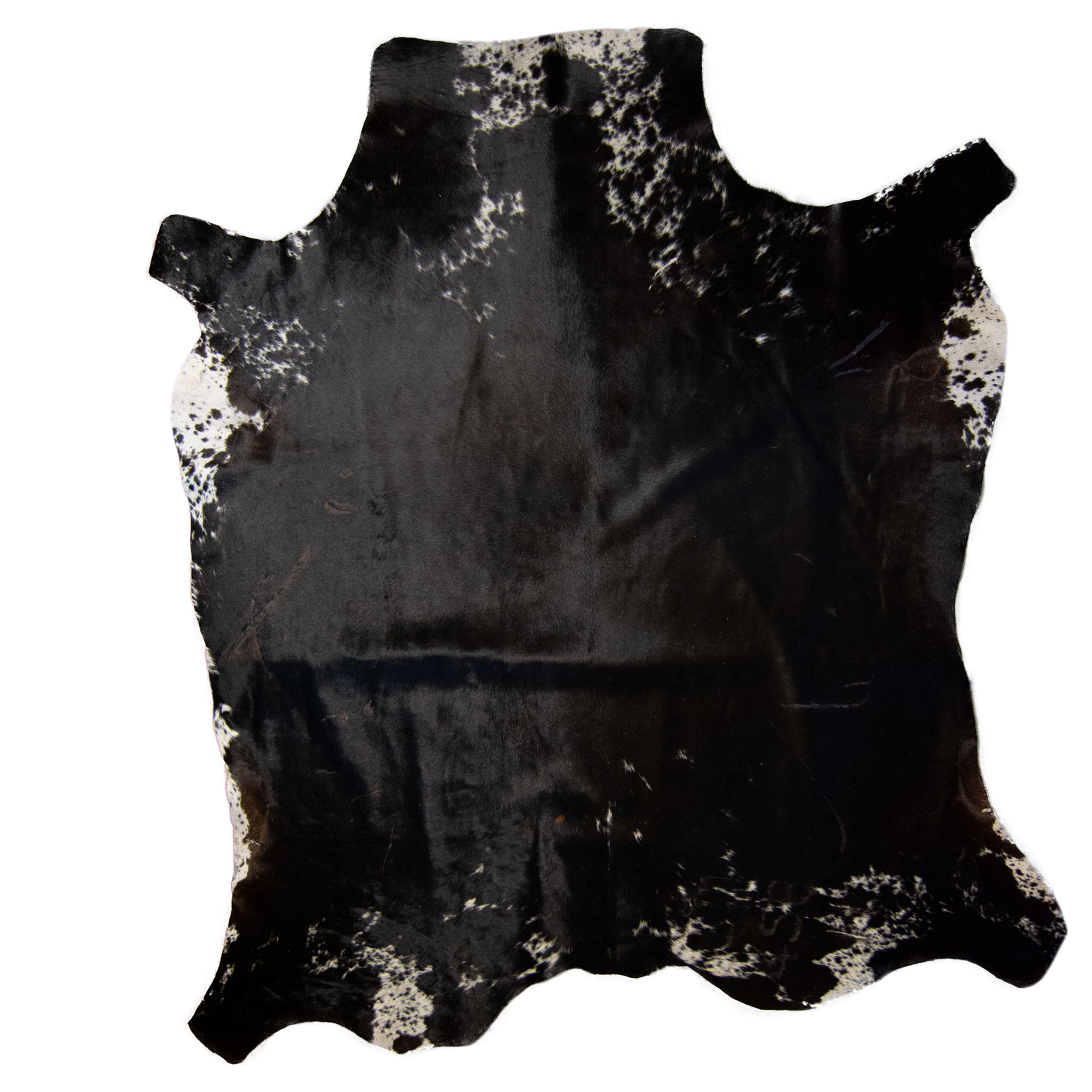
The first practical step in how to choose a genuine Nguni hide is confirming that the product image matters. Ask whether the photographs show the exact hide you will receive or merely an example of a colour category. If you are buying online, look for clear images taken from above as well as closer photographs of the hair, edges and leather underside.
A reputable seller should be able to confirm the individual hide’s measurements, dominant colours and any visible natural marks. Natural scars or small variations are not automatically defects; they are part of the animal’s history. What matters is that they are disclosed so you can make an informed choice.
2. Check the quality of the hair and leather
Good tanning preserves the hair while keeping the leather backing flexible. Whether you are viewing the hide in person or asking a seller for details, check these quality signals:
- A healthy, natural sheen: the hair should look full rather than dull, brittle or patchy.
- A supple underside: the leather should bend naturally instead of feeling hard, dry or board-like.
- Secure hair: a few loose hairs can be normal, but excessive shedding may indicate poor processing or damage.
- Clean finishing: inspect the edges and look for cracks, large bald areas or signs that the backing has become brittle.
- A mild leather scent: a strong chemical or ammonia-like smell can be a warning sign.
If you cannot inspect the hide yourself, ask the seller directly about softness, shedding and tanning quality. Clear answers are more useful than grading labels alone, because grading terminology can differ between suppliers.
3. Choose a colour and pattern for the room
Colour is one of the most enjoyable parts of learning how to choose a genuine Nguni hide. Start with the atmosphere you want to create: a hide can either blend into the room’s palette or become its main focal point.
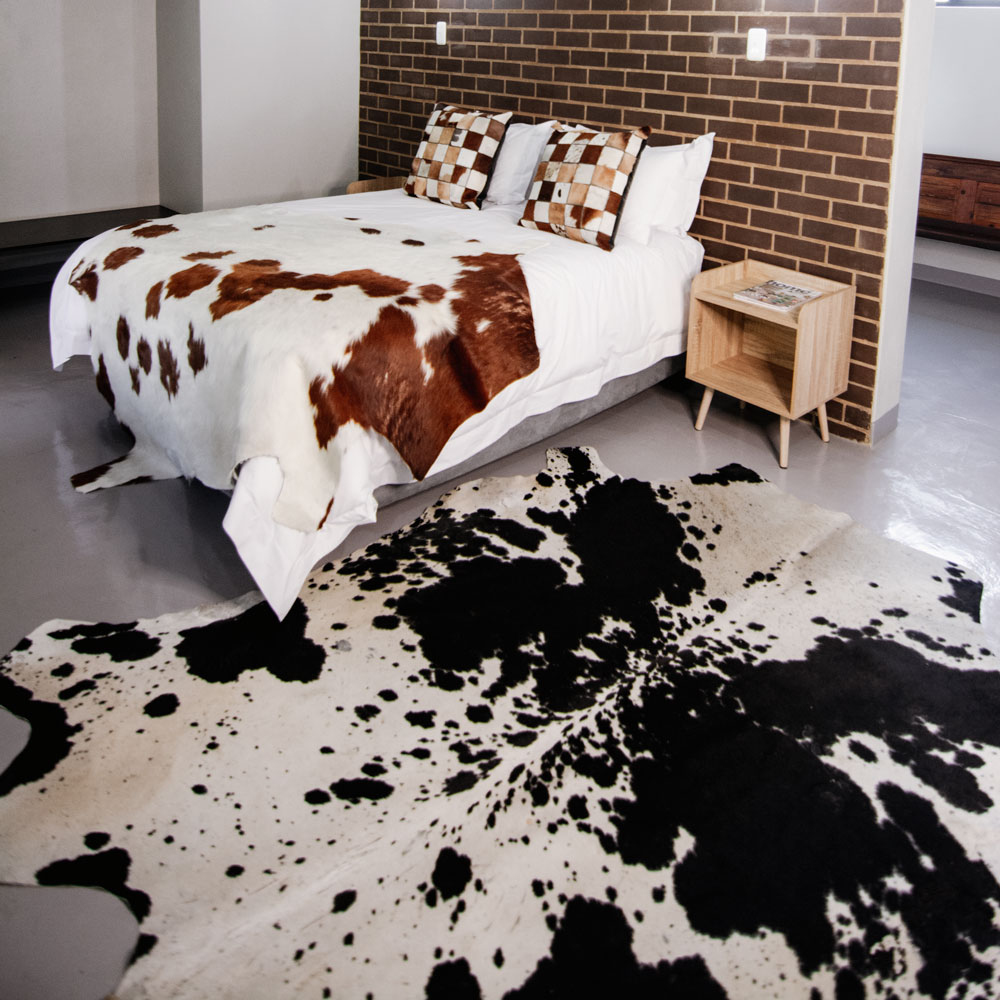
- Black and white: graphic and high-contrast, particularly effective in contemporary or minimalist rooms.
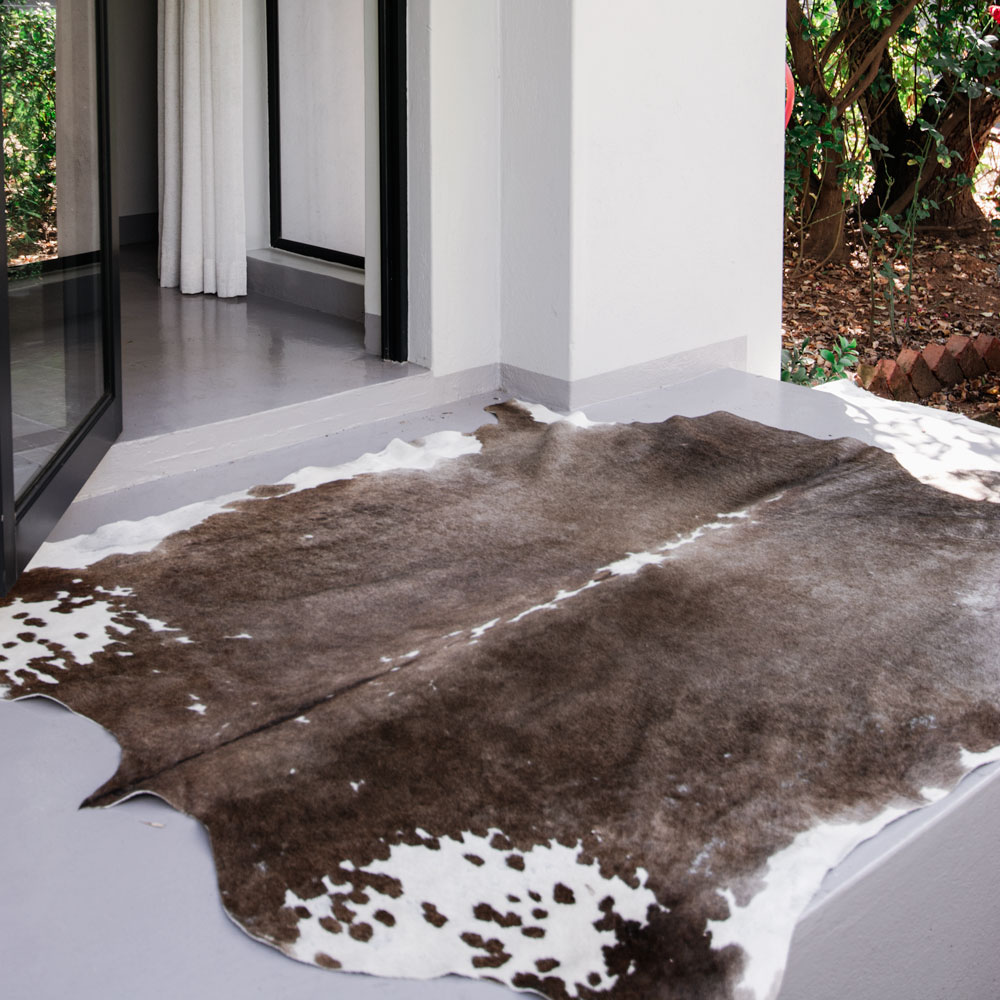
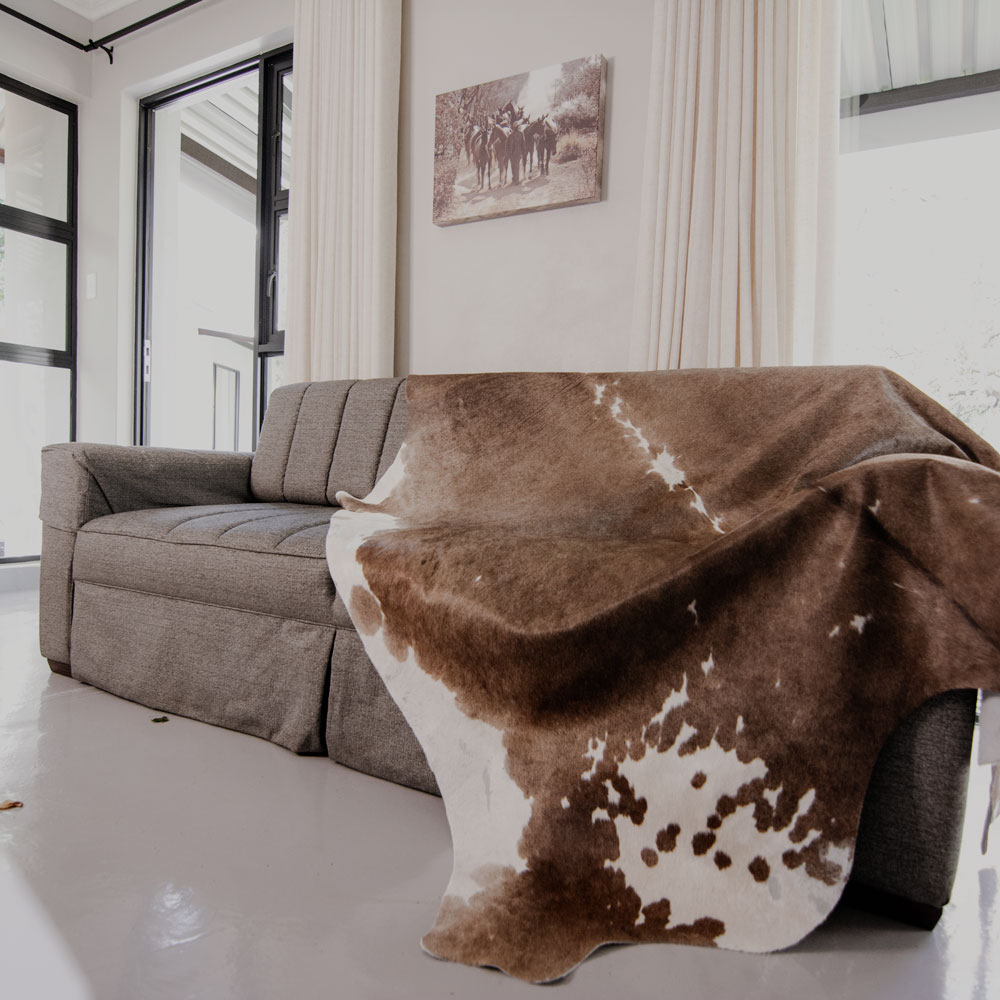
- Brown, caramel and cream: warm and versatile alongside timber, leather, stone and natural fibres.
- Brindle: rich in movement and texture, with stripes that can bridge several wood and upholstery tones.
- Tricolour: a strong statement that can connect black, brown and neutral elements already present in a room.
- Mostly solid or softly mottled: a calmer choice when the room already contains patterned fabric, artwork or wallpaper.
View photographs on more than one screen if possible, since screen brightness can shift cream, tan and brown tones. If you need a specific palette, contact Home of Nguni before ordering so the available hides can be matched more closely to your preferences.
4. Measure the space, not just the floor
Knowing how to choose a genuine Nguni hide also means measuring for its organic outline. A hide is measured at its longest and widest points, but it does not fill that entire rectangular area. Use the supplied measurements as a boundary, then consider how the narrower sections will sit around furniture.
An easy way to test the scale is to mark the maximum length and width on the floor with painter’s tape. Step back and view it from the room’s entrance and the main seating position.
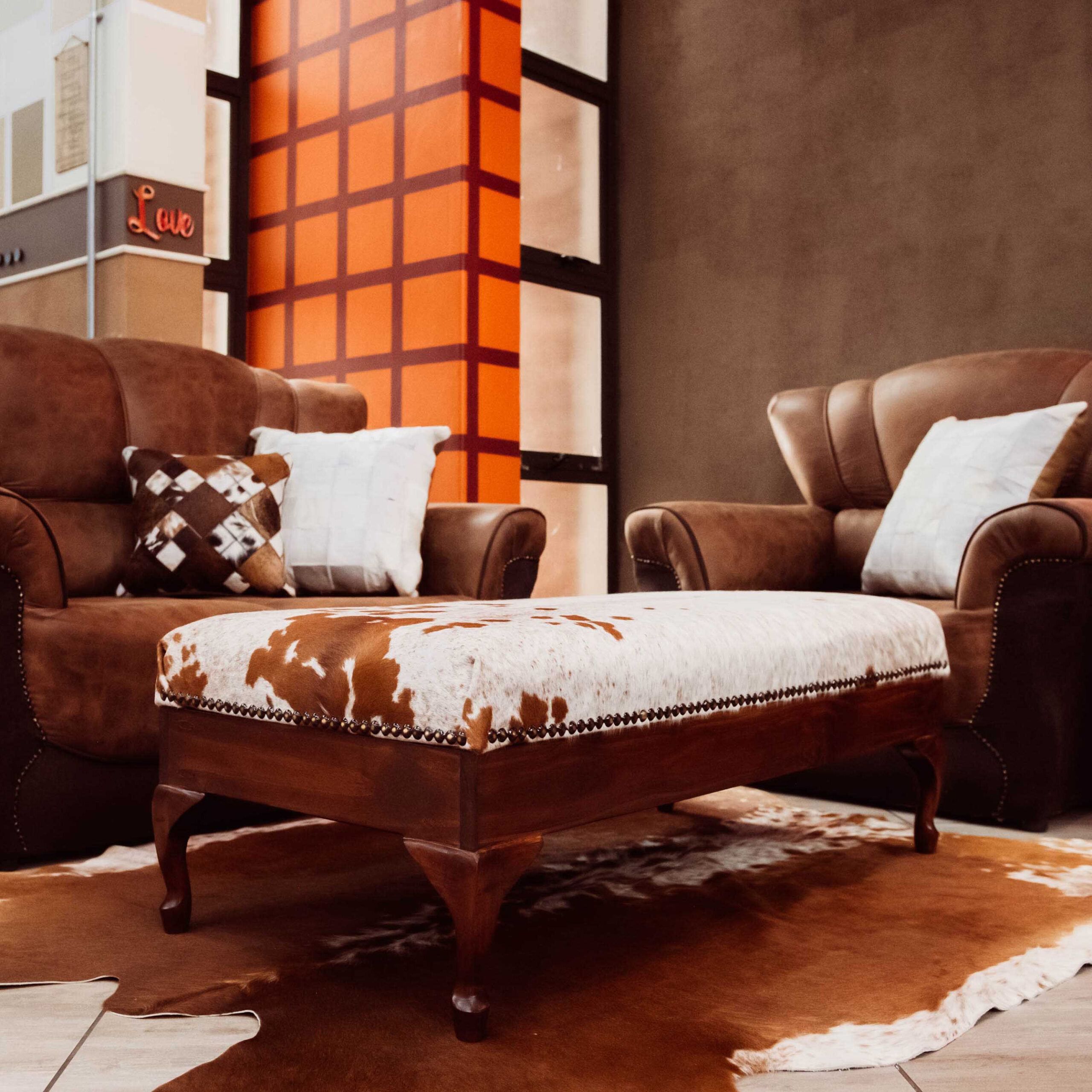
- Living room: use the hide to anchor a coffee table or angle it slightly beneath the front edge of a sofa.
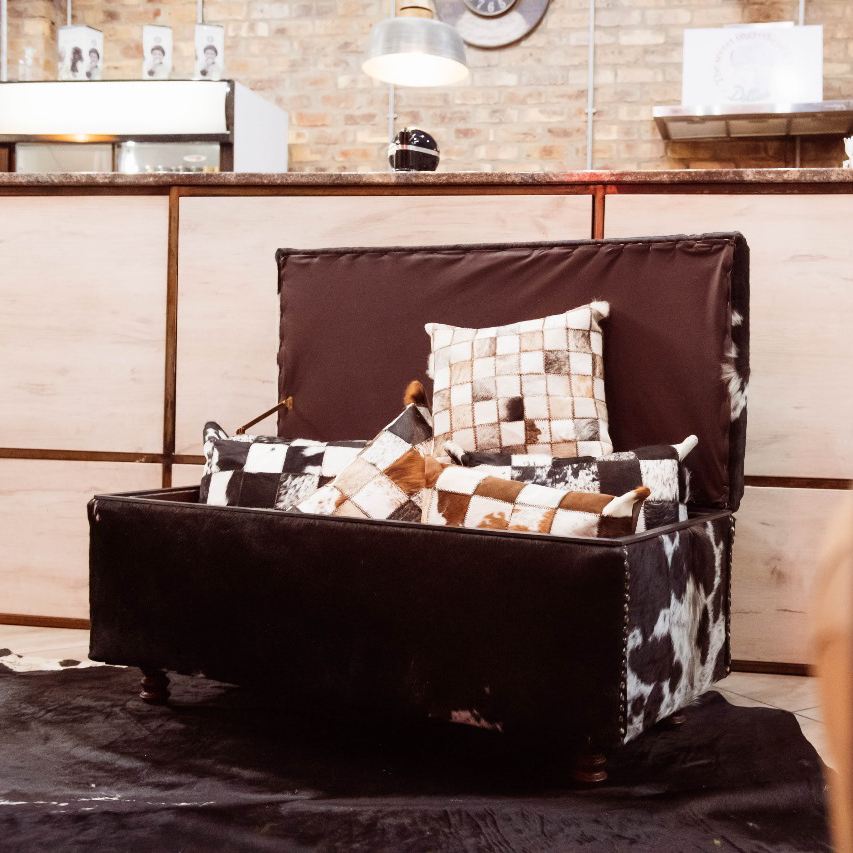
- Bedroom: position it beside the bed, at the foot of the bed or beneath a bench where its shape remains visible.
- Entrance or study: choose a proportion that leaves comfortable clearance for doors and chair movement.
- Large open room: let the hide define a smaller conversation or reading zone rather than expecting it to replace a large rectangular carpet.
5. Think about placement and everyday use
Nguni hides are durable, but thoughtful placement helps preserve their appearance. Avoid areas that stay damp or receive frequent splashes. Continuous strong sunlight may gradually alter natural colour, while direct heat can dry the leather backing.
On a smooth floor, a suitable non-slip underlay can improve stability. Rotate the hide periodically if one section receives more foot traffic or light than another. Under furniture, make sure sharp feet or castors are not repeatedly grinding against the same spot.
6. Ask the seller these questions before buying
- Will I receive the exact hide pictured?
- What are its maximum length and width?
- Are there any repairs, scars, thin areas or other natural marks I should see?
- Does the leather backing remain soft and flexible?
- How should the hide be packaged, unrolled and allowed to settle?
- What care instructions and return conditions apply?
These questions are especially important when purchasing remotely or arranging delivery outside South Africa.
How to compare Nguni hides online
When several hides appeal to you, compare them methodically rather than switching quickly between product photographs. This is a practical way to apply what you have learned about how to choose a genuine Nguni hide. Save the main image and note the stated maximum length and width of each piece. Then look at the same features in the same order: overall outline, dominant colour, balance of markings, condition of the hair, edge finishing and the leather backing. This makes it easier to separate a genuinely suitable hide from one that simply looks dramatic in its first photograph.
Lighting deserves particular attention. Warm indoor light can make cream appear yellow and deepen caramel or red-brown tones, while a bright screen may make black-and-white contrast look stronger than it is. Ask for an additional photograph in indirect daylight when an exact colour match matters. A close-up that includes a familiar reference, such as a hand near the hair, can also give a more useful sense of texture and scale.
Study the hide’s outline as carefully as its pattern. Some pieces are broad through the middle, while others are longer and narrower or have more pronounced legs. Imagine the main photograph rotated in both directions. A hide that feels awkward when placed square to a sofa may become the right choice when angled beneath a coffee table or turned so its strongest markings face the room’s entrance.
- Request a full overhead image: perspective from a low angle can distort the proportions.
- Ask for close-ups: include the centre, edges, any repaired area and at least one view of the underside.
- Compare stated measurements: do not estimate size from furniture or props unless their dimensions are known.
- Confirm colour in writing: clarify whether lighter areas are white, cream, tan or grey if the distinction affects your room.
Separate natural character from quality concerns
A genuine hide should not look manufactured into perfect symmetry. Slight differences between the left and right sides, an irregular edge, changes in hair direction and small healed marks can all contribute to its character. Understanding that distinction is part of knowing how to choose a genuine Nguni hide. These features are different from preventable problems such as a brittle backing, extensive hair loss, poorly finished repairs or damage that was not disclosed before sale.
Decide in advance how much natural variation you enjoy. In a relaxed, layered interior, a visible scar or unusual outline may make the piece more expressive. In a formal or very minimal room, you may prefer a cleaner edge and a more balanced distribution of colour. Neither preference is more authentic; the important point is to see the relevant details before committing.
Price should be considered alongside the individual hide’s size, visual appeal, tanning and condition rather than colour alone. When deciding how to choose a genuine Nguni hide between two options, a rare-looking pattern cannot compensate for poor processing, while a quieter hide with supple leather and dense, secure hair may offer better long-term value. Ask the seller to explain any material price difference between pieces you are comparing.
Plan for delivery and the first week at home
The final stage in how to choose a genuine Nguni hide is planning for its arrival. Before ordering, check the delivery method, expected transit time and what happens if the parcel arrives damaged. The hide should be protected from moisture in transit and packaged in a way that avoids unnecessary hard creases. If it has been folded for transport, open it carefully, place it hair-side up on a clean, dry surface and give it time to relax naturally.
Do not judge the final placement in the first few minutes. Walk around the room, try the hide at two or three angles and view it in both daylight and evening light. Check door clearance, the path people use through the room and whether chair legs or castors catch an edge. Small changes in position can alter how balanced the organic shape feels.
Once you have chosen the position, photograph the room and review it from the main entrance. This often reveals whether the hide is centred too rigidly, hidden beneath too much furniture or competing with another strong pattern. The best arrangement should show enough of the outline to celebrate the hide while still connecting it visually to the furniture around it.
A final checklist before you buy
Before completing an order, pause for a final five-minute review. A simple checklist turns the advice in this guide into a repeatable process and reduces the chance of choosing on colour alone. It is especially useful when learning how to choose a genuine Nguni hide online, where you cannot handle the leather or view the pattern in your own room before paying.
- Identify the exact piece. Confirm that the photographs, dimensions and description belong to the individual hide you will receive. If a listing uses representative images, ask the seller to send the available hides so that you can select one specific pattern and outline.
- Review a complete set of photographs. Look for a full overhead view, useful close-ups, the outer edges and the leather side. Check whether the lighting is consistent and ask for a daylight photograph if cream, grey, tan or white tones are difficult to distinguish on screen.
- Verify the widest measurements. Compare the stated maximum length and width with the area you marked out at home. Allow clearance for doors, chairs and the normal route through the room, and remember that the natural outline will not fill a rectangle in the way a conventional carpet does.
- Assess condition separately from character. Note any scars, repaired areas or variations in hair direction, then decide whether you enjoy those natural details. At the same time, ask specifically about heavy shedding, brittle leather, bald patches or damage that may affect durability.
- Picture the hide in two orientations. Save the overhead image and rotate it before deciding. Consider which end should face the room entrance, how much of the pattern will remain visible beneath furniture and whether an angled placement works better than a rigidly centred one.
- Check the practical details. Confirm the total price, delivery method, packaging, expected transit time and return conditions. If delivery is international, establish which charges are included and who should be contacted if the parcel arrives wet, damaged or materially different from its description.
- Plan the first days at home. Prepare a clean, dry place where the hide can be opened and allowed to relax after transit. Decide whether the floor needs a suitable non-slip underlay and keep the hide away from damp areas, direct heat and harsh cleaning products.
If each point has a clear answer, you are no longer relying on a product image alone. You have checked authenticity, finish, scale, placement and the terms of purchase—the practical foundations of how to choose a genuine Nguni hide with confidence.
How to care for your Nguni hide after purchase
Routine care is simple: shake out loose dust, brush or vacuum gently in the direction of the hair, and blot spills promptly with a clean, dry cloth. Avoid soaking, machine washing, harsh chemicals and direct heat. For detailed stain, drying and storage advice, read our guide on how to care for an Nguni carpet.
Frequently asked questions
Choose a hide with confidence
Now that you know how to choose a genuine Nguni hide, the final decision should feel considered rather than generic: authentic in origin, well finished, correctly scaled and visually connected to the room around it. Take time to compare individual patterns and ask questions before buying.
Explore genuine Nguni hides from Home of Nguni, or get in touch if you would like help finding a particular colour or pattern.