
Nguni Vellies: A Fit and Styling Guide for the Whole Family
Nguni vellies bring together two recognisably South African elements: the practical veldskoen silhouette and the natural character of Nguni hide. The result is footwear that can be worn with denim, workwear, dresses or smart-casual outfits—while every hide pattern gives the pair its own identity.
This guide explains how to choose the right pair for men, women and children, how a good fit should feel, which pattern works with your wardrobe and how to keep hair-on-hide and leather looking their best.
What makes Nguni vellies different?
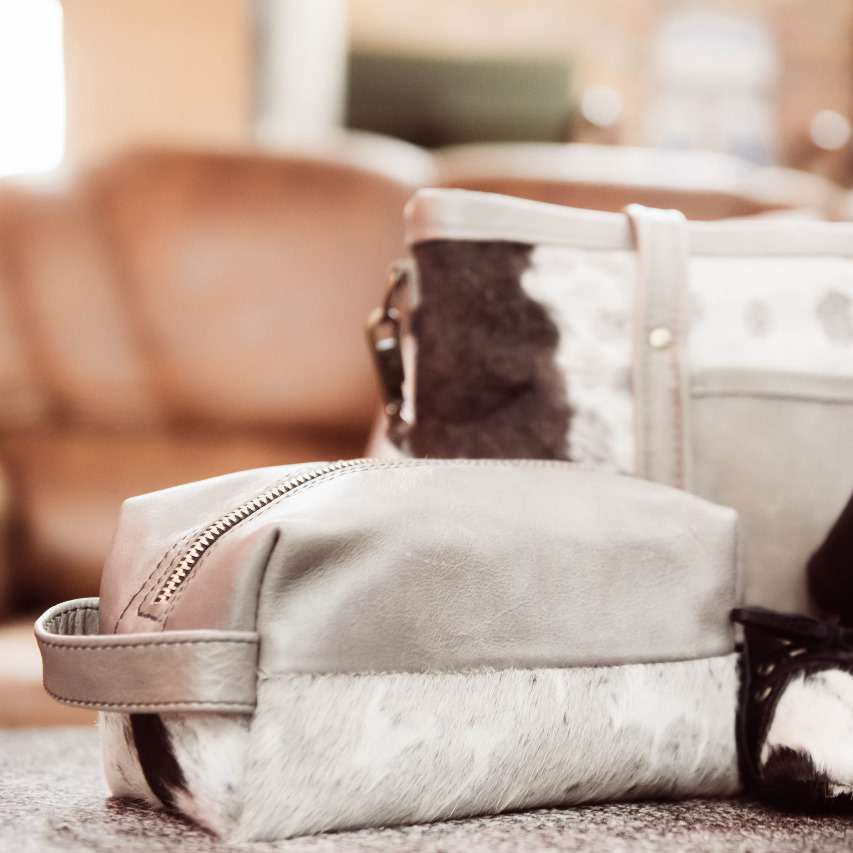
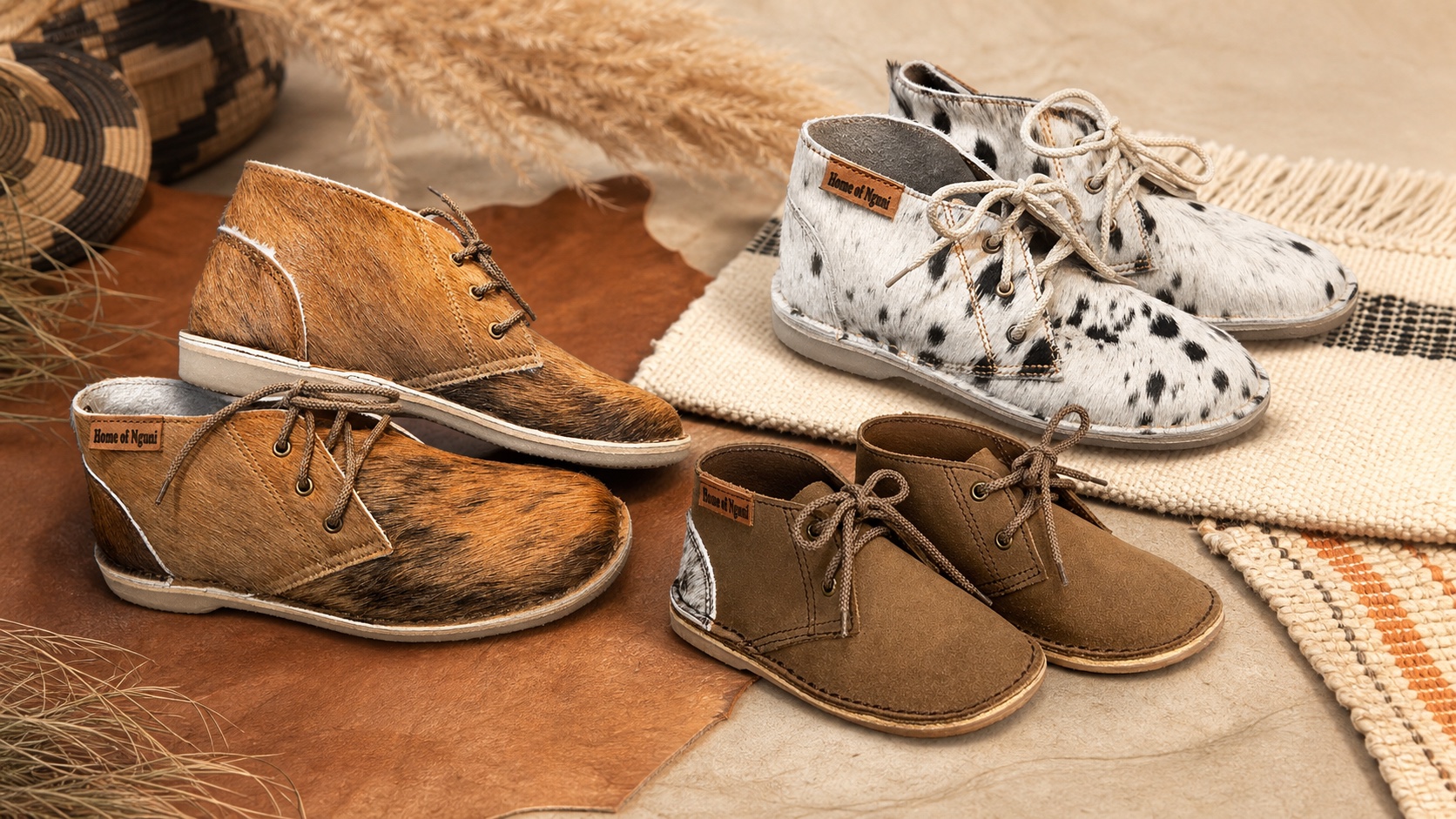
Traditional vellies are straightforward lace-up shoes designed around comfort, practicality and durable materials. A Nguni pair adds genuine hair-on hide to that familiar form. Instead of a perfectly uniform surface, you see natural colour shifts, spots, brindling and changes in hair direction.
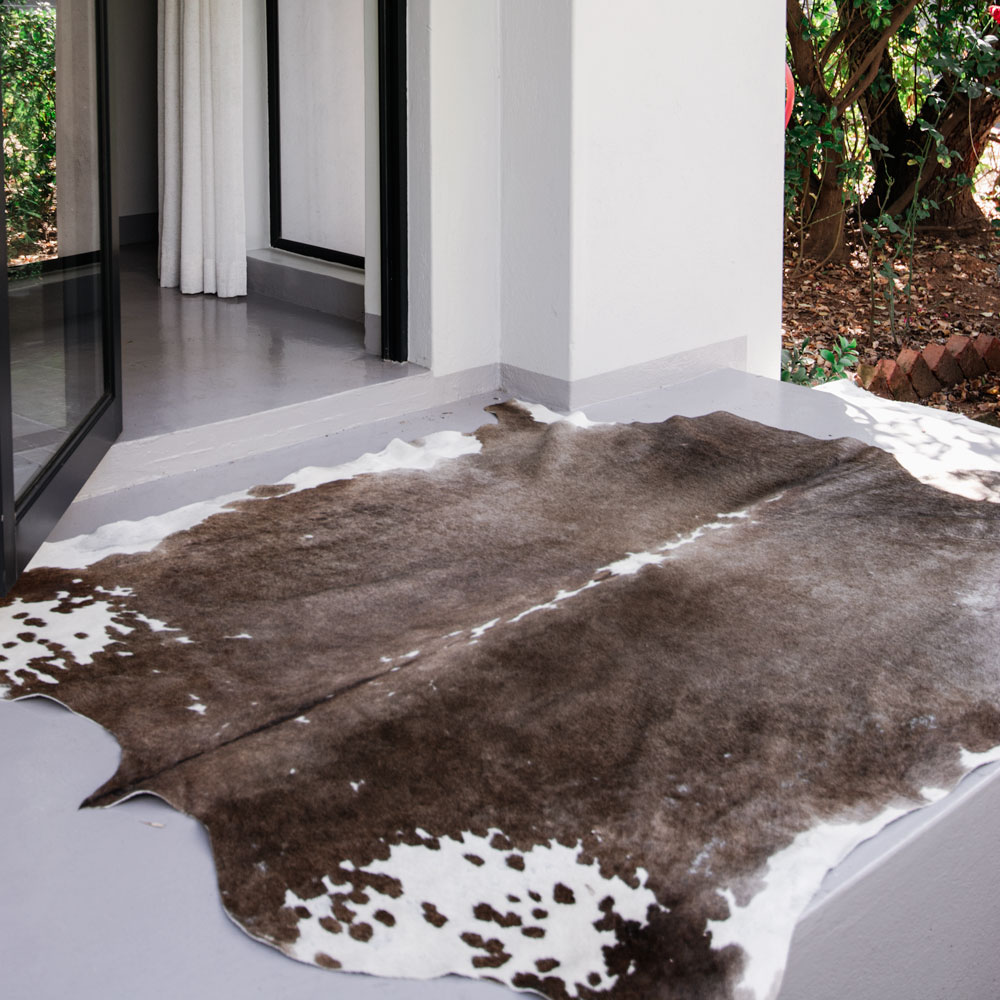
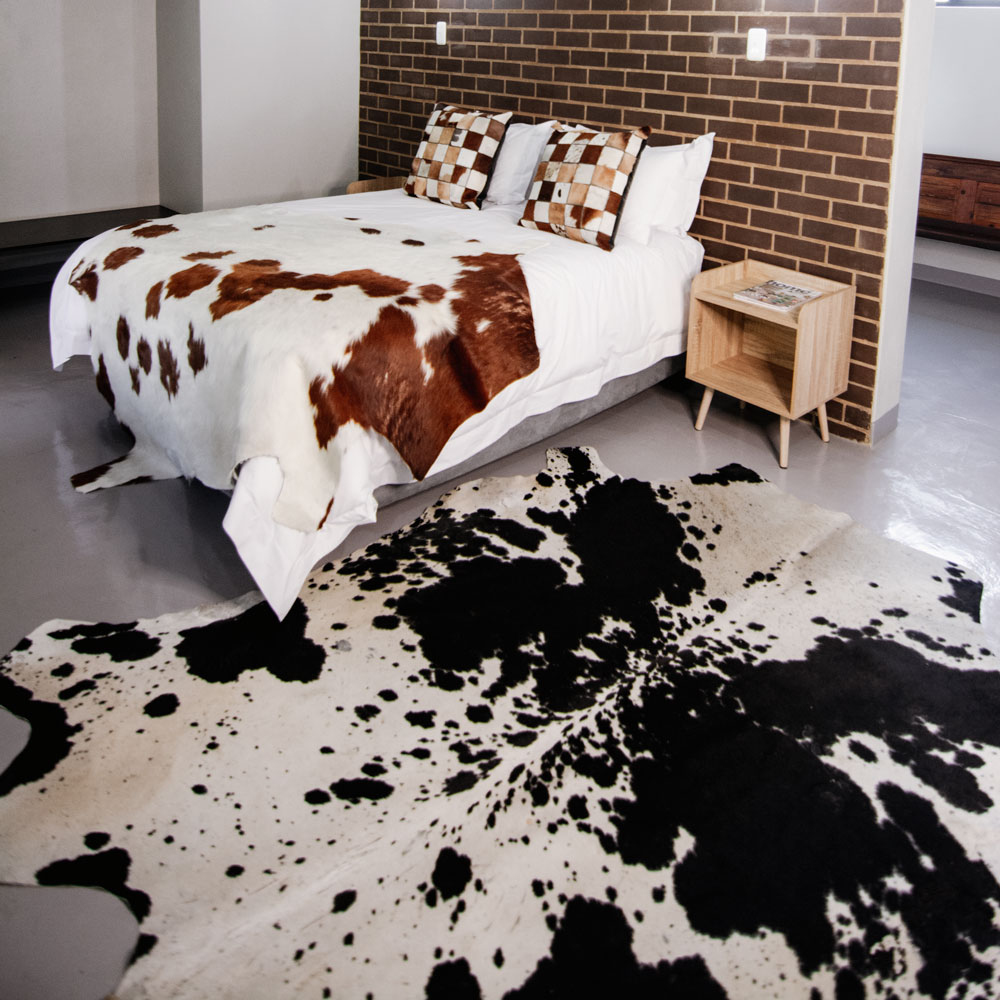
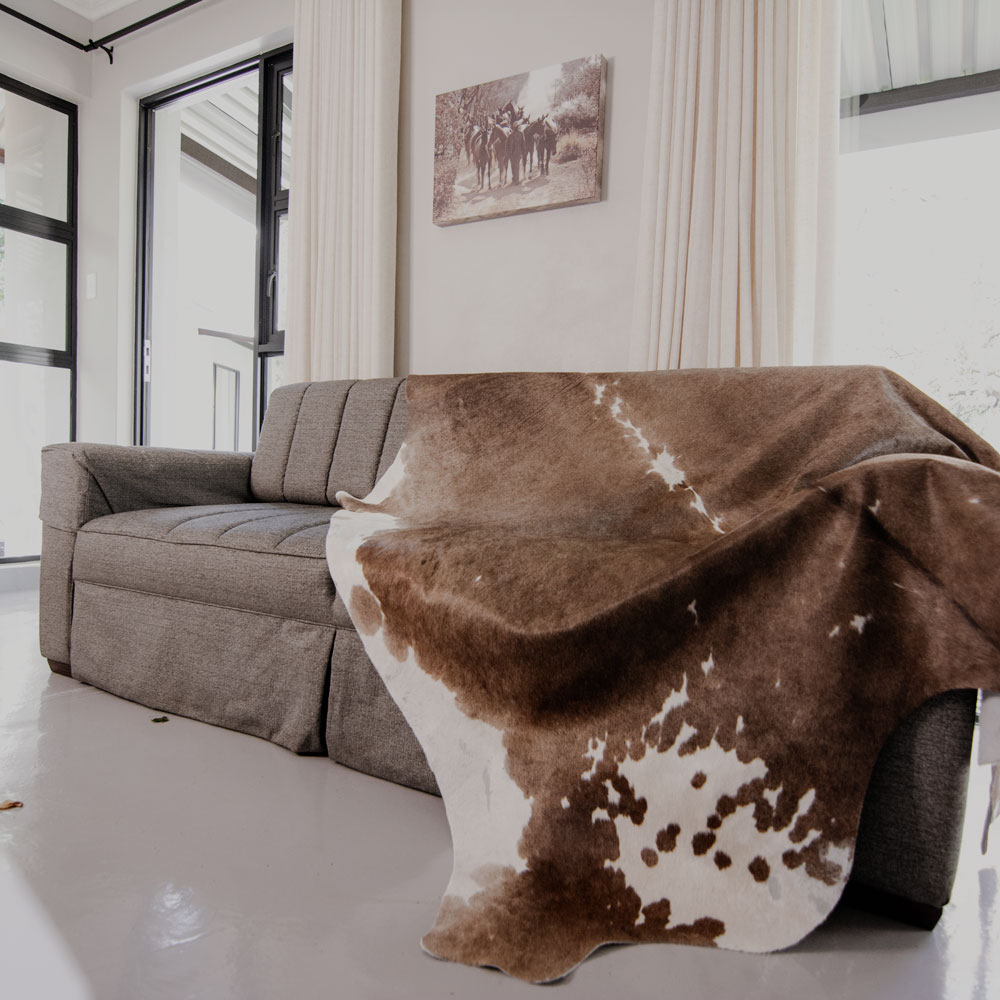
That variation is part of the appeal. Home of Nguni’s range includes light spotted hides, deep brown and black combinations, brindle patterns and designs that use Nguni hide as a contrasting detail. Even two pairs in the same style may not look identical.
The breed behind the material is part of South Africa’s indigenous livestock heritage. The Agricultural Research Council’s 2026 Beef Bulletin describes Nguni cattle as an indigenous, hardy breed with striking multicoloured coats and deep cultural significance. Those naturally varied coats are why Nguni products have such distinctive visual character.
Start with how you will wear them
Before choosing a colour, decide what the pair needs to do. A useful shoe fits your real wardrobe and routine—not an imagined occasion that happens once a year.
- Everyday casual: Choose a versatile pattern that works with denim, chinos and neutral basics.
- Smart-casual occasions: A cleaner silhouette or controlled contrast can work well with tailored trousers, dresses and jackets.
- Outdoor and country wear: Prioritise the sole, practical colour and the conditions in which you will use the shoes.
- Statement footwear: A bold light-spotted or full-hide pair can become the focal point of a simple outfit.
- Children’s daily wear: Choose the current size, appropriate sole and an easy outfit combination rather than buying mainly for display.
If you want more ankle coverage or a stronger boot profile, compare the men’s Nguni boots and ladies’ Nguni boots with the lower vellie styles.
How Nguni vellies should fit
Leather can soften with wear, but a new pair should not depend on painful stretching to become usable. Check the fit with the type of socks you expect to wear most often.
- Seat the heel: Put the shoe on fully and lace it as you would for walking.
- Check toe space: Your toes should not press against the front or feel compressed from the sides.
- Walk, do not only stand: Notice whether the heel lifts excessively or the foot slides forward.
- Check the widest point: The shoe should hold the foot securely without pinching across the forefoot.
- Compare both feet: Fit for the foot that needs slightly more room.
- Ask before guessing: If you are between sizes or buying as a gift, contact the seller for the measurements and fit guidance for that specific style.
For an online order, measure both feet on a flat surface and follow the sizing information supplied for the product. Avoid relying only on the size printed in a different brand, because shape and fit can vary between footwear styles.
Choosing a pattern: light, dark or brindle?
There is no universally “best” Nguni pattern. The right choice depends on how much contrast you want and which colours already dominate your wardrobe.
| Pattern direction | Works especially well with | Overall effect |
|---|---|---|
| Light with dark spots | Cream, black, stone, denim and rust | High contrast and statement-making |
| Warm brown | Indigo, khaki, olive, tan and white | Versatile and easygoing |
| Dark or brindle | Black, charcoal, deep green and raw denim | Grounded, rich and less visually bright |
| Nguni accent panel | Simple everyday outfits | A quieter heritage detail |
Remember that natural hide will not behave like a printed fabric. The placement and density of spots can differ from one item to the next. If a very specific pattern matters to you, confirm whether the product photograph shows the exact pair or is representative of the style.
Nguni vellies for men
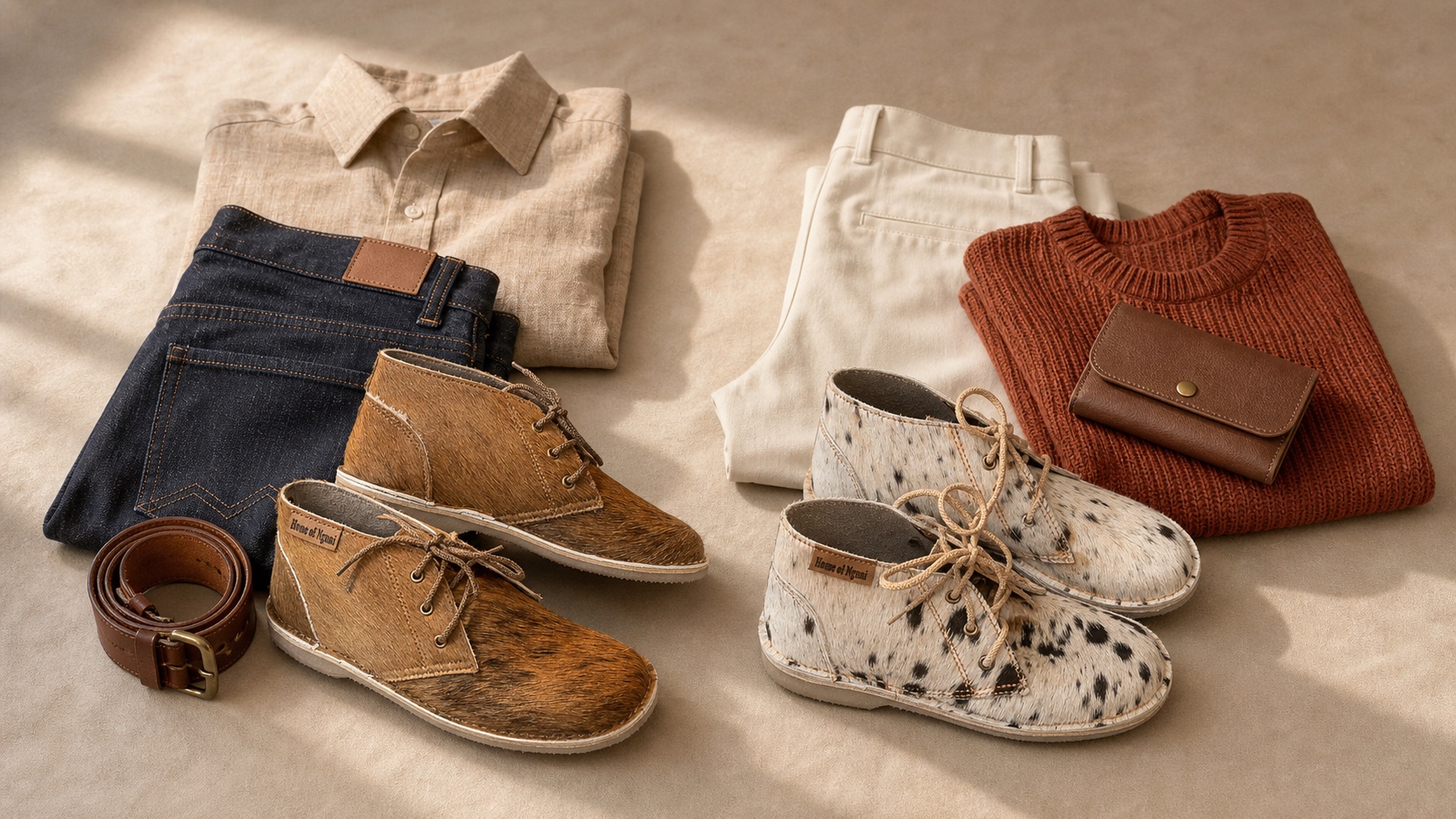
A warm brown or darker pair is easy to combine with raw denim, khaki chinos, corduroy and workwear-inspired layers. The men’s Nguni vellies offer a versatile everyday direction, while the men’s full Nguni vellies in dark or brindle make the natural hide the main feature.
For a smart-casual outfit, keep the rest of the look structured: dark jeans or tailored chinos, a crisp shirt and a simple belt. Let the hide provide the texture. For weekends, roll the trouser hem slightly so the full shoe shape remains visible.
Nguni vellies for women
Women’s vellies work well as a grounded alternative to a sneaker or ankle boot. Pair a light spotted design with cream trousers and a rust, black or olive top. A warmer brown pair fits naturally with denim, linen and neutral dresses.
Explore the classic ladies’ Nguni vellies, the bolder ladies’ full-hide light spotted vellies, or compare the brown Dina and white Nguni Dina styles.
Choosing vellies for children and toddlers
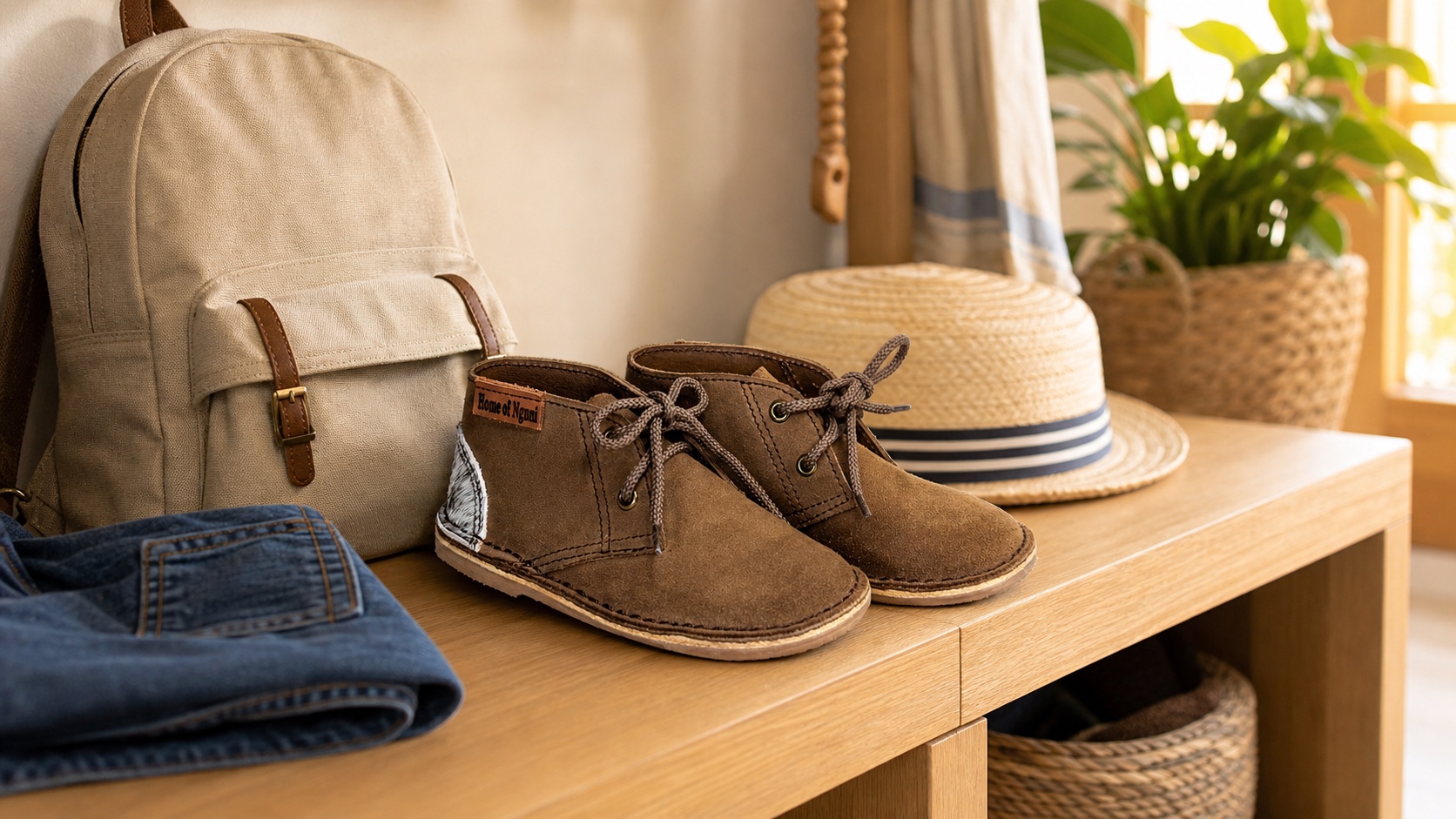
For children, begin with present-day fit and intended use. Check that the laces hold the foot securely, that the toes have comfortable room and that the sole suits the surfaces where the shoes will be worn. Recheck the fit regularly rather than assuming a pair still fits because the outside looks good.
Home of Nguni offers kids’ Nguni vellies, along with toddler options such as toddler vellies without soles and pink toddler vellies with rubber soles. The difference between sole types matters, so choose according to the child’s current stage and where the shoes will be used. If you are unsure, ask Home of Nguni which option is appropriate before ordering.
A closer look at veldskoen craftsmanship
This short workshop video shows the handwork involved in building a custom veldskoen—from shaping and stitching the upper to assembling the finished shoe. It is a useful visual introduction to the construction behind the familiar South African silhouette.
How to care for hair-on-hide vellies
- Brush away loose dust gently, following the direction of the hair.
- Blot small marks rather than rubbing aggressively across the hide.
- Do not soak the shoes or put them in a washing machine.
- Allow damp footwear to dry naturally, away from heaters and strong direct heat.
- Use products intended for the relevant material, and test any cleaner or conditioner on a small hidden area first.
- Store the pair dry, with enough space to keep its shape.
Hair-on hide and smooth leather should not automatically receive the same treatment. If you are unsure about a product, ask before applying it to the patterned hide surface.
Your pre-order checklist
- Choose between a lower vellie and a higher boot silhouette.
- Decide whether you want a versatile neutral or a high-contrast statement pattern.
- Measure both feet and check the sizing information for the specific style.
- Confirm whether the pictured hide pattern is exact or representative.
- Choose the sole around the intended use—especially for toddler styles.
- Ask about availability or fit before ordering if anything is unclear.
Find your Home of Nguni pair
The best Nguni vellies are the pair that fits your feet, your wardrobe and your everyday life. Browse the full Home of Nguni vellies collection to compare men’s, women’s, children’s and toddler options, or contact Home of Nguni for help with sizing, patterns and availability.