
Nguni Hide Size Guide: 7 Room-by-Room Measuring Tips
A Nguni hide size guide should do more than list centimetres. A genuine hide has an organic outline, with a broad body, narrower centre and natural leg shapes, so it behaves differently from a rectangular rug. The right choice depends on the furniture zone, walking paths, floor area and the amount of the hide you want to see. This room-by-room guide shows you how to measure first, compare real dimensions and place an authentic South African hide with confidence.
Why a Nguni hide size guide is different
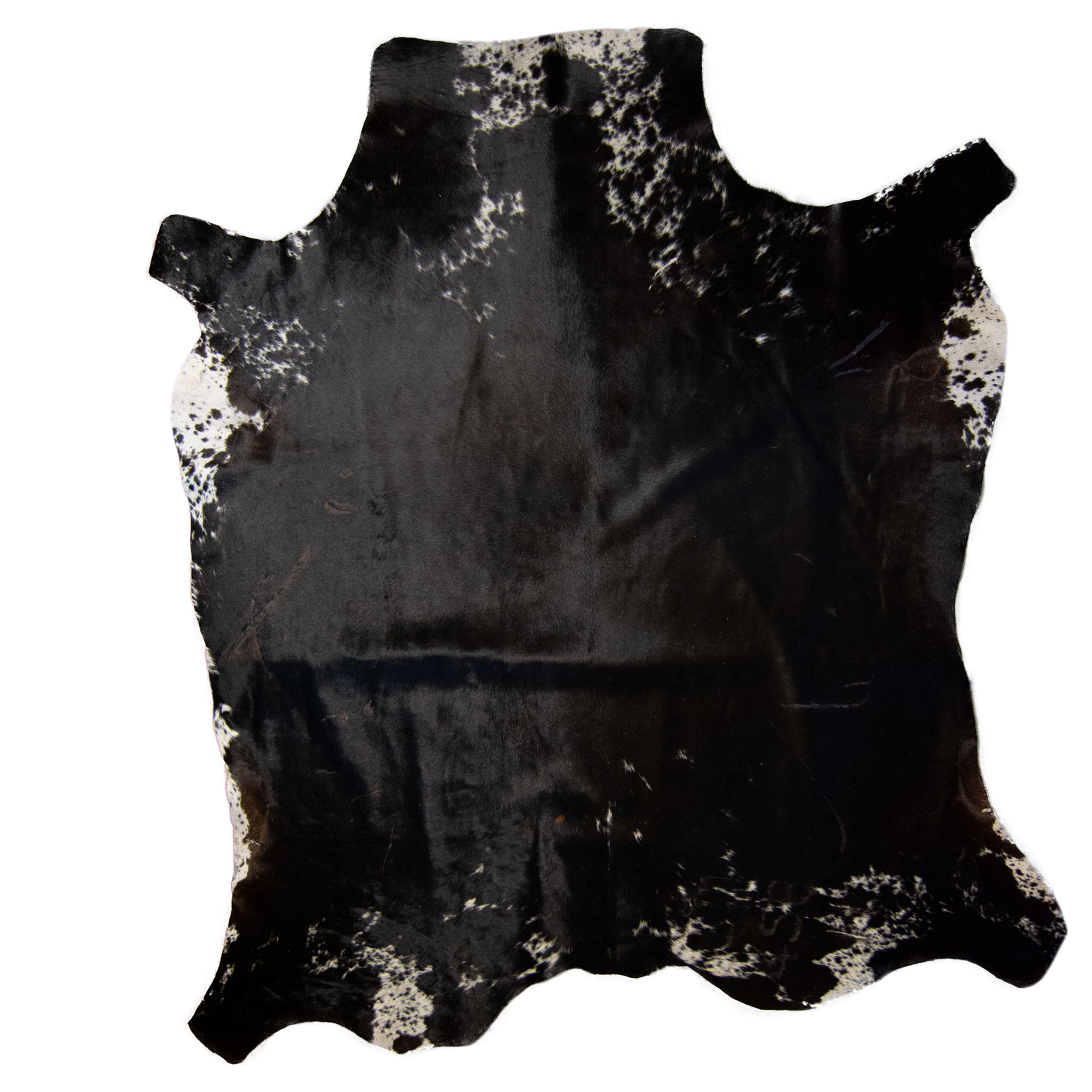
Standard rug charts assume a regular rectangle. This Nguni hide size guide accounts for a full hide that is widest across the body, tapers through the centre and extends at the legs. Two hides with the same maximum dimensions can therefore feel different in a room. One may have a compact, rounded body while another has a longer, more dramatic silhouette.
Always ask for the exact hide photograph and its maximum length and width. If a listing shows only a colour category, confirm whether the photograph represents the piece you will receive. Our genuine Nguni hide buying guide explains the other quality checks to make before ordering.
1. Nguni hide size guide: measure the furniture zone
Start with the area the hide must connect, not only the empty floor. Measure the sofa and coffee-table zone, the bed and bedside route, or the desk and visitor chair. Record the maximum available length and width in centimetres. Then subtract a comfortable border so the natural outline has room to breathe.
- Measure the full room and the smaller furniture zone.
- Mark doors, drawers and chairs that need space to move.
- Note floor vents, fireplaces and areas exposed to moisture.
- Photograph the room from the main entrance before comparing patterns.
- Write down the largest safe footprint, not merely your preferred size.
2. Use the Nguni hide size guide outline test
Use painter’s tape, newspaper or an old sheet to mark the hide’s maximum dimensions on the floor. Do not create a perfect rectangle. Fold or angle the corners so the test shape resembles a natural hide. Walk through the room, open doors and pull chairs out. This simple test reveals whether the proposed size interrupts circulation or looks too small.
A useful general South African rug size guide recommends leaving visible floor around a rug and sizing for the furniture arrangement. With a hide, the same principle applies, but you must also consider the narrower natural sections.
3. Nguni hide size guide for living-room placement
In front of the sofa
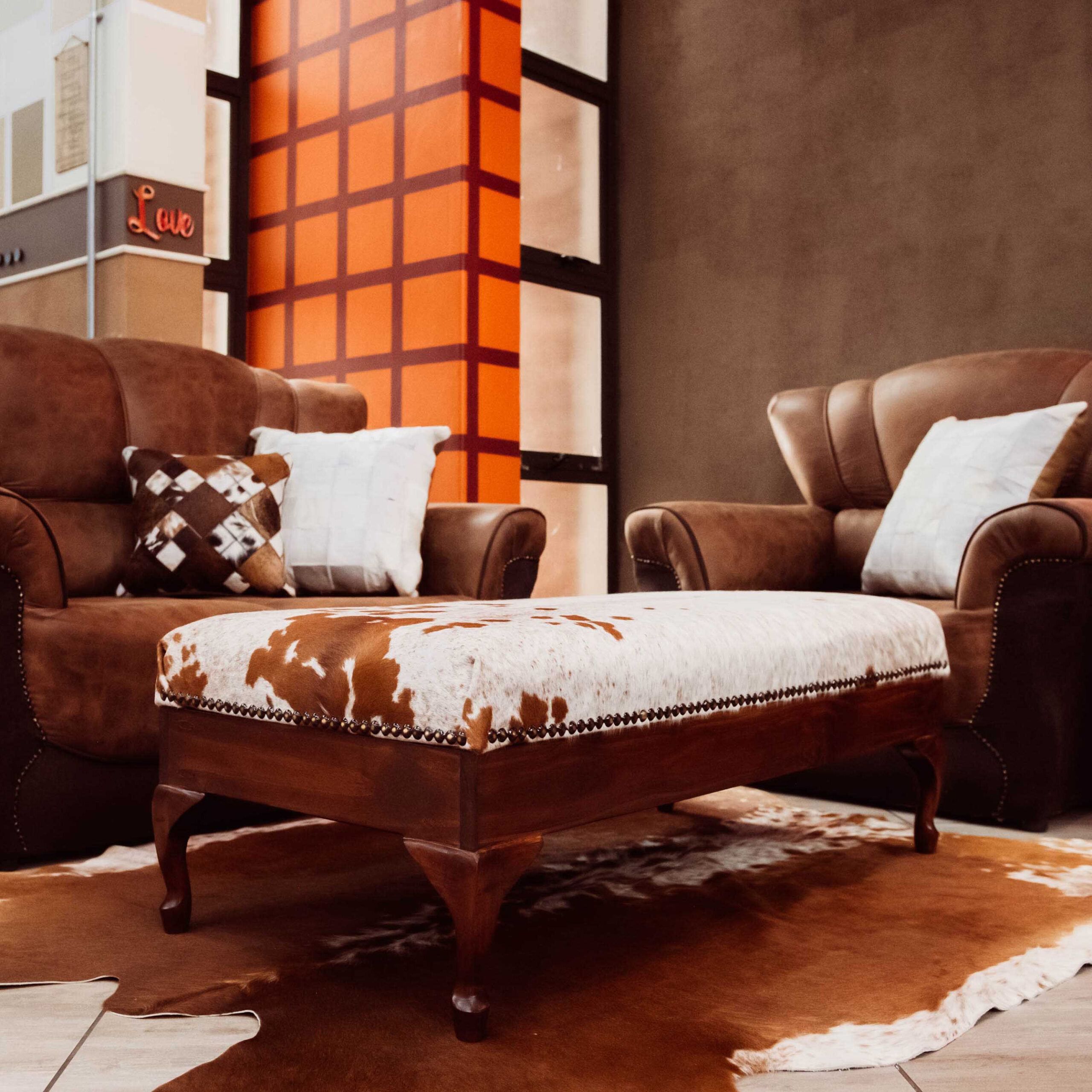
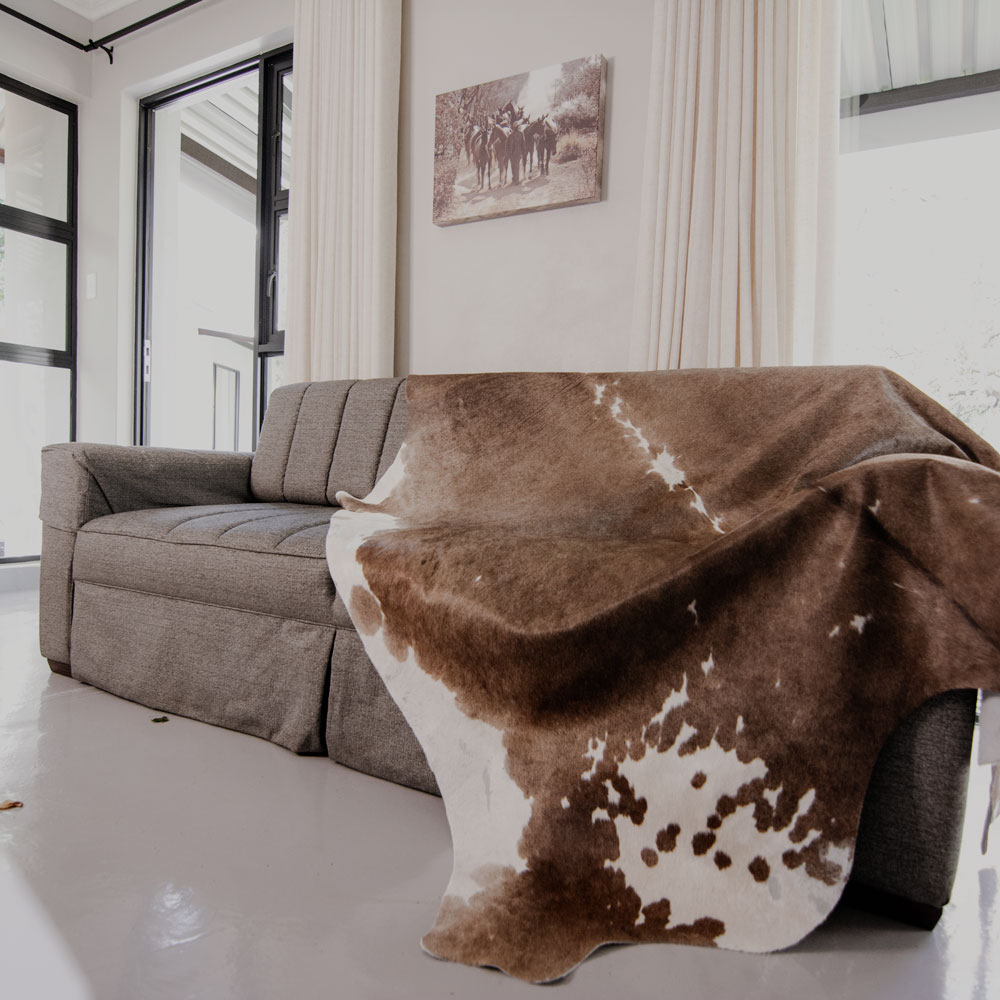
For a compact lounge, a hide can sit completely in front of the sofa with the coffee table centred over its broadest area. Leave enough space between the sofa and table for comfortable movement. An angled hide often feels more relaxed and lets the natural legs remain visible.
Under the front furniture legs
In a larger lounge, slide the broad upper section under the sofa’s front legs and allow the lower shape to extend towards the coffee table. Check that thin edges do not sit in the busiest walking line. A non-slip underlay may help on polished floors.
| Room | Measure first | Useful placement |
|---|---|---|
| Living room | Sofa width and table zone | Angled under a table or sofa front legs |
| Bedroom | Bedside walkway and door swing | Beside the bed or partly under its lower corner |
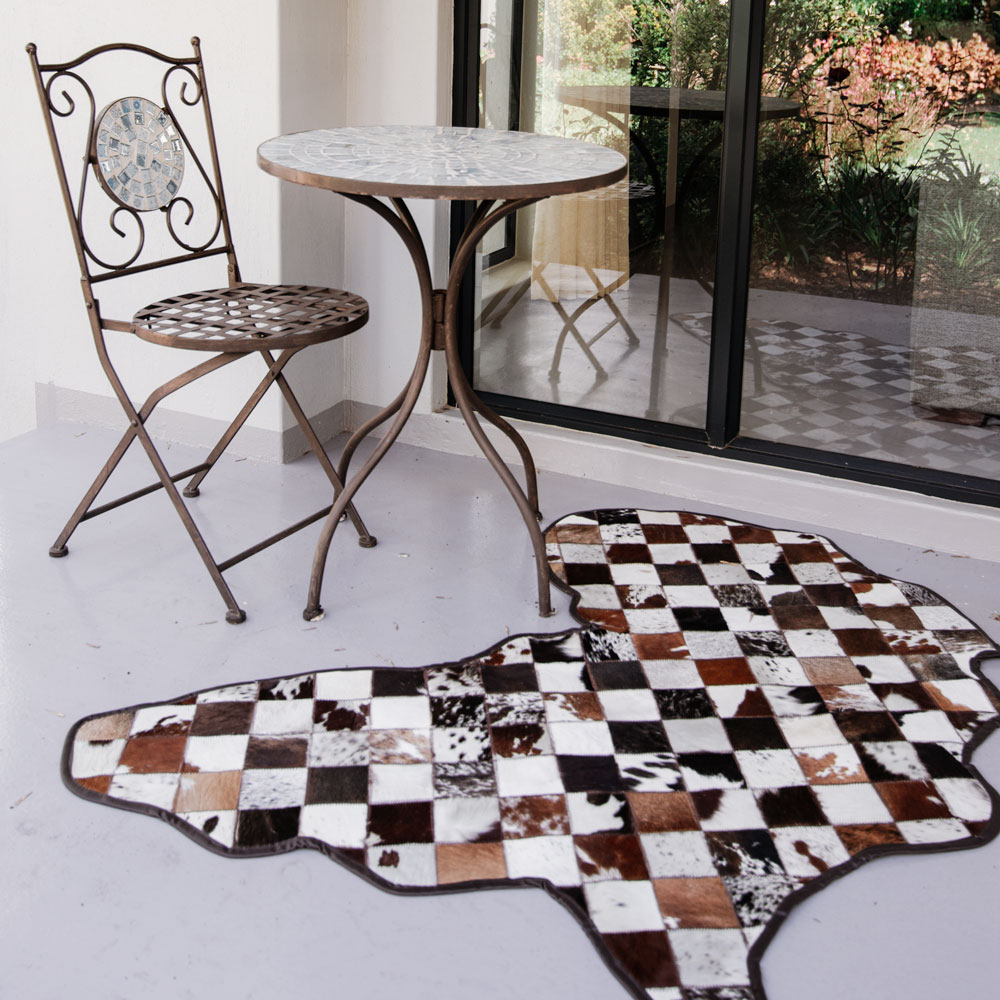
| Dining area | Table plus pulled-out chairs | Use a rectangular blocked carpet when full coverage matters |
| Home office | Desk, visitor chair and castor path | Outside the rolling chair’s busiest route |
4. Nguni hide size guide for bedrooms
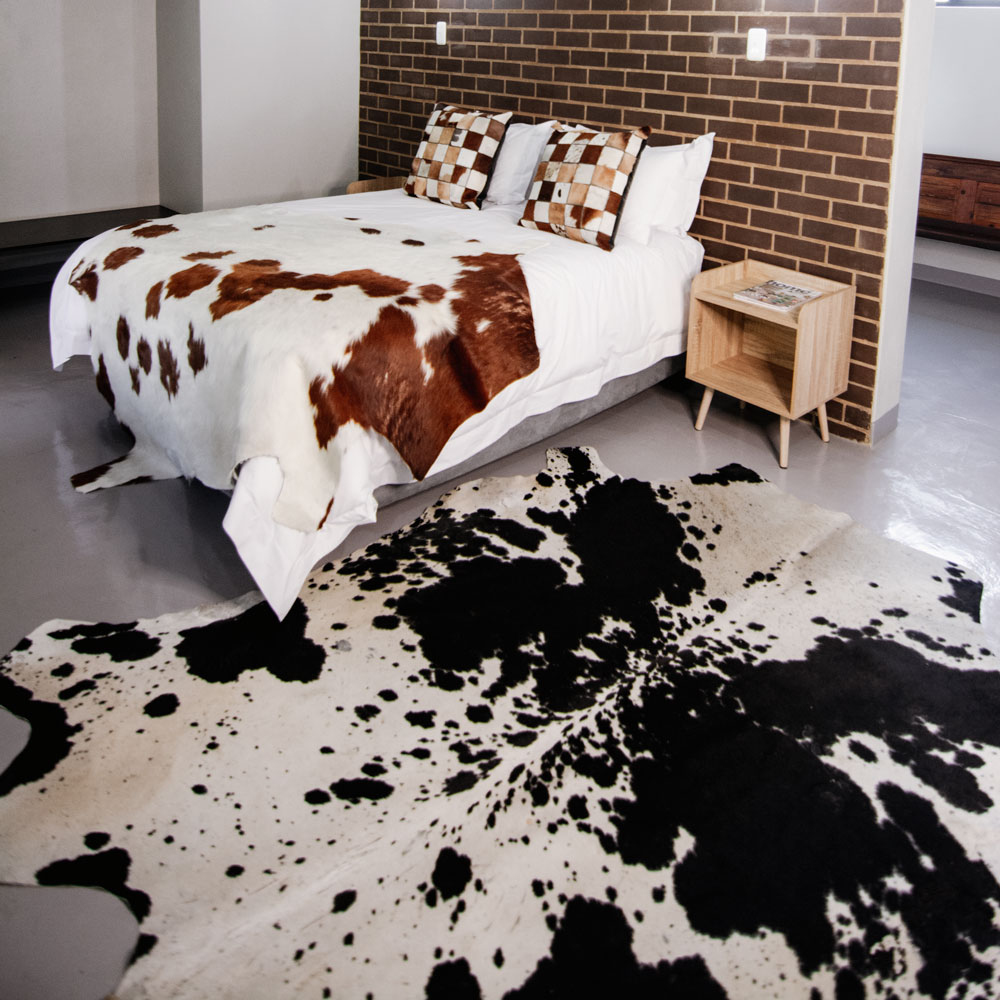
A full hide does not need to sit under the whole bed. Place it beside the bed where the broad body provides a soft landing, or angle it beneath one lower corner so the pattern remains visible. Measure the route between the bed, cupboard and bathroom. The hide should add comfort without catching under a door.
For a king-size bed, a single hide works best as an accent rather than a conventional full-width rug. If you want a large, regular footprint across both sides and the foot of the bed, consider a blocked Nguni carpet instead.
5. Nguni hide size guide for dining rooms
A dining rug must remain beneath chairs when they are pulled back. The Nguni hide size guide rule here is simple: test every chair position, especially at the narrower sides. The irregular edge of a full hide may not provide consistent coverage around a large table. If chair legs repeatedly cross the edge, a rectangular blocked carpet is usually the more practical choice.
A full hide can still work beside a dining area, under a sideboard or in an open-plan transition zone. There it creates a focal point without carrying the constant movement of dining chairs.
6. Match pattern scale to visual space
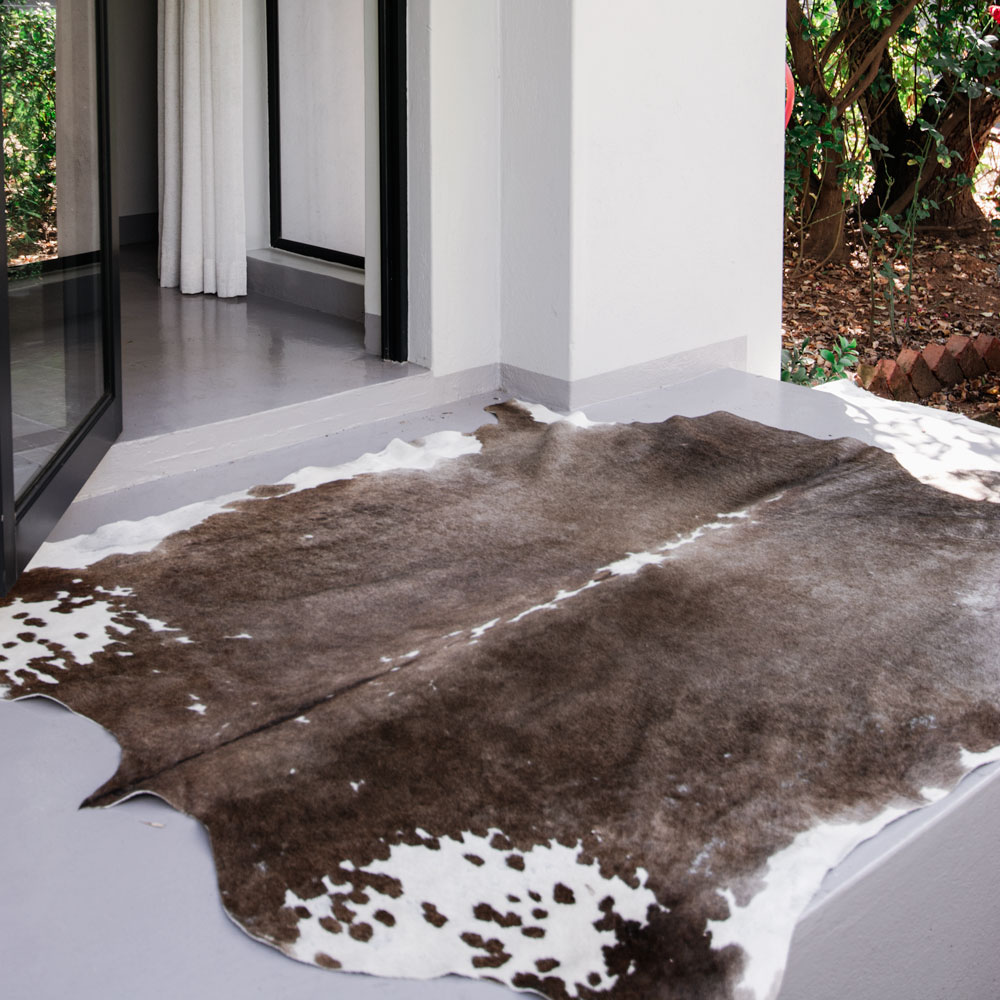
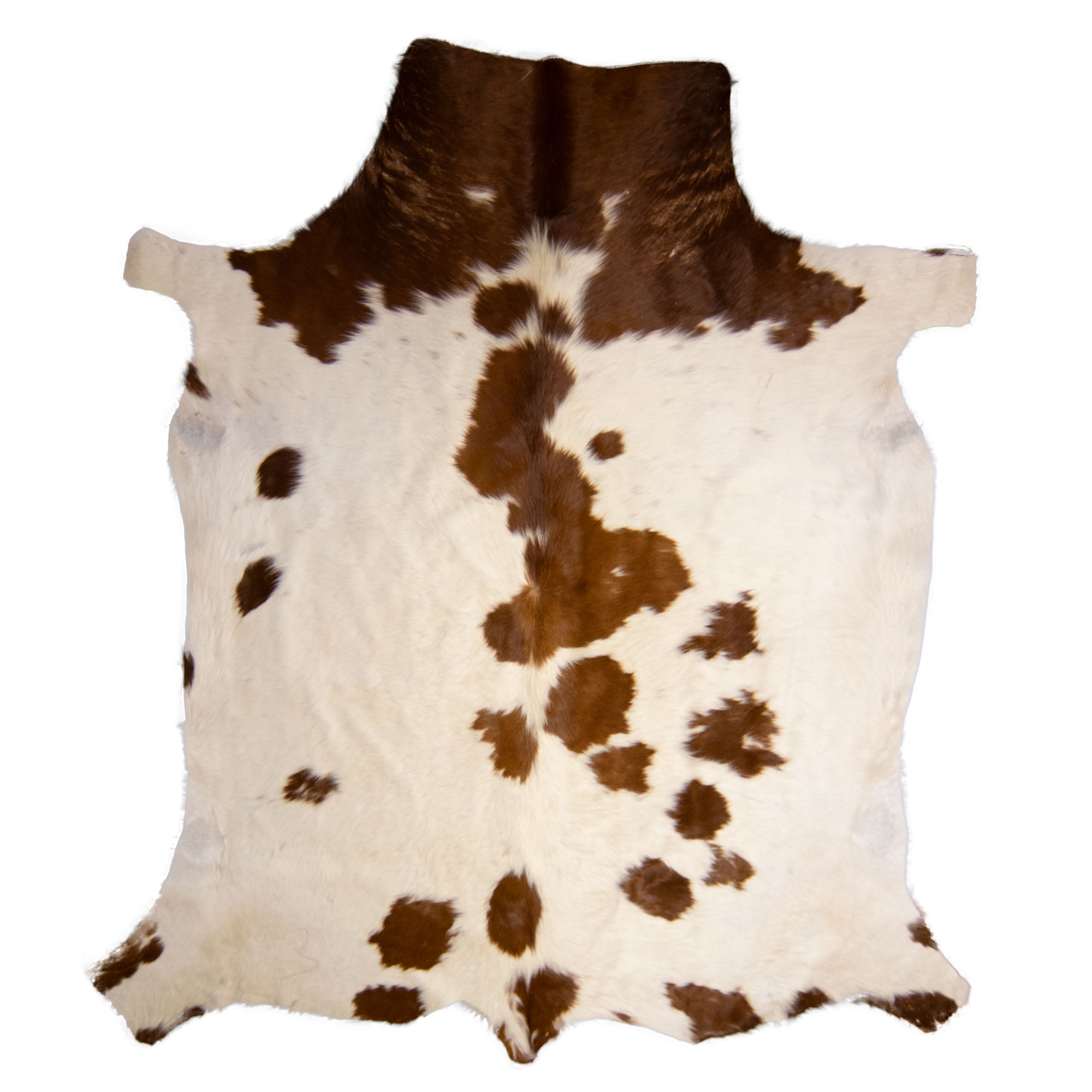
Large black-and-white areas create bold contrast and can make the hide feel visually larger. Fine speckles and brindle patterns add movement without one dominant colour block. Warm brown and cream markings sit naturally beside timber, leather and woven textures. A complete Nguni hide size guide must therefore compare the actual hide with photographs of your sofa, curtains and floor before deciding.
The Nguni hide size guide is therefore partly about colour. A dramatic pattern needs breathing room, while a subtle hide can layer into an already detailed space. Browse the Home of Nguni hide collection to compare natural outlines and markings.
7. Avoid these common sizing mistakes
- Buying from a generic size label: request real maximum dimensions.
- Measuring empty floor only: include furniture, chairs and walking paths.
- Forcing a full hide under a large dining table: test every chair position first.
- Ignoring door movement: thin hide edges should not catch beneath doors.
- Choosing pattern without the room: compare the actual hide beside existing colours.
- Placing it in persistent damp: natural leather needs a dry, ventilated setting.
How to read the seller’s hide measurements
Ask whether the stated length runs from the furthest upper point to the furthest lower point, and whether the width covers the broadest part of the body. The measurement should describe the hide laid flat, without stretching. A useful listing also shows a clear overhead photograph, because maximum dimensions alone cannot explain where the natural outline narrows.
When comparing two hides, sketch both maximum rectangles on paper and then look at the actual silhouettes inside them. A fuller body can provide more usable coverage than a longer hide with narrow sections. This is why the Nguni hide size guide combines dimensions with shape, placement and pattern rather than ranking pieces by length alone.
A final measuring checklist
- Record the room length and width in centimetres.
- Measure the complete furniture zone, including pulled-out chairs.
- Mark the hide’s maximum dimensions with tape or paper.
- Shape the corners so the test area resembles a natural outline.
- Walk every route and open every nearby door or drawer.
- Compare the actual hide photograph with the room’s colours.
- Confirm exact dimensions and whether the photograph is the piece supplied.
- Plan a dry placement and suitable non-slip solution if needed.
Keep these notes while shopping instead of relying on memory. If the choice is close, send the room measurements and a photograph to the Home of Nguni team through the contact page. Practical advice before purchase is far easier than trying to force the wrong scale into the room afterwards.
Frequently asked questions
How do I use a Nguni hide size guide?
Measure the furniture zone, mark the maximum hide dimensions on the floor, shape the test outline and check every door and walking route before buying.
What is the average size of a full Nguni hide?
Natural hides vary, so there is no single guaranteed size. Ask for the exact maximum length and width of the photographed hide and test that footprint in your room.
Should a Nguni hide go under a sofa?
It can sit in front of the sofa, beneath the front legs or at an angle under a coffee table. Choose the arrangement that keeps thin edges out of busy walkways.
Can I use a full hide under a dining table?
Only when the hide remains under all chair legs as they move. A blocked rectangular Nguni carpet is often more predictable for larger dining settings.
How much floor should remain visible?
Leave enough floor to frame the natural outline. The exact border depends on room scale, but a hide usually looks better when it does not run into walls or doorways.
Measure twice, choose the actual hide
Use this Nguni hide size guide to define the furniture zone, mark the natural outline and check every walkway before buying. Then compare actual photographs, real dimensions and pattern scale. The result will feel intentional, protect the hide from awkward traffic and allow its South African character to become part of the room.