
Safari Lodge Interior Design: 9 Beautiful Nguni Hide Ideas
Safari lodge interior design succeeds when local character, guest comfort and daily practicality feel like one coherent story. Genuine Nguni hide can support that story through whole hides, blocked carpets, cushions, ottomans and smaller accents. The aim is not to cover every surface in pattern. It is to choose a few authentic pieces, repeat their colours thoughtfully and place them where their natural texture can be enjoyed without creating a difficult maintenance burden.
body.single-post .site-main{max-width:1140px;margin:0 auto;padding:64px 24px 88px;color:#342f2c} body.single-post .page-header{max-width:920px;margin:0 auto 34px;text-align:center} body.single-post .page-header .entry-title{margin:0;font-size:clamp(34px,4.5vw,58px);line-height:1.08;letter-spacing:-.025em;text-transform:none!important;color:#2b2927} body.single-post .page-content{max-width:860px;margin:0 auto;font-size:17px;line-height:1.82;color:#514a46} body.single-post .page-content>p:first-of-type{font-size:21px;line-height:1.65;color:#342f2c} body.single-post .page-content h2{margin:52px 0 18px;font-size:clamp(27px,3vw,38px);line-height:1.2;color:#2f2925} body.single-post .page-content h3{margin:34px 0 12px;font-size:23px;line-height:1.3;color:#3a312c} body.single-post .wp-block-image{margin:34px auto} body.single-post .wp-block-image img{width:100%;max-height:620px;object-fit:cover;border-radius:20px;box-shadow:0 18px 48px rgba(50,38,29,.14)} body.single-post .wp-block-image figcaption{margin-top:10px;color:#756960;font-size:14px;text-align:center} body.single-post .wp-block-table{margin:30px 0;overflow-x:auto} body.single-post .wp-block-table table{border-collapse:collapse;width:100%} body.single-post .wp-block-table th,body.single-post .wp-block-table td{padding:14px;border:1px solid #ded7d1;text-align:left} body.single-post .hon-video{position:relative;padding-bottom:56.25%;height:0;overflow:hidden;margin:34px 0;border-radius:20px;box-shadow:0 18px 48px rgba(50,38,29,.14)} body.single-post .hon-video iframe{position:absolute;inset:0;width:100%;height:100%;border:0} body.single-post .hon-faq details{margin:12px 0;padding:18px 20px;border:1px solid #ded7d1;border-radius:12px;background:#faf8f6} body.single-post .hon-faq summary{cursor:pointer;font-weight:700;color:#342f2c} body.single-post .wp-block-button__link{background:#342f2c;color:#fff;border-radius:999px;padding:14px 24px} body.single-post #rank-math-toc{margin:34px 0;padding:24px 28px;border:1px solid #ded7d1;border-radius:16px;background:#faf8f6} body.single-post #rank-math-toc h2{margin:0 0 14px;font-size:24px;line-height:1.25} body.single-post #rank-math-toc ul{margin:0;padding-left:22px;columns:2;column-gap:36px} body.single-post #rank-math-toc li{margin:7px 0;break-inside:avoid} body.single-post #rank-math-toc a{color:#5a4337;text-decoration:underline;text-underline-offset:3px} @media(max-width:720px){body.single-post #rank-math-toc ul{columns:1}}Contents
Why Nguni hide belongs in safari lodge interior design
A successful safari lodge interior design scheme can connect Nguni markings naturally with timber, stone, woven fibre, leather and the earth-led palettes used in Southern African hospitality. It also prevents a lodge from feeling like a generic international hotel. A VISI feature on a KwaZulu-Natal safari villa describes Nguni hides, Zulu craft and South African art used throughout the lodge, showing how local materials can form part of a refined contemporary interior.
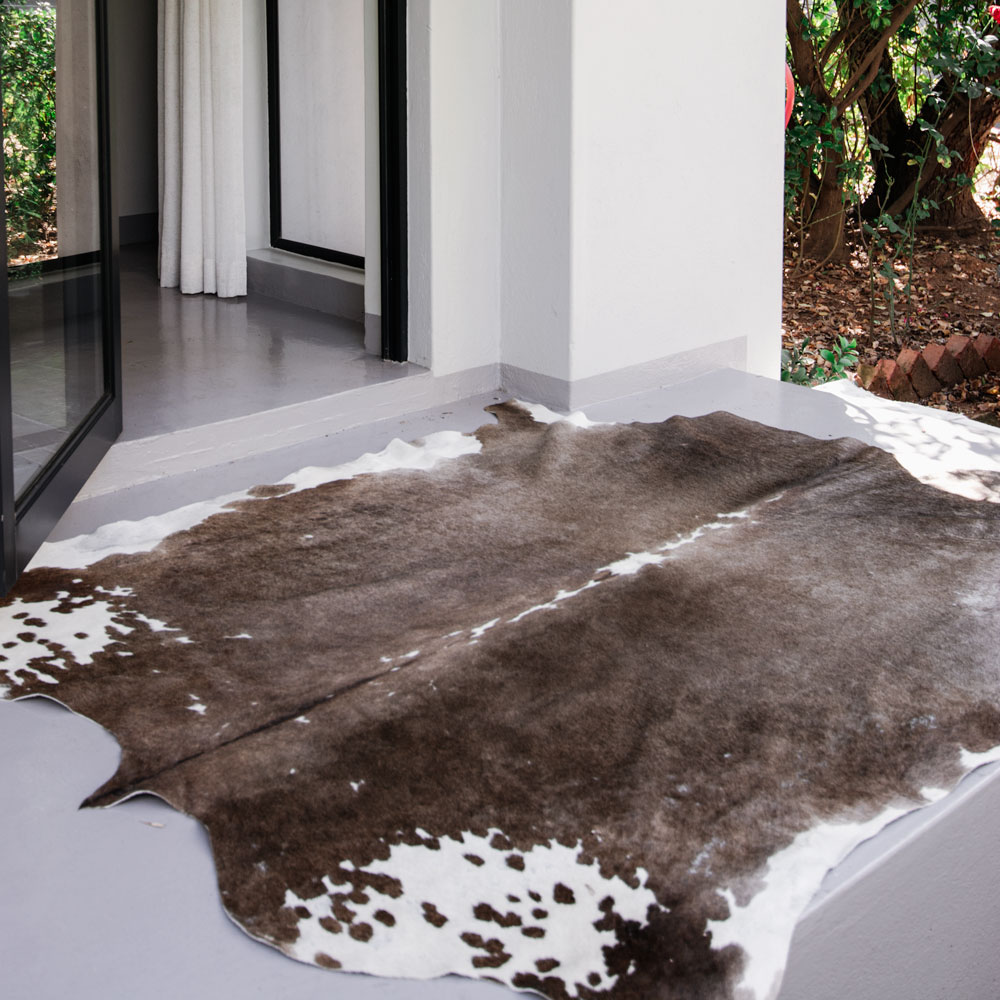
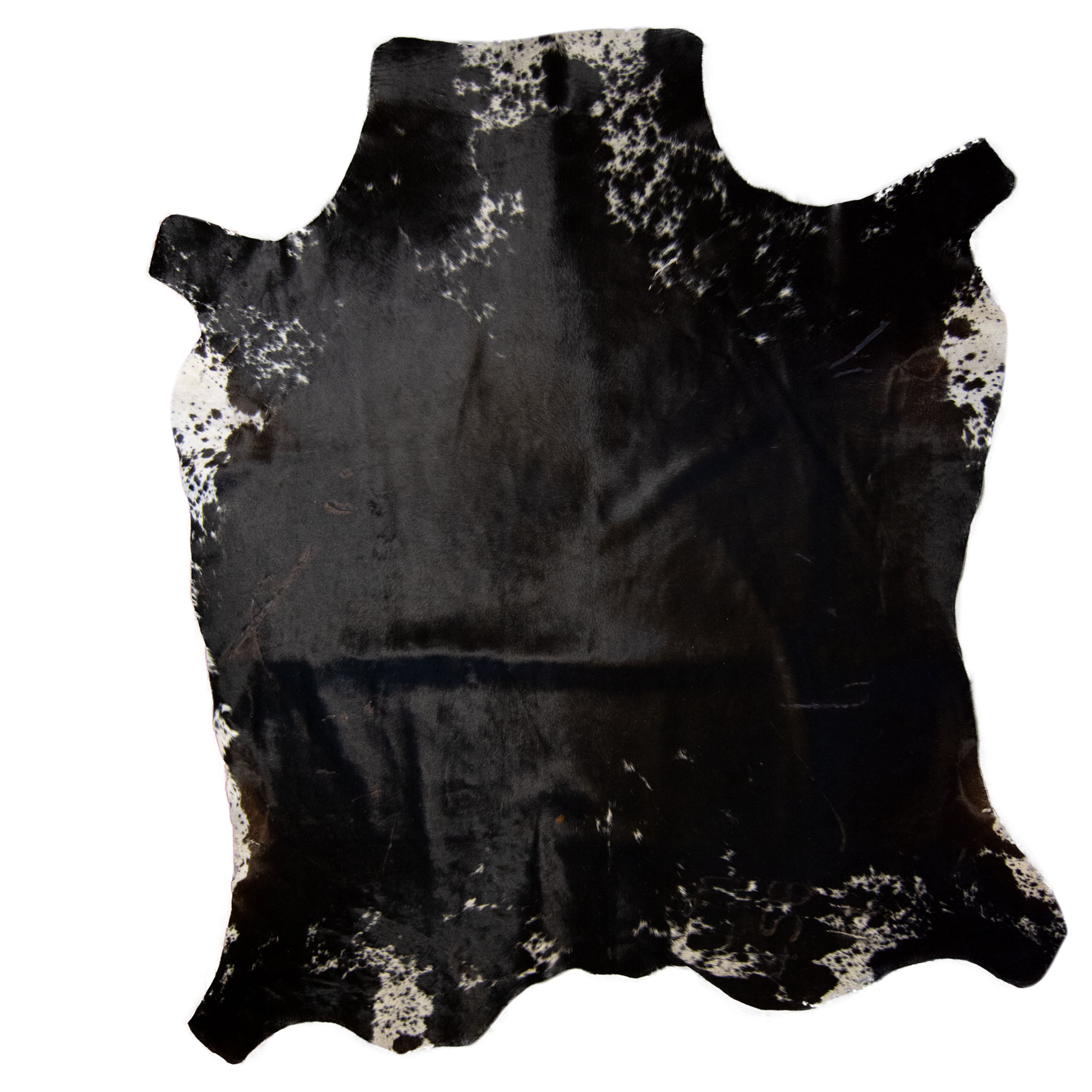
Authenticity still requires restraint. Each hide has an irregular outline and one-of-a-kind pattern, so the room should be designed around the exact piece rather than a catalogue thumbnail. Start with the available Nguni hides, note their dominant colours and measurements, and then decide where a whole hide or made product will have the strongest effect.
1. Build one natural palette for the whole property
In safari lodge interior design, choose three or four recurring tones before purchasing individual pieces. Black and white hides suit a crisp contemporary lodge, while brown, tan, cream and brindle work easily with warm timber and thatch. Repeat the chosen tones through upholstery piping, lamps, ceramics and woven baskets. The rooms do not need identical markings, but they should feel related when a guest walks from reception to a suite.
- Photograph floor, wall, timber and upholstery samples in daylight.
- Compare them with the exact hide rather than a generic colour name.
- Limit competing animal prints so genuine Nguni remains the focal texture.
- Use plain linen, canvas and wool to give bold markings breathing room.
- Carry one accent colour through signs, cushions and smaller accessories.
2. Give reception one memorable Nguni focal point
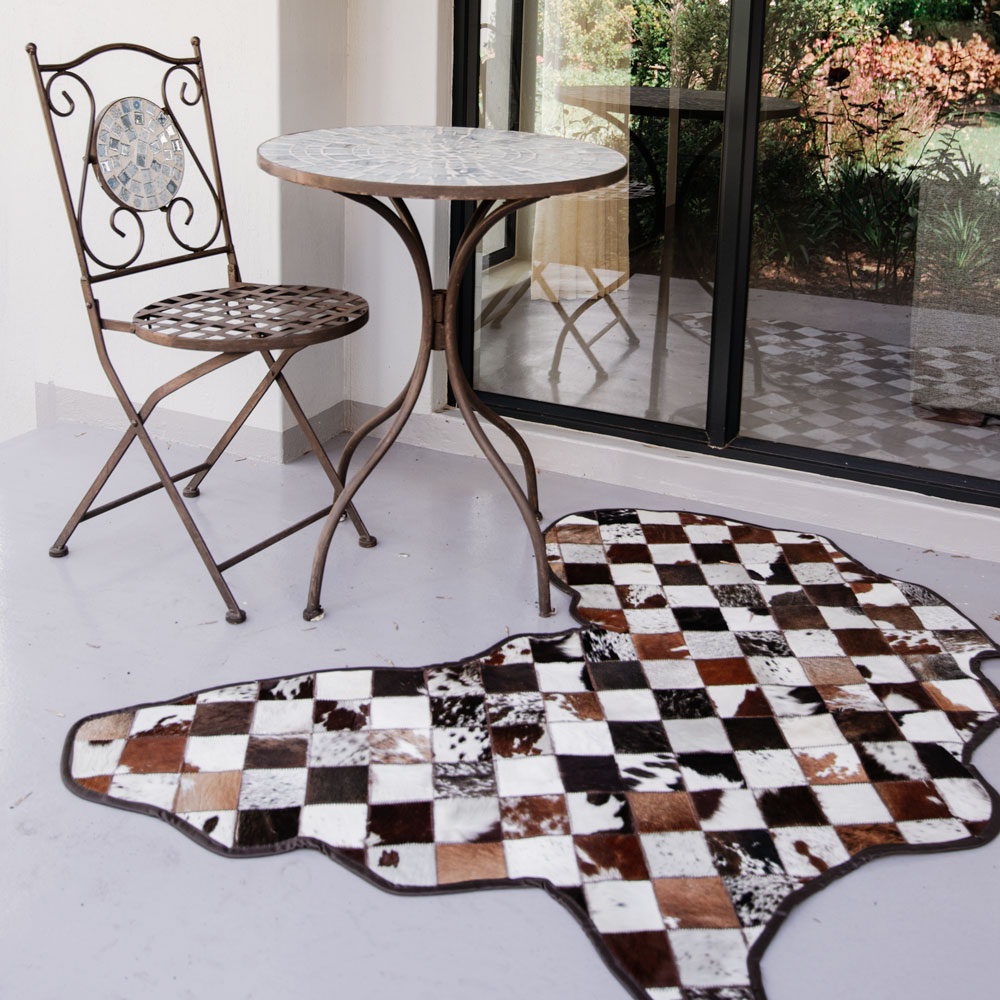
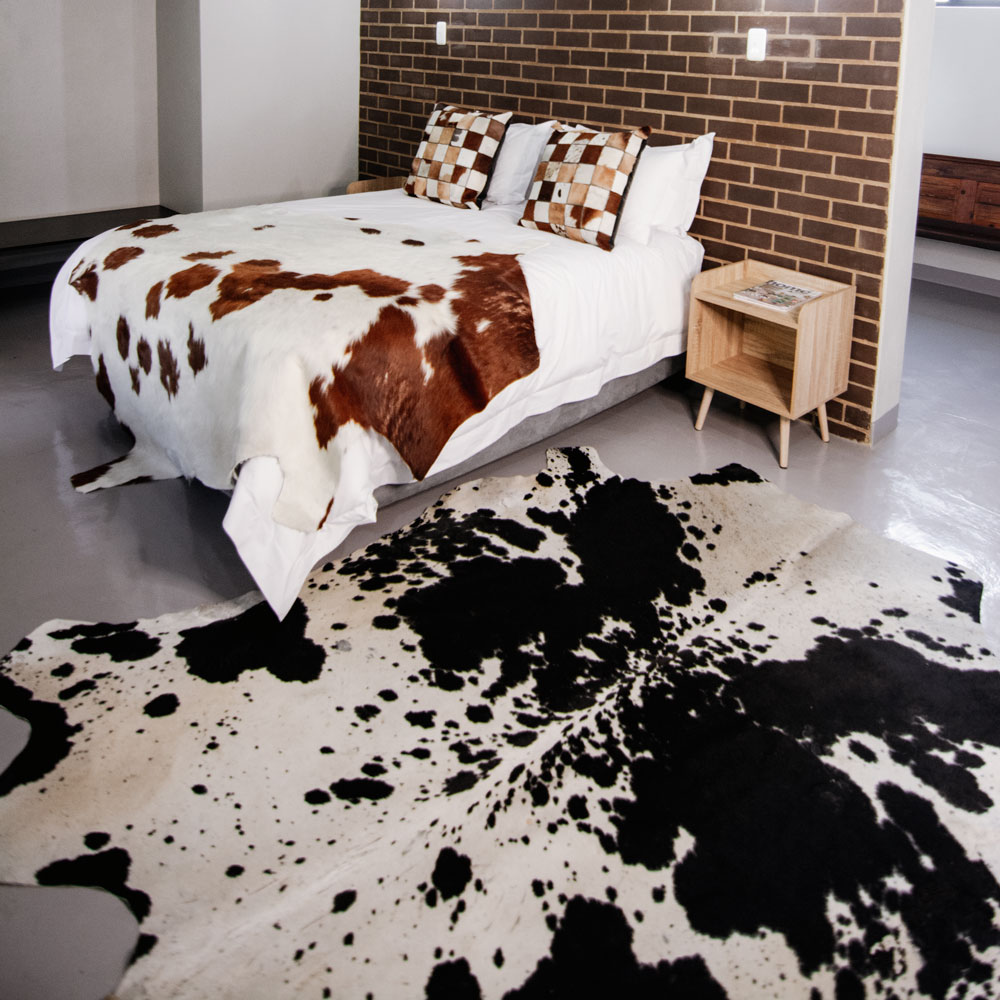
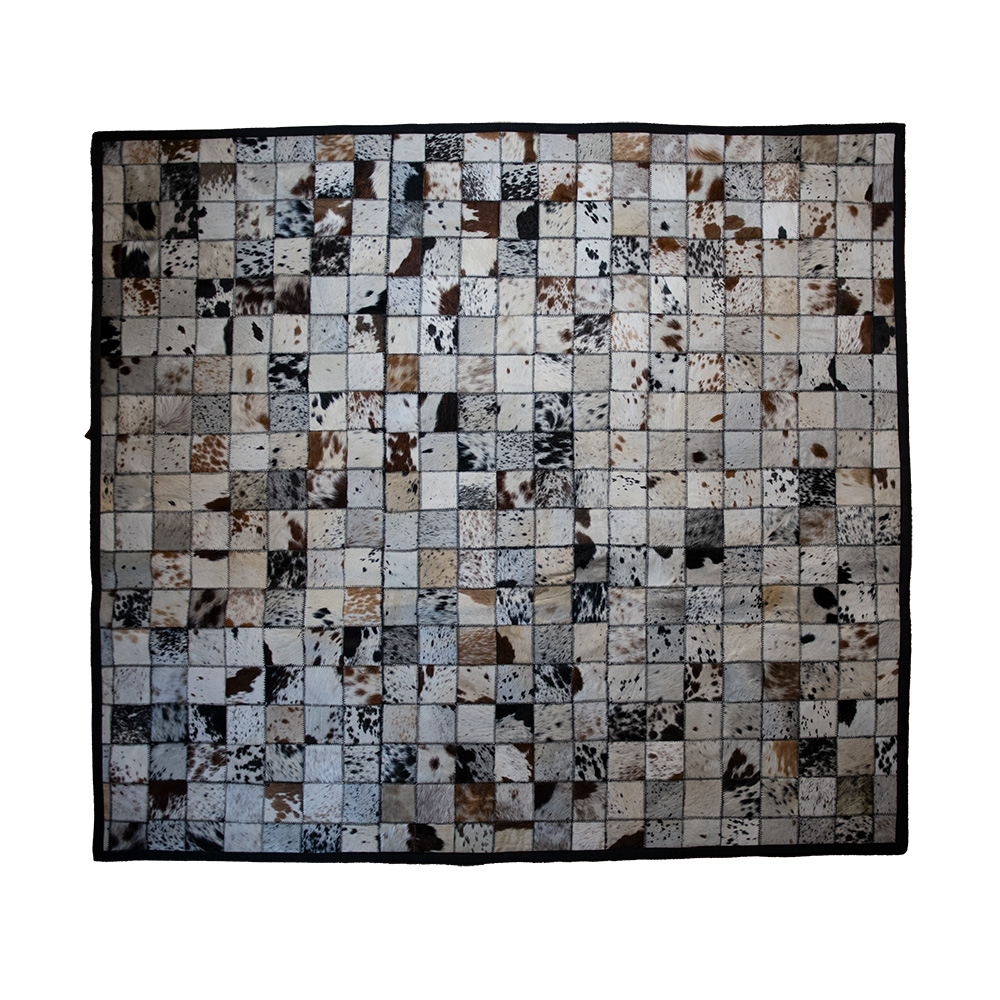
Reception shapes the guest’s first impression, so select one generous piece rather than many unrelated accents. A whole hide may sit beneath a low seating group or be mounted as wall art where foot traffic is heavy. A Nguni blocked carpet can suit a more structured seating plan because its rectangular format aligns with desks, sofas and architectural lines.
Keep luggage wheels, wet umbrellas and door draughts in mind. Leave a clear path from the entrance to the desk, and avoid placing a delicate hair-on-hide edge where trolley wheels repeatedly cross it. Good safari lodge interior design is as much about circulation as appearance.
3. Anchor lounge seating without overcrowding it
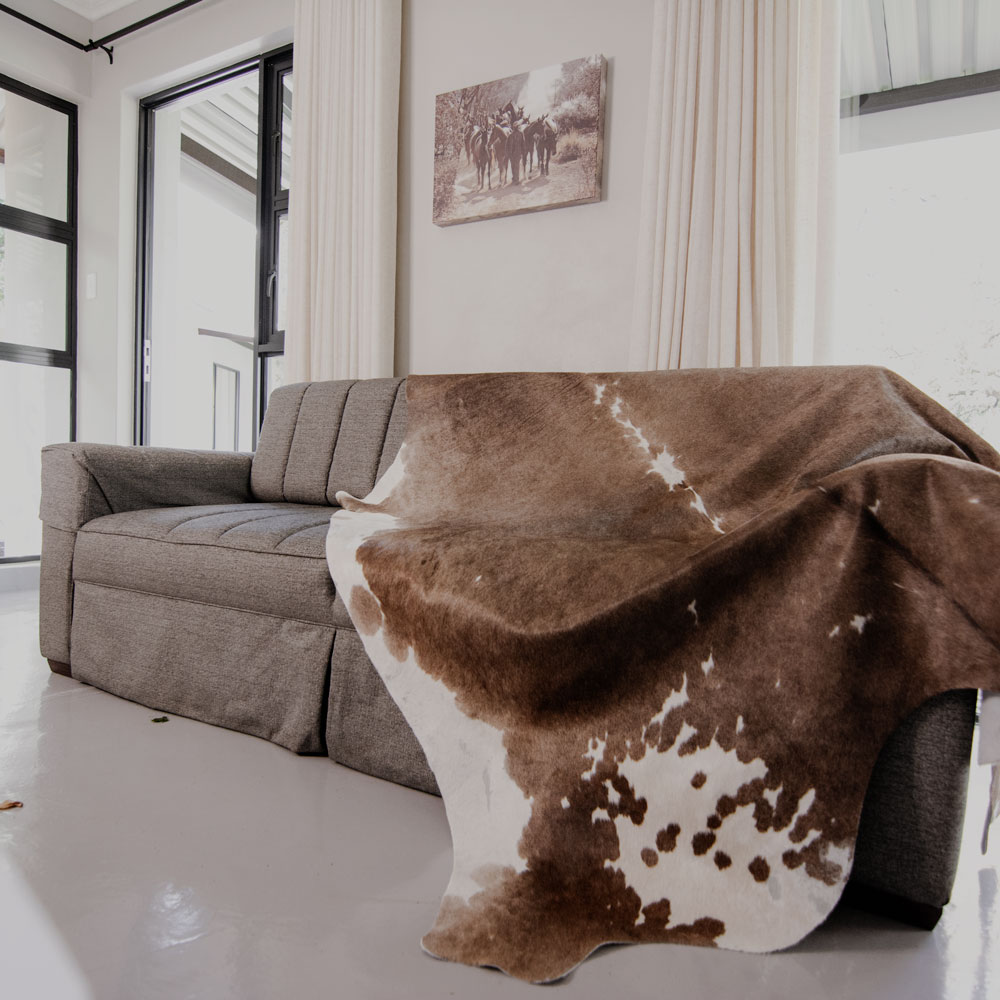
In a lounge, let the Nguni piece define the conversation area. The front legs of sofas and occasional chairs can sit on a suitably sized carpet, while the remaining furniture stays visually quieter. If the room already has strong artwork, carved screens or a dramatic view, choose lower-contrast brown and cream markings instead of another black-and-white statement.
Measure doors, hearths and main walkways before ordering. Our Nguni hide size guide explains how to check the widest and longest natural points. For a made-to-shape solution, discuss room dimensions and the desired block pattern before production.
4. Use cushions to connect suites with public spaces
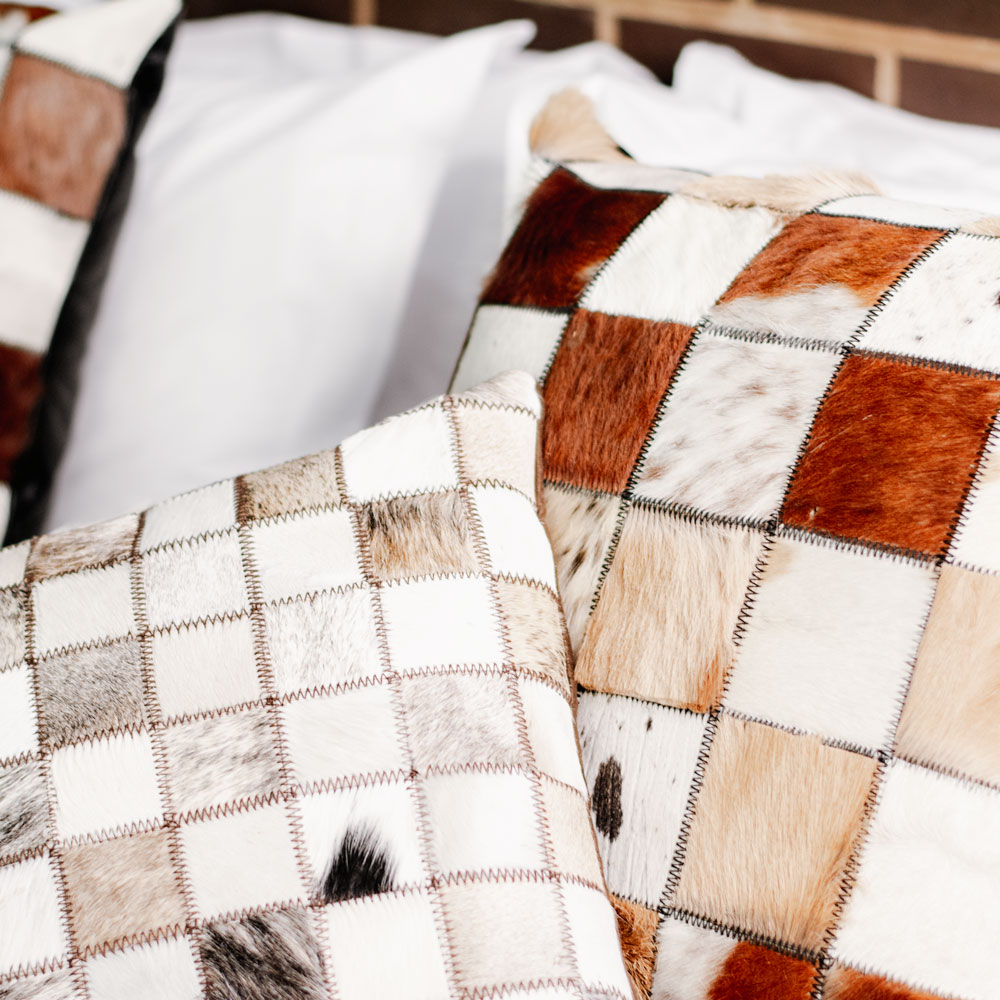
In safari lodge interior design, suites benefit from smaller, repeatable Nguni details. One or two Nguni cushions can echo the reception palette without making every bedroom identical. Place them against plain headboards or linen so their texture reads clearly, and specify a consistent size and leather frame when the design needs stronger continuity across several rooms.
Avoid placing hair-on-hide where guests are likely to rest wet swimwear, apply body lotion or spill drinks. Provide a practical alternative cushion for everyday comfort and treat the Nguni piece as a considered accent.
5. Add useful seating with Nguni ottomans
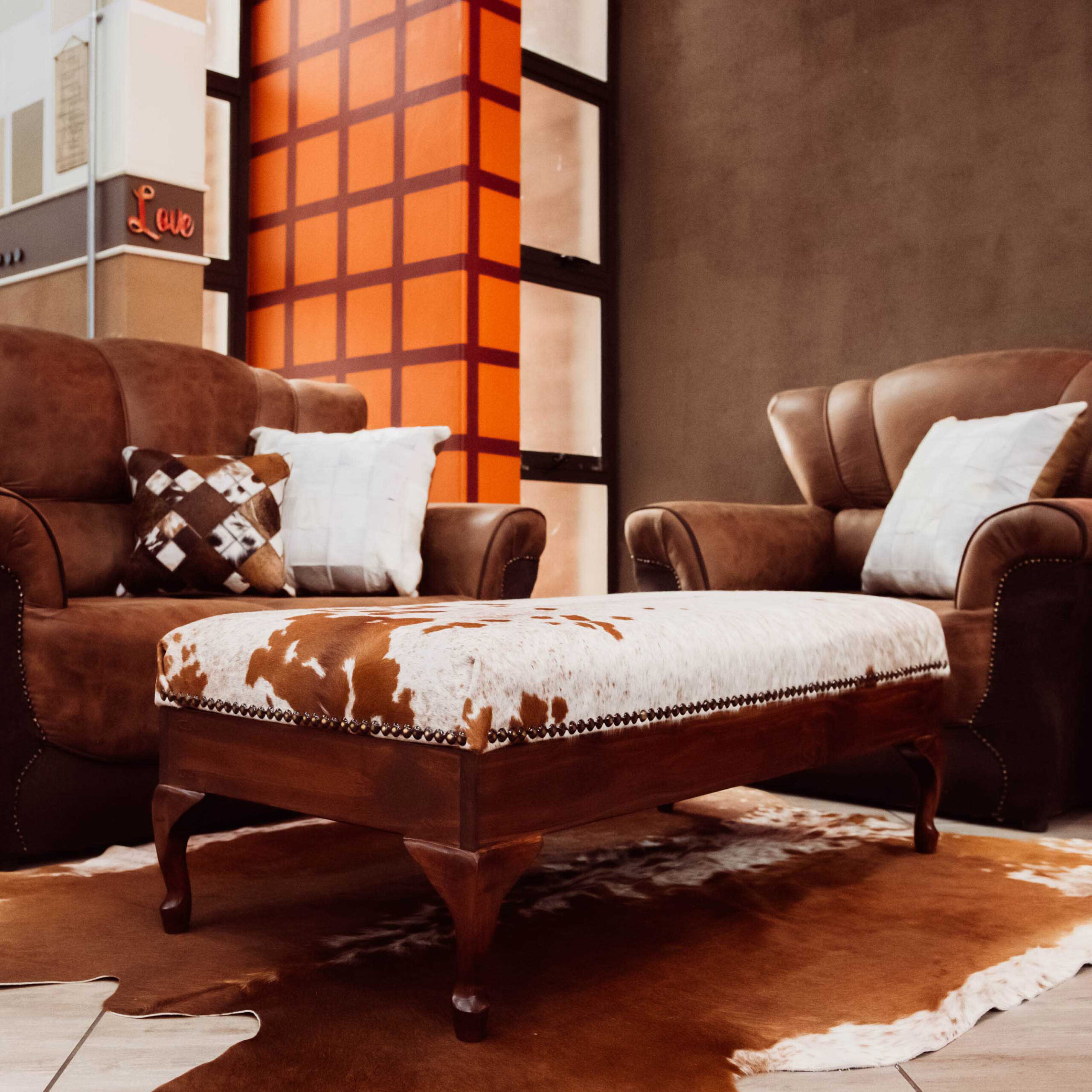
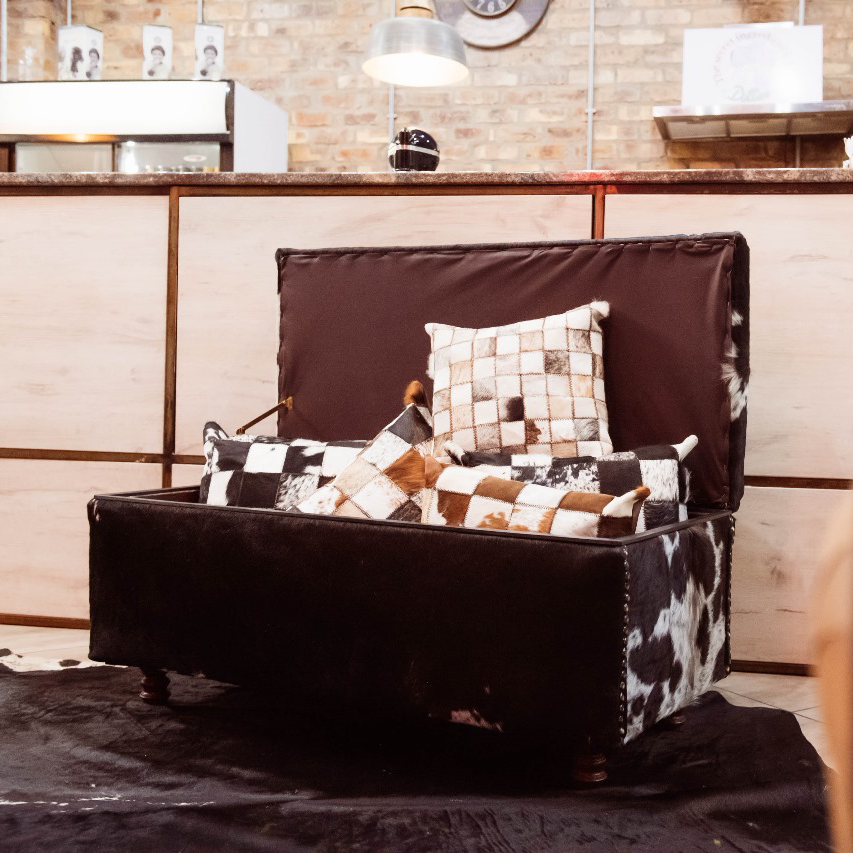
An Nguni ottoman can serve as a footrest, occasional seat or visual bridge between a sofa and whole hide. A storage blanket box may work at the end of a bed, provided there is enough clearance for the lid and housekeeping can open it safely. Confirm the intended load, dimensions and construction before treating any ottoman as frequent seating.
Repeat one ottoman shape in different natural patterns rather than forcing identical markings. That keeps the joinery consistent while celebrating the fact that every hide panel is unique.
Build and test one repeatable guest-room kit
A room kit gives the design team a repeatable set of dimensions, materials and practical checks without demanding identical natural markings. In safari lodge interior design, that distinction matters: the ottoman size, cushion construction and placement can remain consistent while each Nguni panel keeps its own colour balance and character. Start with one representative suite and treat it as a working prototype before ordering for the entire property.

In safari lodge interior design, place the sample ottoman where housekeeping can move around it easily, check the walking route after luggage is added and confirm that guests can use nearby doors, drawers and curtains without obstruction. Photograph the completed arrangement in daylight and evening light. A hide that feels subtle in a bright studio may look much stronger beneath warm bedside lamps, so approve the real room rather than a detached product sample.
- Record the ottoman height, width, depth and intended load.
- Specify the cushion size, leather edging and preferred colour family.
- Check clearance beside the bed, wardrobe, luggage rack and curtains.
- Test how easily staff can vacuum, make the bed and inspect the hide.
- Keep one labelled photograph and product reference for every room type.
For safari lodge interior design, invite a housekeeper, maintenance colleague and guest-facing team member to review the prototype. They notice operational details that a mood board cannot show, such as an awkward lifting point, a corner that catches a vacuum hose or a placement that competes with luggage. Adjust the specification once, then use the approved dimensions and positioning notes in the remaining suites.
This pilot-room method keeps safari lodge interior design coherent while respecting natural variation. It also creates a clear handover record for replacements: the team can match size, function and colour family without trying to duplicate a one-of-a-kind pattern. The result feels intentionally collected rather than randomly mixed, and the operational team knows how each piece should be placed, checked and cared for from opening day. Keep the approved room photographs with procurement records so future replacements can follow the same proportions, placement and practical clearance checks.
6. Bring local texture into dining and bar areas carefully
For safari lodge interior design, dining areas need selective Nguni placement because they involve food, moisture and chair movement. A hide may work on a protected wall, on the front of a host station or in a nearby lounge rather than directly beneath tables. Small leather and hide details on menu covers or display trays can continue the material story without placing a large piece in the highest-spill zone.
Where a rug is used, check chair clearance and ensure edges do not create a trip point. The arrangement must still function when staff reset tables quickly and guests move chairs independently.
7. Match each product to the actual traffic level
| Lodge area | Possible Nguni feature | Practical check |
|---|---|---|
| Reception | Whole hide wall display or blocked carpet | Clear luggage route and secure installation |
| Main lounge | Carpet, hide, ottoman or cushions | Correct size, furniture placement and cleaning access |
| Guest suite | Cushions or blanket-box ottoman | Lid clearance, guest use and housekeeping routine |
| Dining area | Wall feature or small accents | Distance from spills, heat and chair movement |
| Library or private lounge | Whole hide or statement ottoman | Sun exposure and low-to-medium traffic |
| Covered veranda | Only a product approved for the conditions | Humidity, wind, sunlight and dry storage |
A hair-on-hide care guide from Made Goods recommends gentle maintenance in the direction of the hair and careful treatment of spills. For hospitality use, create a written procedure and confirm the suitability of each exact product with the supplier rather than assuming domestic care guidance covers every commercial setting.
8. Source natural variation as a coordinated collection
Bulk sourcing for safari lodge interior design should begin with a visual brief: dimensions, dominant colours, acceptable contrast, room allocation and delivery sequence. Ask for current photographs of the actual hides and products. Number each selected piece and assign it to a room so the installation team does not make last-minute pattern decisions on site.
- Prepare room plans, measurements and reference photographs.
- Choose the shared colour family and acceptable pattern range.
- Confirm the number of hides, carpets, cushions and ottomans.
- Review photographs of the exact available pieces.
- Record which item belongs in each room or public area.
- Confirm production, delivery, inspection and installation dates.
9. Plan care, replacement and rotation before opening
A practical safari lodge interior design plan includes care from the start. Train housekeeping to remove dry dust gently, blot moisture promptly and report loose stitching, lifting edges or unusual wear. Never introduce a new chemical across the full piece without checking the maker’s instructions and testing discreetly. Keep a photographic record of each room at handover so changes in condition can be identified early.
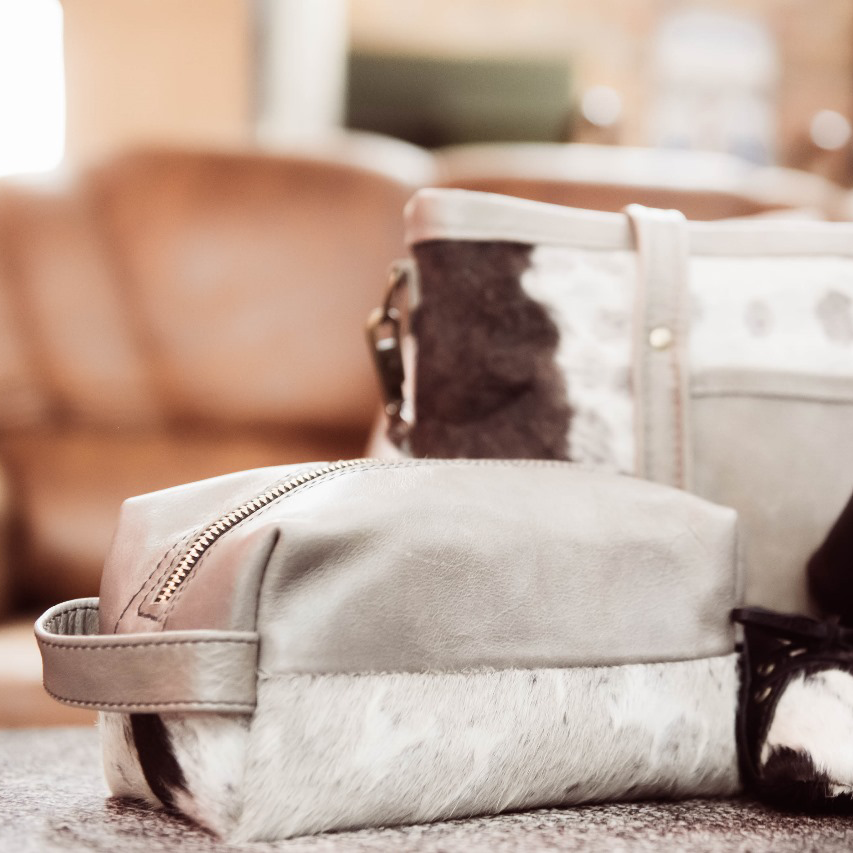
Where possible, hold one or two coordinating cushions as replacements and rotate movable pieces away from prolonged direct sunlight. For hides and made products, agree who to contact for repairs or specialist cleaning. This small operational plan protects both the guest experience and the procurement investment.
Frequently asked questions
Is Nguni hide suitable for safari lodge interiors?
Yes, when the exact hide or made product is matched to the room, traffic level, climate and care plan. High-spill or exposed areas need especially careful product selection.
Should every lodge room use the same Nguni pattern?
No. Natural markings are unique. Use a shared colour family, repeated product sizes and consistent surrounding materials to create cohesion without demanding identical patterns.
Where is the best place for a whole Nguni hide?
A reception focal wall, low-traffic private lounge or measured seating area can work well. Check circulation, direct sunlight, moisture and cleaning access before deciding.
Can a Nguni ottoman be used as guest seating?
Only if its construction and intended load are suitable. Confirm this with the supplier, and check stability, dimensions, edges and housekeeping access.
How should a lodge source several Nguni pieces?
Provide room measurements, quantities, colours and pattern preferences, then approve photographs of the exact pieces and assign each item to a room before delivery.
Create a local story that works in daily operation
The strongest safari lodge interior design uses Nguni hide with purpose. Set the palette, select exact pieces, match each product to traffic and train the team to care for it. A measured mix of hides, carpets, cushions and ottomans can give guests a genuine sense of place while remaining comfortable, functional and coherent across the property.