
Ladies Leather Wallet: 9 Smart Features Worth Checking
Contents
A ladies leather wallet is used many times a day, so small design choices quickly become important. Card capacity, note length, coin storage, zip clearance and the closed thickness all affect whether a wallet remains organised or becomes awkward to carry. These nine smart checks will help you compare genuine leather and Nguni options according to your handbag, payment habits and the items you actually use.
Start a ladies leather wallet comparison with your daily contents
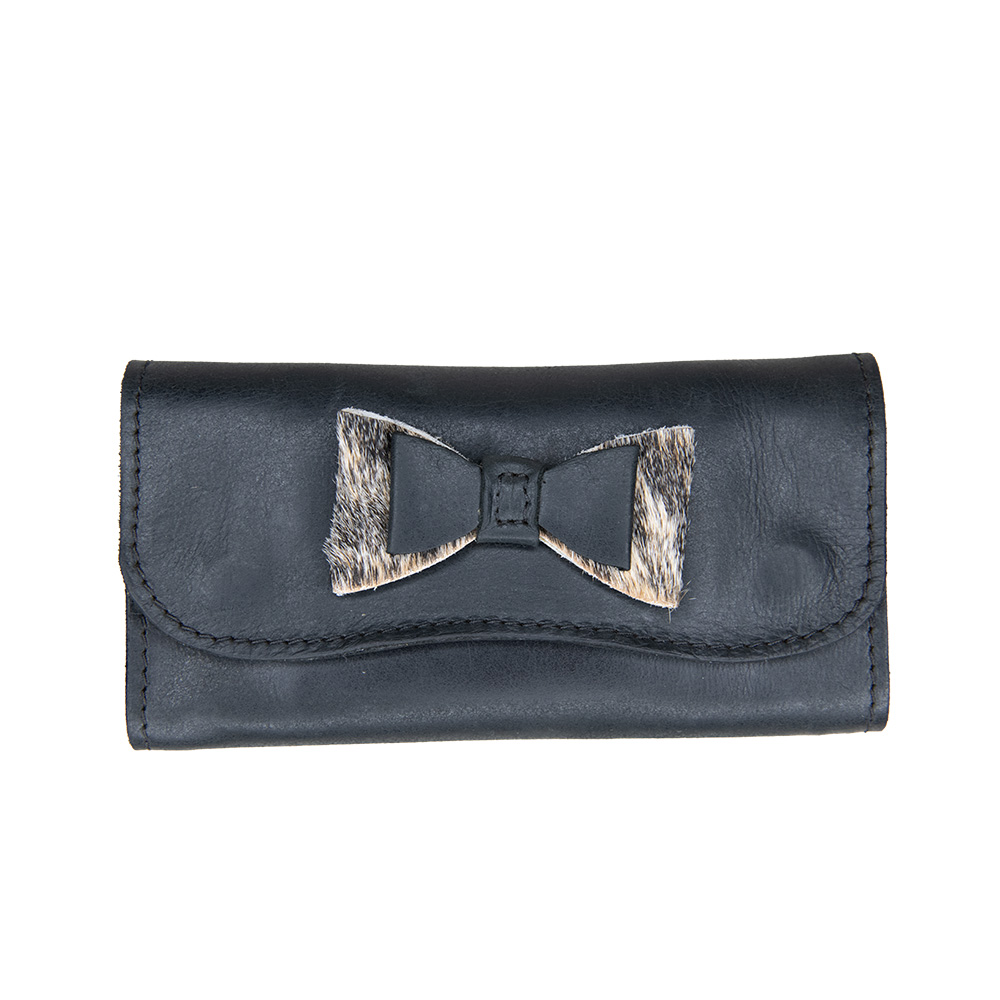
Empty your current wallet onto a table and sort cards, cash, coins, receipts and identification. Remove expired items before counting capacity. The Nguni ladies single wallet and Nguni ladies double wallet provide different formats, so the right choice depends on what you carry rather than which one has the most compartments.
Genuine leather develops character with handling, while an Nguni panel adds an individual natural pattern. Learn the basics of the material through the Leather Working Group, then judge the finished wallet on its exact construction, hardware and maker care guidance.
1. Count essential cards and add a little breathing room
Count the bank, licence, access and membership cards you genuinely need. Choose enough slots for each essential card without stacking several thick cards together. A new wallet should close comfortably from the start. Leaving one or two spare slots is sensible, but buying double the required capacity often encourages clutter and creates unnecessary bulk.
2. Check whether South African notes lie flat
Measure the longest banknote you normally carry and compare it with the internal note section. Notes should slide in without folding, catching a zip or protruding above the edge. If the wallet has two note compartments, use them for different currencies, receipts or budgeting categories rather than filling both with loose paper.
3. Decide if you need a secure coin section
A zip or press-stud coin pocket is useful when you regularly carry coins, but it adds thickness. Test whether the closure remains easy to operate when the wallet is full. Do not overfill a narrow coin pocket, because concentrated metal weight strains lining, seams and the outer closure.
- Carry only the coins you regularly use.
- Keep keys outside the wallet.
- Clear receipts before they jam the closure.
- Check lining corners for trapped coins.
- Open the coin section over a table during the first test.

4. Compare a single and double wallet format
A single wallet is usually lighter and simpler. A double wallet offers more separated storage and may suit someone carrying several documents, but it takes more handbag space. Measure the pocket or compartment where the ladies leather wallet will live. A format that fits neatly and can be found quickly is often more useful than maximum capacity.
5. Test the main zip or press-stud under light load
Close the wallet with the intended cards, notes and a few coins. A zip should move smoothly around corners without pulling the lining. A press-stud should align without forcing the sides together. Hardware should remain easy to operate with one hand, but should not open accidentally inside a bag.
6. Look at stitching, folded edges and lining
Consistent stitching and tidy edge finishing help a wallet withstand frequent handling. Check corners, card-slot openings and the points beside the main closure. The lining should sit flat without loose threads. Natural variation in leather colour is different from a weak seam or poorly aligned pocket, so evaluate construction separately from appearance.
7. Choose an Nguni pattern you will enjoy every day
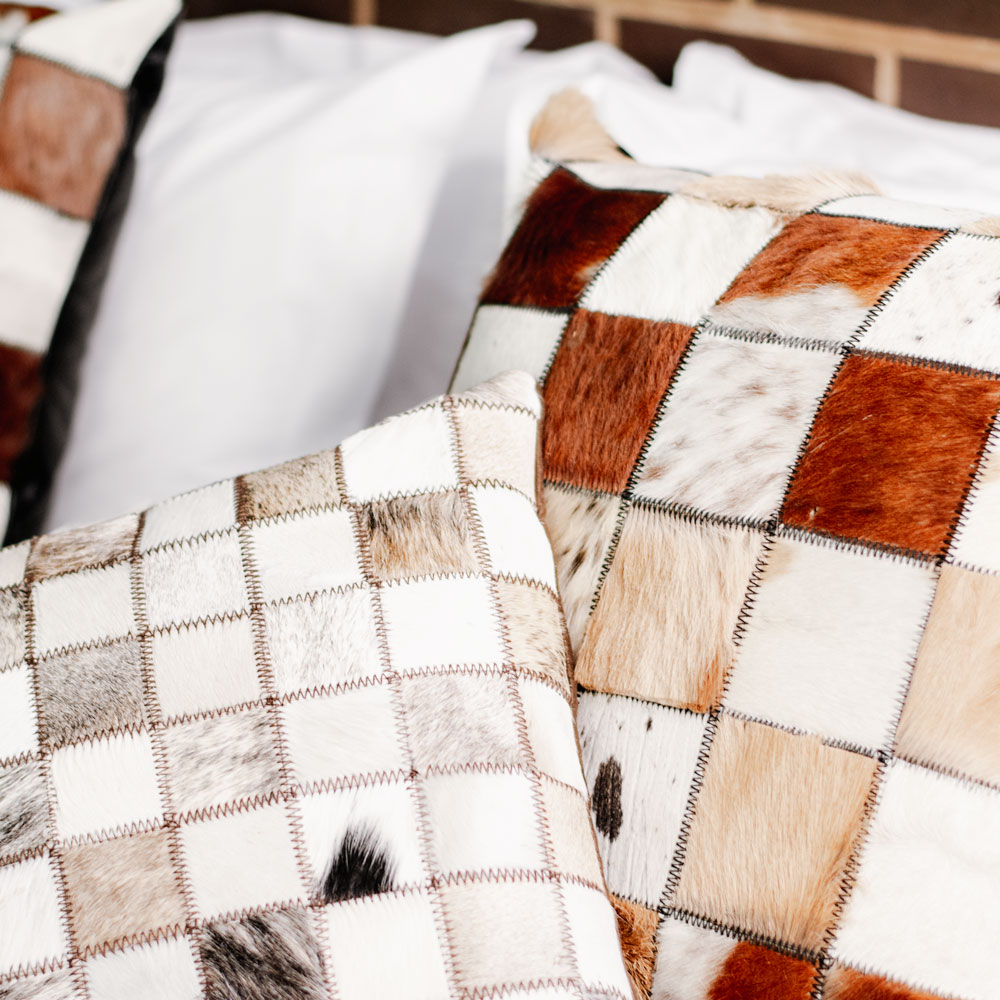
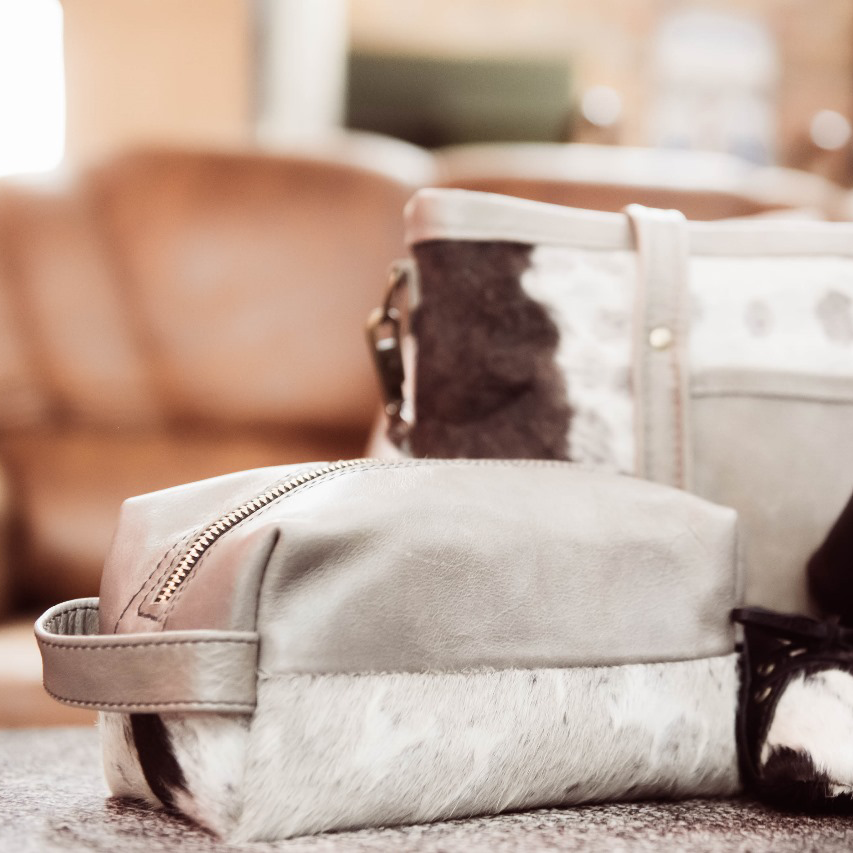
Hair-on-hide markings make every wallet visually different. Ask whether the image shows the exact piece and inspect how the pattern sits across folds and closures. A bold black-and-white panel is easy to find in a dark handbag, while brown or brindle feels warmer. Variation is part of a genuine natural panel, not a printing fault.
8. Keep contactless cards and personal data organised
A wallet helps organisation, but security habits remain important. Carry only necessary cards, enable transaction alerts and know how to freeze a lost bank card. If RFID-blocking matters to you, confirm the exact product specification rather than assuming any leather wallet provides it. Store sensitive numbers securely elsewhere, not on a note inside the wallet.
9. Plan gentle leather and hide care
Keep the wallet away from leaking cosmetics, pens and damp compartments. Wipe smooth leather only with products approved by the maker, and brush a hair-on-hide panel gently in the hair direction. Do not overstuff the wallet to stretch card slots. Store it empty in a breathable place when it will not be used for a long period.
Ladies leather wallet feature comparison
| Feature | Single wallet | Double wallet |
|---|---|---|
| Everyday weight | Usually lighter | Usually heavier |
| Card organisation | Simple essential set | More separated capacity |
| Cash and receipts | One compact area | More room for categories |
| Handbag space | Fits smaller compartments | Needs a larger pocket |
| Best for | Minimal daily carry | Documents and fuller organisation |
Set up the wallet so it stays organised
Assign every slot a purpose and keep the most-used card where it can be removed without exposing the whole wallet. Put receipts in one temporary section and clear them weekly. Store coins in their closure rather than loose beside cards. This routine prevents a ladies leather wallet from becoming thicker and harder to close each month.
Photograph the wallet’s contents list without recording full card numbers. If the wallet is lost, the list makes cancellation easier. Keep emergency contact information in a safe digital or home record rather than carrying sensitive details together with the cards they protect.
- Count only essential cards.
- Confirm notes fit without folding.
- Choose whether a coin section is necessary.
- Measure the closed wallet against the handbag pocket.
- Test the main closure with a normal load.
- Inspect stitching, lining and card-slot edges.
- Confirm any security feature in the product specification.

Frequently asked questions
How many cards should a ladies wallet hold?
Choose capacity for the cards you genuinely use plus one or two spare slots. Avoid stacking multiple thick cards in one slot.
Is a double wallet better than a single wallet?
It is better only when you need the additional separated capacity and have enough handbag space. A single wallet is lighter for minimal carry.
Do all leather wallets block RFID signals?
No. Confirm RFID protection in the exact product specification if that feature matters to you.
How do I clean a Nguni wallet?
Brush hair-on-hide gently in the hair direction and follow the maker’s instructions for smooth leather. Avoid soaking or harsh household cleaners.
Will the Nguni pattern match the photograph?
Ask whether the listing shows the exact piece. Natural hair-on-hide patterns vary from one wallet to another.
Choose the format that fits your real routine
A good ladies leather wallet holds essential cards, full-length notes and necessary coins without strain. Compare the single and double formats, test the closure with a realistic load and inspect the small construction details that receive daily wear. When those essentials are right, the individual Nguni pattern becomes a distinctive South African finish rather than a substitute for function.