
Leather Toiletry Bag: 9 Smart Travel and Care Tips
Contents
A leather toiletry bag should organise daily essentials without exposing natural leather or hair-on-hide to avoidable leaks. The best size depends on trip length, bottle format and whether the bag must share limited luggage space. These nine travel and care tips explain how to choose the shape, test the zip, separate liquids, pack efficiently and protect a distinctive Nguni toiletry bag between journeys.

Choose a leather toiletry bag for what you really pack
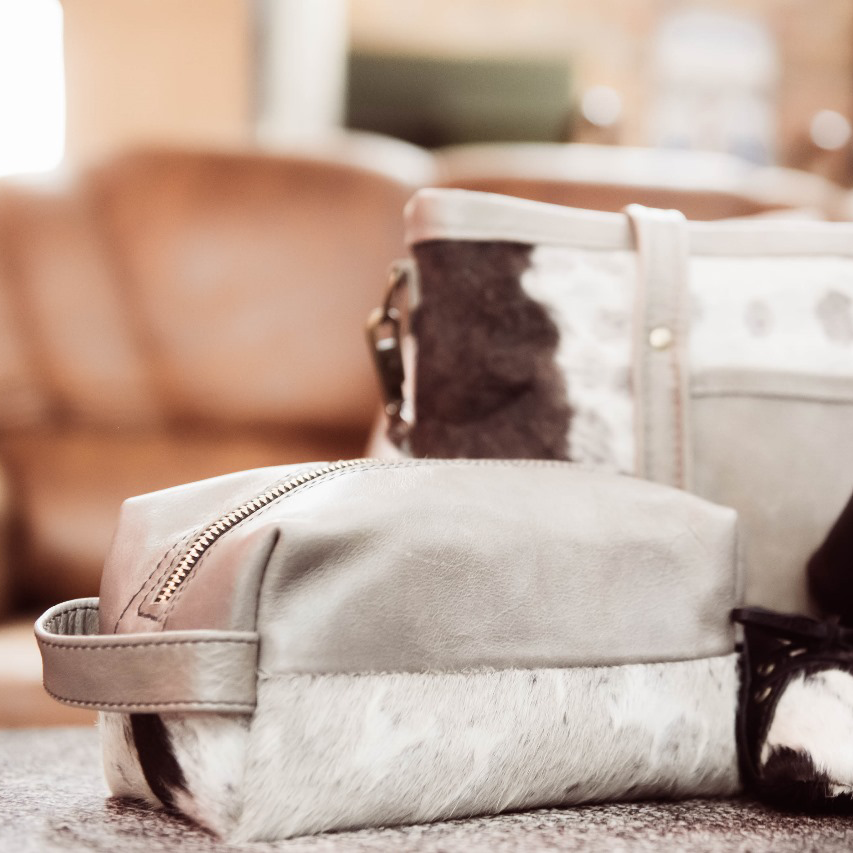
Collect the products used on an ordinary morning and remove duplicates or oversized containers. Arrange them beside a ruler before comparing bags. The Nguni toiletry bag provides a compact format with an individual natural panel; exact pattern and usable internal volume matter more than an optimistic product category name.
Leather is durable but should not be treated as a substitute for leak-proof packaging. The Leather Working Group provides wider material information, while the maker’s instructions remain the authority for the exact finished bag. Protect the outer surface by controlling liquids inside.
1. Choose capacity by trip length and routine
A weekend bag may need only travel-size cleanser, toothpaste, brush and a few essentials. A longer trip needs more volume, but decanting can still reduce weight. Lay out one complete routine before choosing. If the bag is too large, bottles roll and knock together; if too small, the zip and seams remain under constant strain.
2. Measure the tallest bottle and zip opening
Check whether the tallest required container fits horizontally or upright and whether it can pass through the zip without forcing the teeth apart. A wide opening makes packing easier, while a stable base helps the bag remain upright. Remember that rigid caps and pumps require more usable space than soft packets.
3. Put every liquid in a second sealed layer
Close caps firmly, lock pumps and place liquids in a transparent resealable pouch before they enter the leather toiletry bag. This simple inner barrier protects lining and outer material while making airport inspection easier. Do not rely on the main bag zip to contain a shampoo or lotion leak.
- Use travel-size containers with reliable caps.
- Place oils and coloured products in separate pouches.
- Keep tablets and electronics outside the liquid section.
- Do not fill bottles completely when pressure may change.
- Check every closure again before the return journey.

4. Separate sharp and abrasive items
Razors, nail tools, metal combs and brush handles can scratch lining or press through soft products. Use protective caps or a small internal pouch. Follow current transport rules for sharp items and cabin luggage. A well-organised bag protects both the leather and the products from one another.
5. Test the zip around the full curve
Run the zip slowly with the bag empty and again with a normal load. It should not catch the lining or require pulling the sides together. Keep loose plastic pouches below the zip path. If the bag must be forced closed, remove a product rather than stretching seams or damaging the slider.
6. Keep the Nguni panel away from wet counters
Place the bag on a dry shelf, towel or luggage stand rather than beside a basin or shower. Hair-on-hide and smooth leather should not be left in standing water. If the outer surface is splashed, blot promptly with a clean absorbent cloth and follow the maker’s advice instead of rubbing or applying heat.
7. Pack the bag where luggage pressure is controlled
Position rigid bottles centrally and surround the toiletry bag with soft clothing, without crushing it beneath shoes or a heavy case frame. Keep the bag accessible if security checks may require liquids to be removed. A consistent luggage position reduces compression and makes leaks easier to detect early.
8. Clean the interior before residue builds up
Empty the bag after every trip. Remove loose powder and wipe the lining only as recommended for its material. Let it dry open in a ventilated room, away from direct heat. Brush an Nguni panel gently in the hair direction. Never place a natural leather toiletry bag in a washing machine unless the maker explicitly states that it is safe.
9. Store it empty and breathable
Do not store products in the bag for months. Residue, pressure and fragrance can affect lining and leather. Shape the empty bag lightly with clean tissue, leave the zip partly open and keep it in a dry, breathable cupboard. Avoid sealed plastic, damp bathrooms and prolonged direct sunlight.
Leather toiletry bag packing guide
| Item | Best packing method | Main risk controlled |
|---|---|---|
| Liquids | Sealed transparent inner pouch | Leaks and staining |
| Pumps | Lock or cap, then bag separately | Accidental dispensing |
| Razors | Protective head cover | Cuts and lining damage |
| Brushes | Dry fully before packing | Moisture and residue |
| Medication | Original labelled packaging outside liquids | Identification and access |
Use a five-minute unpacking routine
As soon as the trip ends, remove every item and check the lining, corners and zip. Wipe product containers before returning them to the bathroom, then air the empty bag. Early attention prevents a small leak or powder spill from becoming a permanent mark.
Keep a ready-to-pack checklist rather than leaving duplicates inside. The routine makes each trip faster and allows the leather toiletry bag to rest empty between uses. For broader natural material advice, the cowhide bag care guide explains safe dusting, storage and spill response.
- Lay out the exact routine before choosing size.
- Measure tall bottles and the zip opening.
- Double-bag every liquid.
- Cap sharp or abrasive items.
- Keep the bag off wet bathroom surfaces.
- Unpack and air it after every journey.
- Store it empty in a dry, breathable cupboard.

Frequently asked questions
Can liquids go directly into a leather toiletry bag?
Use a separate sealed inner pouch for every liquid. The outer bag should organise and protect, not act as leak-proof containment.
Can I wash a leather toiletry bag in a machine?
Not unless the maker explicitly permits it. Natural leather and hair-on-hide generally need controlled, material-specific care.
What size toiletry bag is best for a weekend?
Choose the smallest bag that fits one complete travel-size routine without forcing the zip or stacking rigid bottles under pressure.
How should the bag be stored?
Store it empty, dry and lightly shaped in a breathable cupboard away from heat and direct sun.
Can a toiletry bag go in cabin luggage?
The bag can, but liquids and sharp items must comply with the current rules of the airport, airline and destination.
Protect the natural exterior by controlling the contents
A leather toiletry bag works best when its size matches the routine, every liquid has a sealed inner layer and the bag is unpacked after each trip. Test the zip, isolate sharp items and keep the Nguni surface away from wet counters. Those simple habits protect both the travel essentials inside and the distinctive natural material outside.