
How to Care for a Cowhide Bag: 9 Safe Nguni Leather Tips
Learning how to care for a cowhide bag starts with one important distinction: patterned hair-on-hide and smooth leather do not always need the same treatment. A genuine Nguni bag may also include fabric lining and metal hardware. These nine safe tips explain how to clean, protect and store each part without flattening the hair, darkening the hide or over-conditioning the leather.
body.single-post .site-main{max-width:1140px;margin:0 auto;padding:64px 24px 88px;color:#342f2c} body.single-post .page-header{max-width:920px;margin:0 auto 34px;text-align:center} body.single-post .page-header .entry-title{margin:0;font-size:clamp(34px,4.5vw,58px);line-height:1.08;letter-spacing:-.025em;text-transform:none!important;color:#2b2927} body.single-post .page-content{max-width:860px;margin:0 auto;font-size:17px;line-height:1.82;color:#514a46} body.single-post .page-content>p:first-of-type{font-size:21px;line-height:1.65;color:#342f2c} body.single-post .page-content h2{margin:52px 0 18px;font-size:clamp(27px,3vw,38px);line-height:1.2;color:#2f2925} body.single-post .page-content h3{margin:34px 0 12px;font-size:23px;line-height:1.3;color:#3a312c} body.single-post .wp-block-image{margin:34px auto} body.single-post .wp-block-image img{width:100%;max-height:620px;object-fit:cover;border-radius:20px;box-shadow:0 18px 48px rgba(50,38,29,.14)} body.single-post .wp-block-image figcaption{margin-top:10px;color:#756960;font-size:14px;text-align:center} body.single-post .wp-block-table{margin:30px 0;overflow-x:auto} body.single-post .wp-block-table table{border-collapse:collapse;width:100%} body.single-post .wp-block-table th,body.single-post .wp-block-table td{padding:14px;border:1px solid #ded7d1;text-align:left} body.single-post .hon-video{position:relative;padding-bottom:56.25%;height:0;overflow:hidden;margin:34px 0;border-radius:20px;box-shadow:0 18px 48px rgba(50,38,29,.14)} body.single-post .hon-video iframe{position:absolute;inset:0;width:100%;height:100%;border:0} body.single-post .hon-faq details{margin:12px 0;padding:18px 20px;border:1px solid #ded7d1;border-radius:12px;background:#faf8f6} body.single-post .hon-faq summary{cursor:pointer;font-weight:700;color:#342f2c} body.single-post .wp-block-button__link{background:#342f2c;color:#fff;border-radius:999px;padding:14px 24px} body.single-post #rank-math-toc{margin:34px 0;padding:24px 28px;border:1px solid #ded7d1;border-radius:16px;background:#faf8f6} body.single-post #rank-math-toc h2{margin:0 0 14px;font-size:24px;line-height:1.25} body.single-post #rank-math-toc ul{margin:0;padding-left:22px;columns:2;column-gap:36px} body.single-post #rank-math-toc li{margin:7px 0;break-inside:avoid} body.single-post #rank-math-toc a{color:#5a4337;text-decoration:underline;text-underline-offset:3px} @media(max-width:720px){body.single-post #rank-math-toc ul{columns:1}}Contents
How to care for a cowhide bag starts with the material
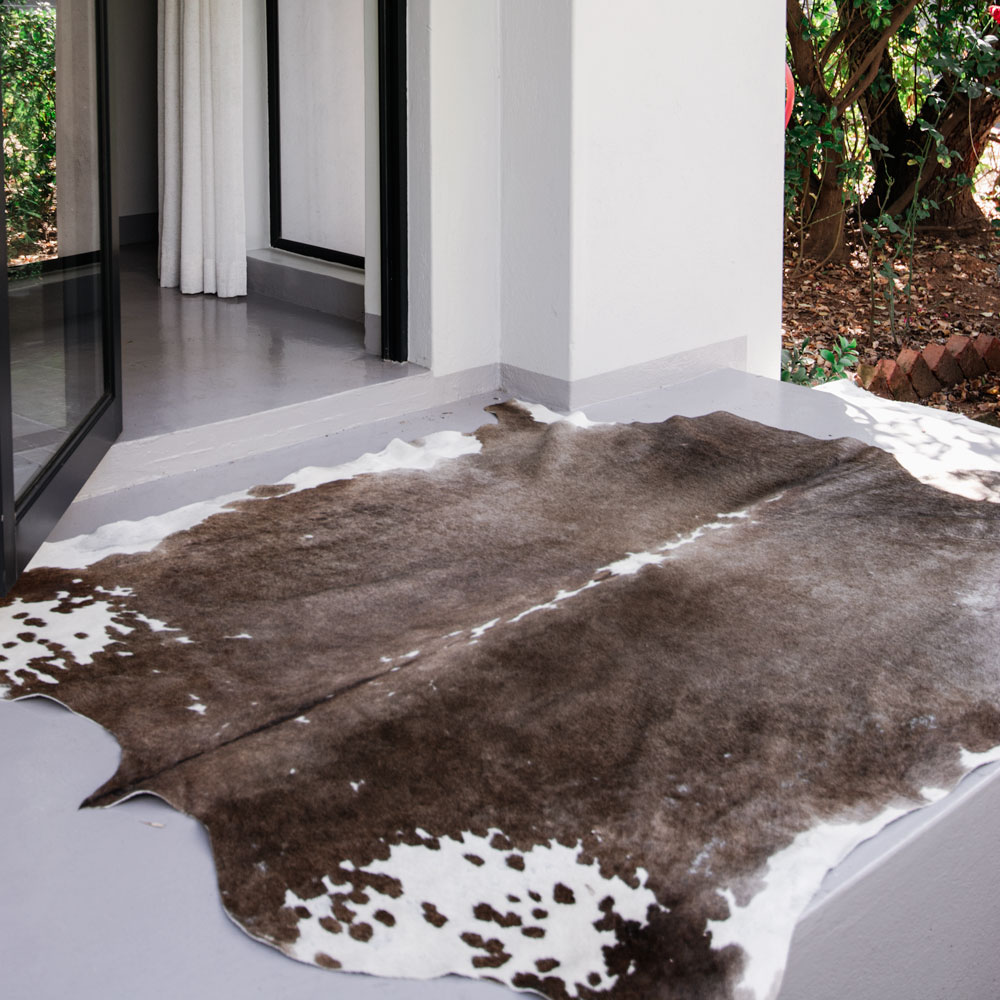
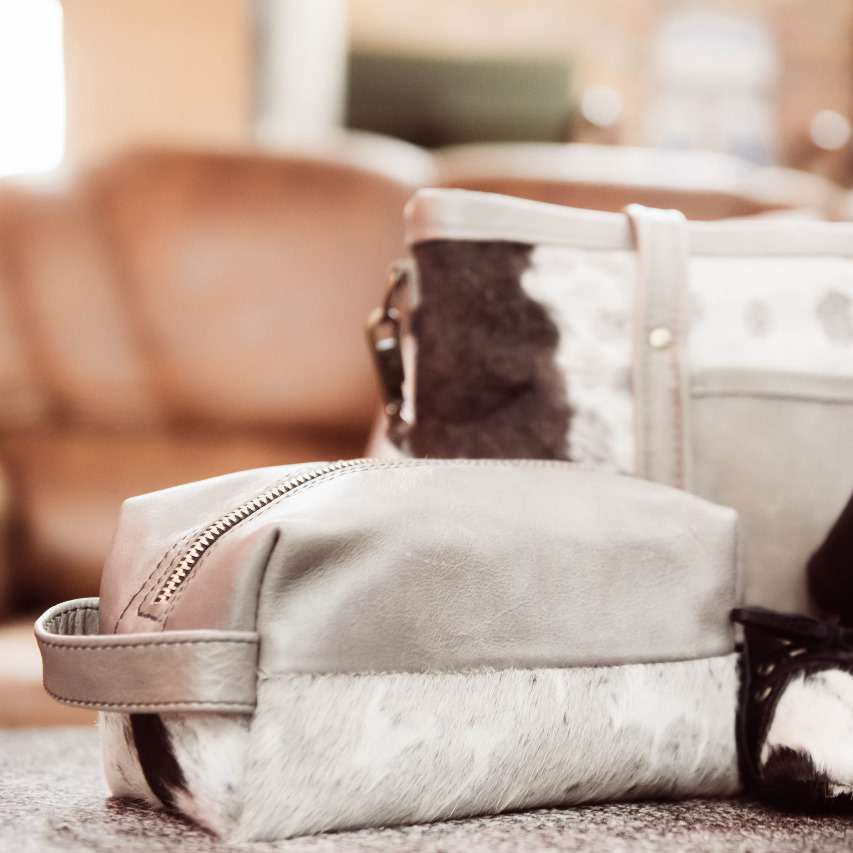
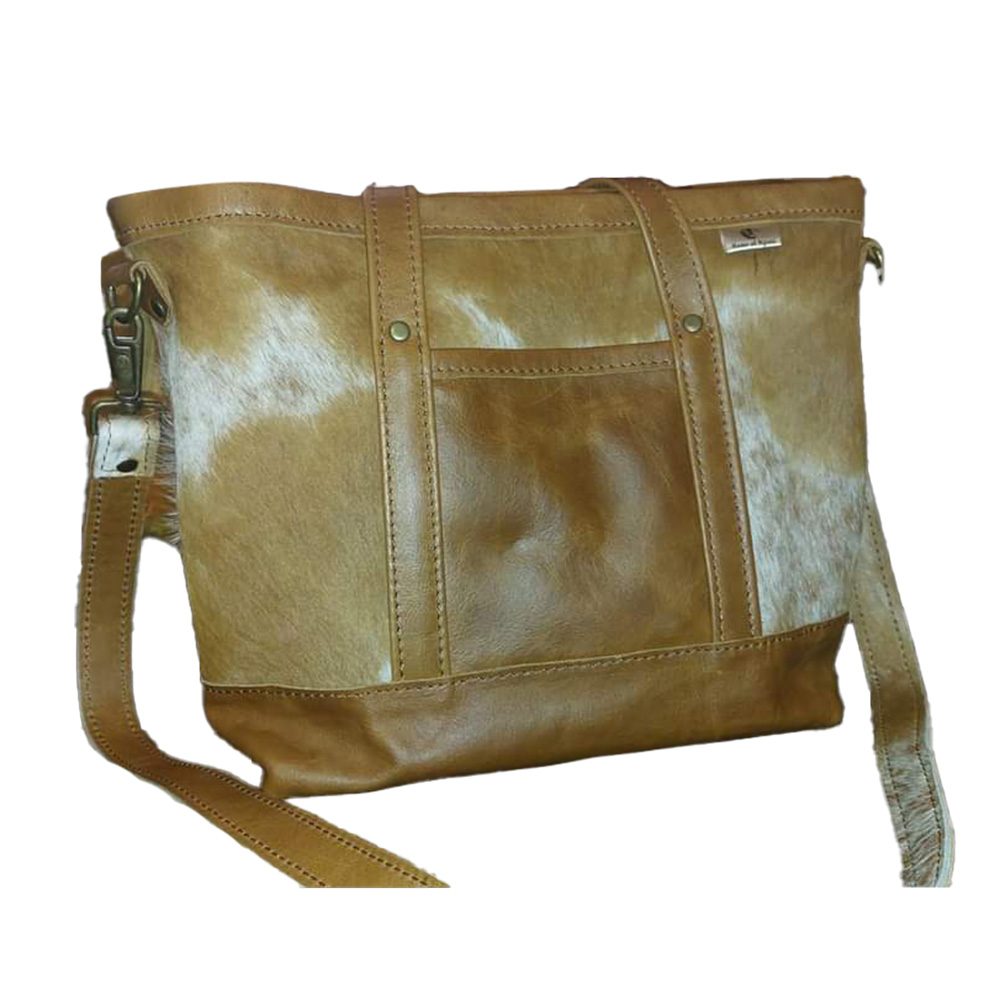
Hair-on-hide is leather with the natural hair retained. It gives every Nguni bag its individual colour and pattern, but the hair can be rubbed, soaked or pulled if it is treated like ordinary polished leather. Smooth leather is the hair-free material commonly used for straps, bases, piping and handles. It may tolerate a suitable leather conditioner, while hair-on-hide generally should not be covered in oily cream.
Check the exact construction before beginning. A Nguni skin and leather tote bag combines patterned hide with smooth leather, while a Nguni full-skin tote bag places more hair-on-hide across the design. A compact Nguni sling bag has straps, edges and hardware that receive regular contact. Care should follow the materials and high-wear areas of the actual bag, not a single generic method.
| Bag area | Safe routine care | What to avoid |
|---|---|---|
| Hair-on-hide panel | Soft dry cloth or gentle brush in the direction of the hair | Soaking, scrubbing, oils and pulling against the hair |
| Smooth leather | Dry dusting and a compatible leather product after a patch test | Household spray, silicone polish and too much conditioner |
| Fabric lining | Empty, shake gently and spot clean only when suitable | Saturating the lining while it remains inside the bag |
| Metal hardware | Wipe with a clean dry microfibre cloth | Abrasive polish touching the leather or hide |
The Made Goods care instructions also treat leather and hair-on-hide as distinct surfaces, which is a useful principle for any mixed-material bag. Product finishes vary, so test any treatment in a hidden place and follow the maker’s instructions on its label.
1. Empty and inspect the bag before cleaning
A useful first step in how to care for a cowhide bag is to remove every item, open the pockets and shake out loose crumbs outdoors while supporting the bag. Look for wet areas, lifted hair, colour transfer, scratches, loose stitching and damaged hardware. Inspection prevents a minor problem from being rubbed deeper into the surface. Photograph an unusual mark before treating it.
2. Remove everyday dust with a gentle touch
After regular use, wipe the smooth leather with a clean, dry, lint-free cloth. For the patterned hide, use a very soft natural-bristle brush or dry cloth and work with the direction in which the hair lies. Use light passes rather than pressure. This removes surface dust before it works into seams and stops particles from acting like fine sandpaper on handles and corners.
3. Brush hair-on-hide in its natural direction
The safest answer to how to care for a cowhide bag is often less treatment, not more. Stroke the hide with your hand to find the natural direction, then brush the same way. Do not repeatedly brush backwards to make it look fuller. Friction at the side that rests against your clothing is normal, so rotate how you carry a tote where practical and avoid trapping the patterned panel against rough surfaces.
4. Blot a fresh spill instead of rubbing it
Knowing how to care for a cowhide bag also means acting promptly when a spill occurs. Place the bag upright, remove the contents and blot the liquid with a clean white absorbent cloth. Press and lift without rubbing. Work from the outside of the damp area towards the centre so that the mark does not spread. Allow the bag to dry naturally, away from a heater, hairdryer or strong sun.
Do not soak hair-on-hide to chase a stain. Our guide on how to clean Nguni rugs explains the same blotting principle for larger pieces. Ask a leather cleaner about ink, oil, makeup or old unknown stains.

5. Condition smooth leather only when appropriate
A compatible conditioner can help certain smooth leathers remain supple, but it should not automatically be applied to the hair-on-hide. Read the product label, confirm that it suits the leather finish and test a tiny hidden area. Wait for the test to dry fully because conditioners can darken pale leather or change its sheen. Apply a minimal amount to the cloth first, not directly onto the bag.
More conditioner is not better. Excess product can attract dust, transfer to clothing and soften structure. A South African reference, Ground Leather’s bag care guide, also recommends light cleaning, sparing conditioning and natural drying.
6. Keep the bag away from heat, damp and harsh sunlight
Leather responds to its environment. Prolonged heat can dry and stiffen it, damp storage may encourage odour or mould, and direct ultraviolet light can fade both smooth leather and natural markings. Do not leave the bag in a hot parked car, on a bathroom floor or beside a sunny window for days. If it becomes wet in rain, blot it, open it and let moving room air do the drying.
7. Store it upright, supported and able to breathe
When learning how to care for a cowhide bag, storage is as important as cleaning. When the bag is not in use, empty it and fill it loosely with clean acid-free tissue or a soft undyed cotton cloth. Support the body without stretching it. Place it upright in a breathable dust bag, with enough space that another item does not crush the hair-on-hide. Avoid sealed plastic for long-term storage because trapped humidity cannot escape.
8. Protect handles, corners, lining and hardware
Everyday habits are central to how to care for a cowhide bag because handles and corners usually show wear first. Clean hands before carrying pale leather, keep pens and cosmetics inside pouches, and avoid overloading the bag. Excess weight pulls on seams and changes the silhouette. Wipe hardware dry after contact with rain, but keep metal polish away from the surrounding hide and leather.
For the lining, use a small handheld vacuum on its lowest setting only if the lining can be safely pulled away from the leather, or remove crumbs with a soft brush. Spot-test any fabric method. When comparing styles in the Home of Nguni bag collection, consider the size you genuinely need so that daily overfilling does not become routine.
9. Know when professional care is the safer choice
Part of learning how to care for a cowhide bag is knowing when to stop home treatment. Seek specialist help if you see mould, a spreading water mark, ink, oil, colour loss, cracking, loose hair in patches or damaged stitching. A specialist can assess the material and choose a controlled method. Tell them that the bag includes genuine hair-on-hide as well as smooth leather, and show photographs of its original colour.
Create a safe care kit and patch-test record
A dedicated care kit makes how to care for a cowhide bag simpler when dust, rain or a fresh spill needs attention. Keep the tools together in a clean container, separate from shoe polish and household chemicals. Label every cloth so that conditioner residue from smooth leather never reaches the natural hair. Replace stained cloths rather than washing them with strongly scented detergent, and check that brushes remain soft, clean and free of grit before each use.
- Two clean white cotton cloths for blotting and dry wiping.
- A soft natural-bristle brush reserved only for hair-on-hide.
- Acid-free tissue or undyed cotton for supporting the empty bag.
- A small card listing the bag’s materials, purchase details and care advice.
- The contact details of a reputable leather repair or cleaning specialist.
Before a new care product touches a visible area, note its brand, intended material and test date. Apply the smallest possible amount beneath the base or behind a trim section, then allow it to dry completely in normal room conditions. Compare colour, sheen, texture and flexibility in daylight. A written patch-test record turns how to care for a cowhide bag into a repeatable routine and prevents another family member from accidentally repeating a product that caused darkening or residue.

A practical approach to how to care for a cowhide bag under pressure is to add a simple spill plan to the card: empty the bag, blot with a white cloth, reshape it and dry it naturally in shade. Include a reminder not to rub, soak or heat the hide. When several people use or pack the bag, this short instruction prevents a well-meant emergency clean from becoming permanent damage. Review the kit every few months and discard expired, contaminated or unlabelled products.
A simple Nguni bag care routine
- After use: empty rubbish, wipe dry handles and check for fresh spills.
- Weekly during frequent use: dust the smooth leather and gently brush with the hair.
- Monthly: inspect stitching, corners, lining, strap attachments and hardware.
- Before storage: clean dry surfaces, support the shape and use a breathable cover.
- When damage appears: stop experimenting and ask a qualified leather specialist.
Frequently asked questions
Can I use leather conditioner on a cowhide bag?
Use a compatible conditioner sparingly on suitable smooth leather only after a hidden patch test. Do not spread an oily conditioner across the hair-on-hide unless the bag maker specifically recommends it.
How do I clean the hair on a Nguni bag?
Remove dry dust with a soft cloth or gentle brush, always working in the natural direction of the hair. Do not soak, scrub backwards or pull at individual hairs.
What should I do if my cowhide bag gets wet?
Empty it, blot moisture with a clean white cloth, reshape it gently and allow it to dry naturally in ventilated shade. Do not use a hairdryer, heater or tumble dryer.
Can I use baby wipes or household cleaner?
No. Alcohol, fragrance, detergent and other ingredients may strip a finish, move colour or leave residue. Use only a product confirmed for the exact material after a patch test.
How should I store an Nguni tote bag?
Store it upright, lightly filled with clean tissue or undyed cotton, inside a breathable dust bag. Keep it away from damp, heat, strong sun and items that crush the hide.
How often should I condition the leather?
There is no universal timetable because leather finishes and use differ. Condition suitable smooth leather only when needed and according to the product or maker’s guidance. Avoid over-conditioning.
How to care for a cowhide bag for years of use
The best approach to how to care for a cowhide bag is gentle and material-specific: brush the natural hair in its direction, blot spills, treat smooth leather separately, protect the structure and let every damp area dry naturally. Small routine checks are safer than aggressive occasional cleaning. With thoughtful handling and timely professional repair, an authentic Nguni bag can keep its distinctive pattern, shape and character through years of everyday use.