
Animal Hide Rugs: 7 Beautiful Room Placement Ideas
Contents
Genuine animal hide rugs bring an organic outline, natural markings and textural contrast to a room. Their irregular shape can define a seating group, soften the side of a bed, add warmth beneath a small table or become wall art when floor space is limited. These seven placement ideas focus on proportion, walking routes, furniture contact, daylight and care so the hide looks intentional and remains practical.

Measure animal hide rugs as irregular shapes
Record the greatest length and width of the exact hide, then study the photograph to see where the outline narrows. Tape that footprint on the floor before moving furniture. Home of Nguni’s genuine Nguni hides provide individual South African options, while the size guide explains detailed room measurement.
Basic interior design principles such as proportion, balance and circulation are especially useful with natural shapes. Do not force an irregular hide to imitate a rectangular rug. Use its broad body to anchor the area and let the legs and edges create movement.
1. Centre the broad body in a lounge seating group
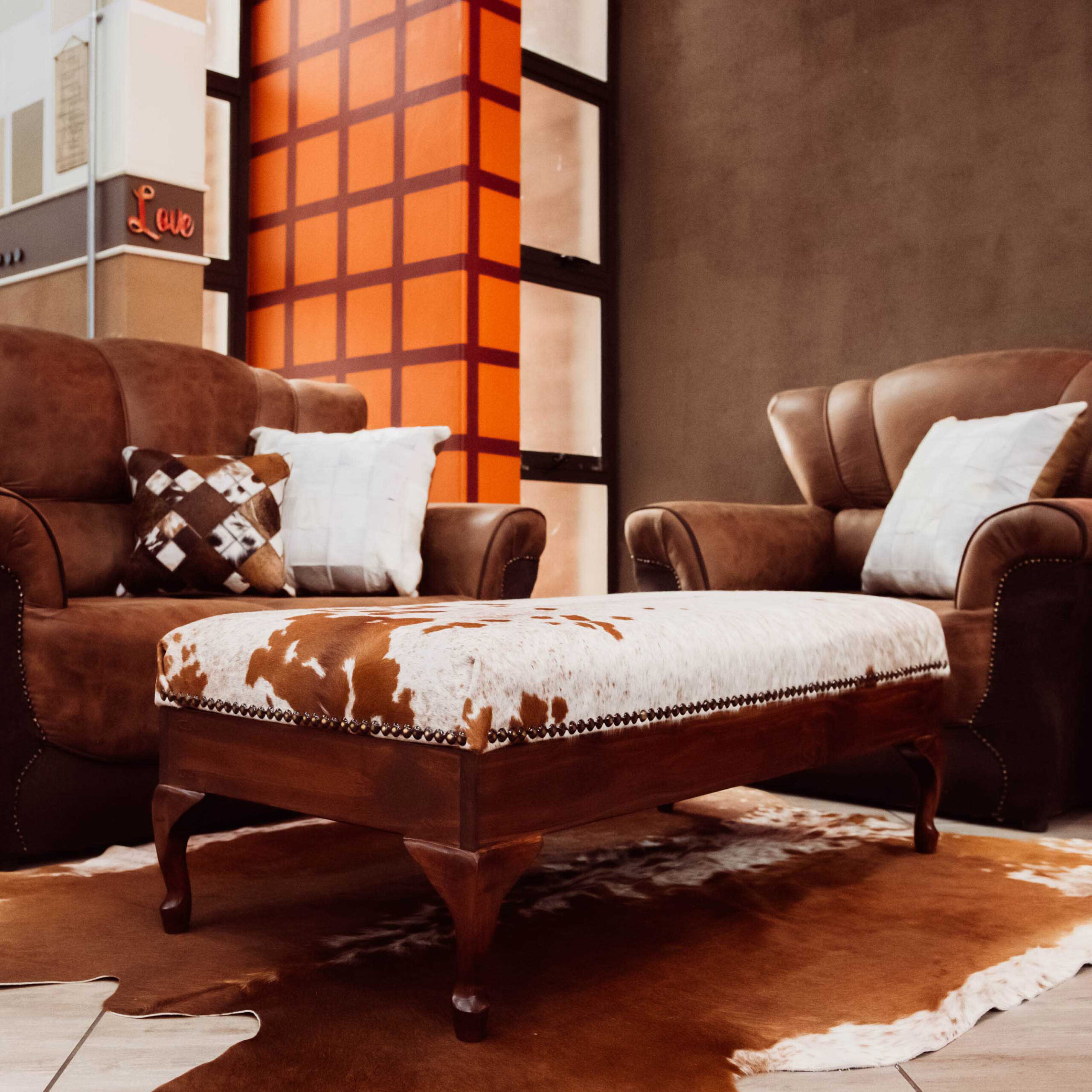
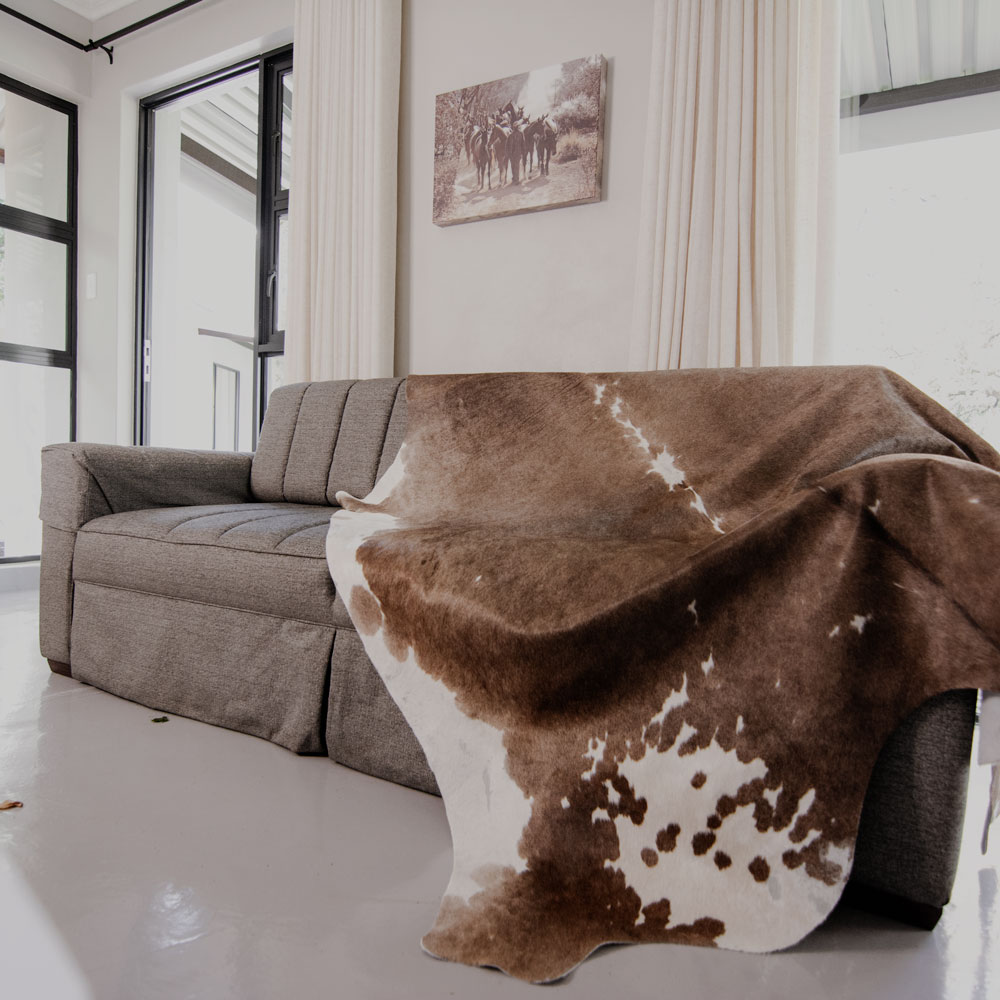
Place the widest part beneath or just in front of the coffee table and let the hide extend towards the sofa. Front furniture legs may overlap slightly if they do not pinch a thin edge. Keep the narrow legs away from the main route into the seating area. The result should connect the group without hiding the complete pattern.
2. Add softness beside or below a bed
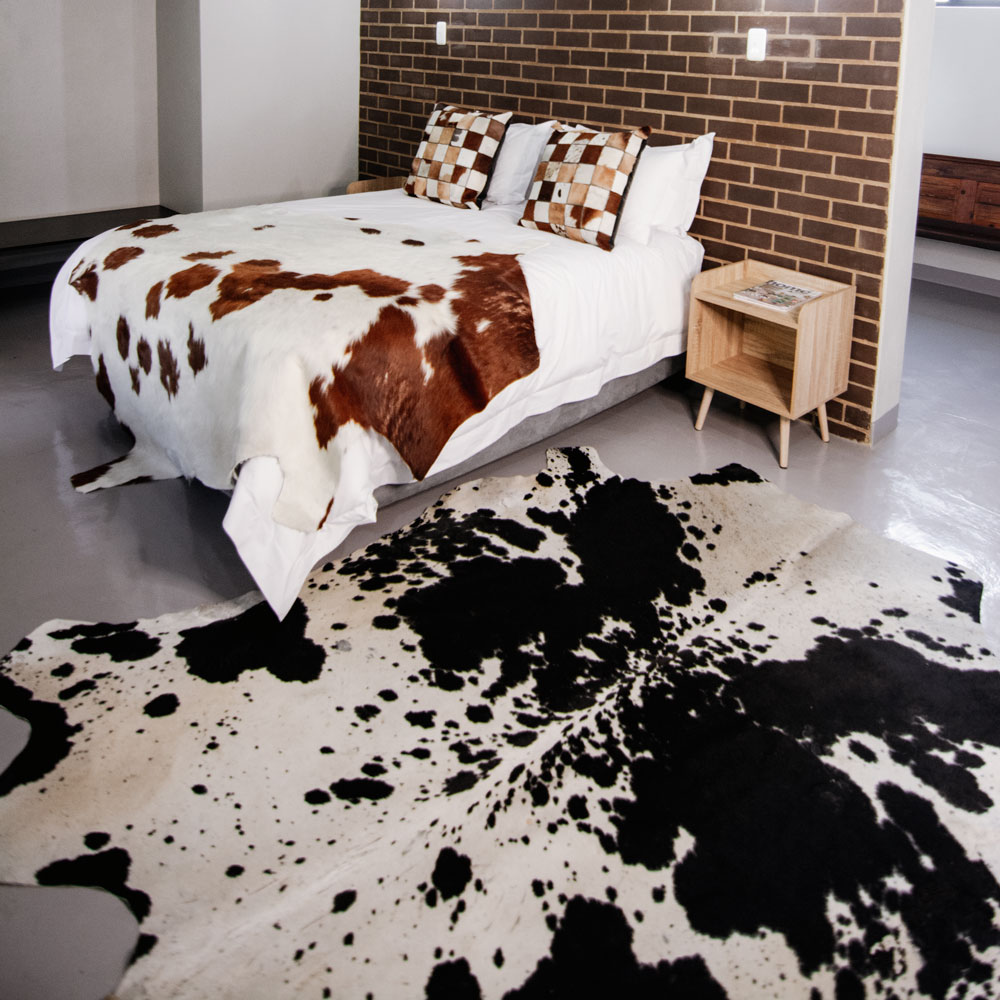
A hide can sit beside the bed where feet first meet the floor, or across the lower third with part of the outline visible. Check bedside drawers, cupboard doors and the path to the bathroom. In a compact room, a smaller piece placed to one side often works better than forcing a large hide beneath most of the bed.
3. Define a small dining or breakfast area
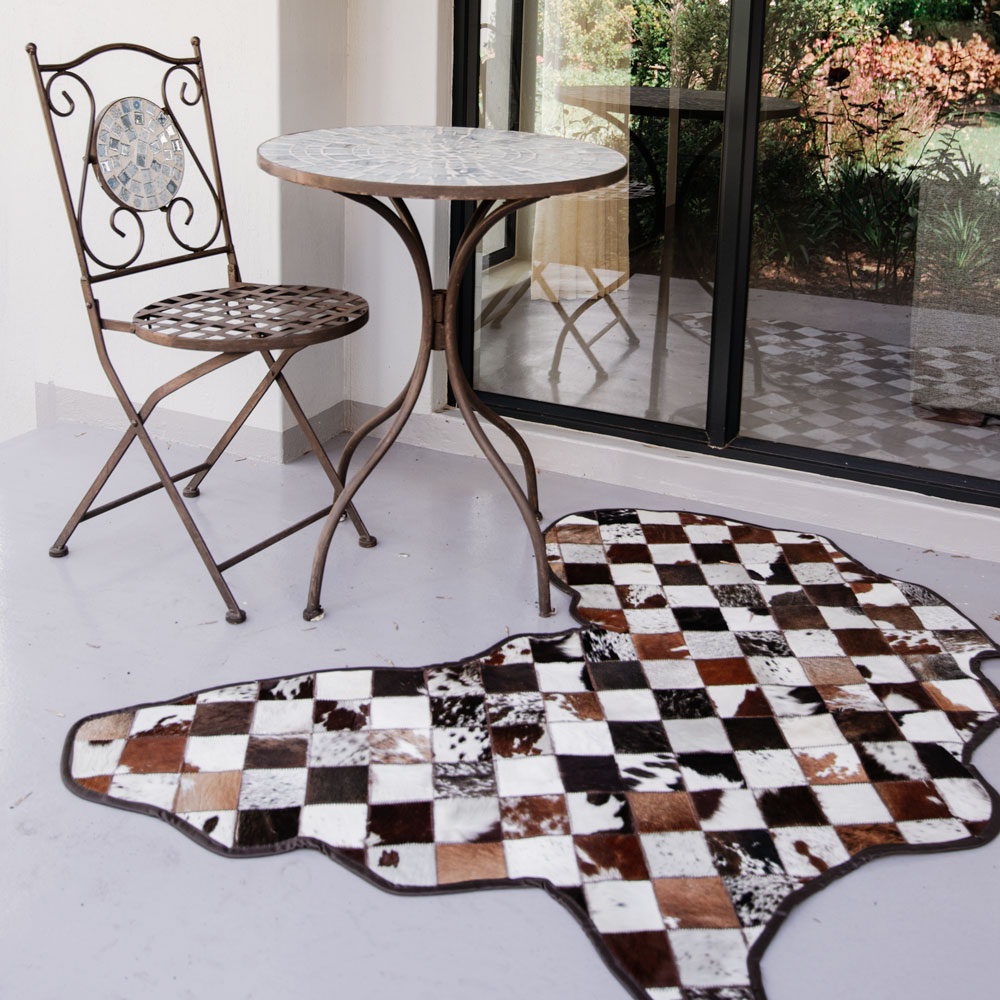
Measure chairs in both tucked-in and pulled-out positions. All chair feet should remain stable rather than catching on a narrow point. Natural animal hide rugs work best beneath smaller tables when the complete working footprint fits the broad centre. For a large dining set with frequent chair movement, a rectangular flatweave may be more practical.
- Measure the pulled-out chair footprint.
- Keep narrow hide legs away from chair routes.
- Use stable floor protection under heavy table feet.
- Check crumbs and spill risk before choosing the position.
- Follow product-specific cleaning guidance promptly.

4. Create an entrance feature outside the busiest path
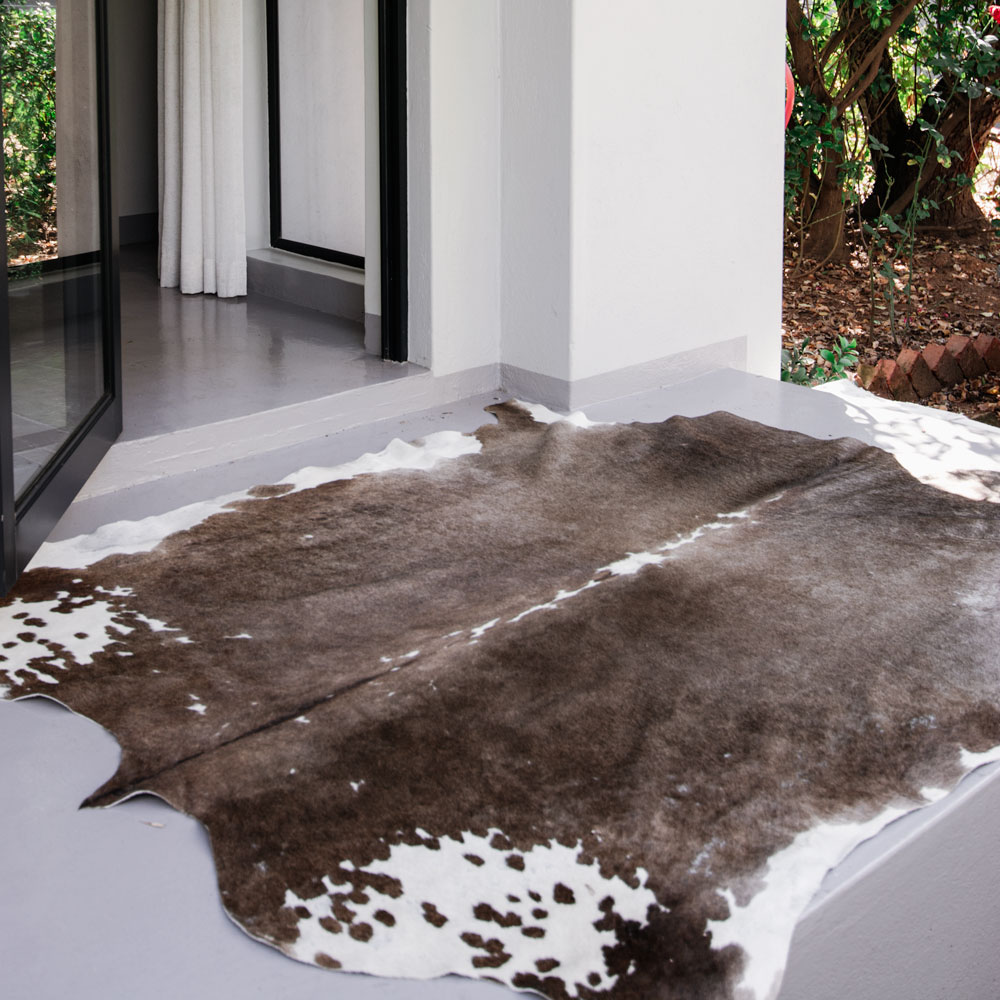
An entrance can display the hide beautifully if doors open freely and wet shoes do not cross it. Position the broad pattern beside the route rather than directly under it, and provide a separate durable mat at the exterior door. A dry console area or open wall can showcase the markings with less abrasion.
5. Layer over a larger plain rug
Layering adds texture and helps a smaller hide hold a defined place in an open room. Use a low-pile plain base with enough border visible around the organic shape. Test for slipping, ridges and door clearance. Avoid thick or heavily patterned foundations that compete with the natural markings or create an unstable change in floor height.
6. Hang the hide when the floor is unsuitable
Wall display protects the piece from pets, children, rolling chairs and busy traffic while revealing the complete outline. Make a paper template and distribute support across secure fixings suited to the wall. The cowhide wall decor guide covers planning and safe installation. Keep the hide away from damp and strong heat.
7. Rotate and reassess the placement seasonally
Furniture, sunlight and household routes change. Inspect the backing and hair direction every few months, then rotate the hide where the room allows so wear is not concentrated. If a new chair or table begins to catch an edge, move the furniture or choose another position rather than waiting for damage.
Animal hide rugs room placement guide
| Space | Best placement | Important check |
|---|---|---|
| Lounge | Broad centre under a light table | Main walkway avoids narrow edges |
| Bedroom | Beside or across the foot of the bed | Doors and drawers open freely |
| Dining | Small table on the broad body | Pulled-out chairs remain stable |
| Entrance | Beside the route or on a wall | Dry shoes and door clearance |
| Open plan | Layered over a plain low-pile rug | No slipping or raised trip edge |
Test the placement before committing furniture
Mark the complete outline and live with the taped shape for a day. Walk every normal route, open each door and pull chairs out. Photograph the room from the entrance and seated positions. This low-effort test often reveals a circulation problem that measurements alone miss.
When the hide arrives, clean and dry the floor, allow a rolled piece to relax naturally and avoid heat or soaking. Start without heavy furniture so the backing can settle. For safe routine maintenance, follow the Nguni rug cleaning guide and the seller’s instructions for the exact piece.
- Measure the exact hide at its widest and tallest points.
- Tape the irregular outline on the floor.
- Keep narrow legs out of main walking routes.
- Check doors, drawers and pulled-out chairs.
- Use wall display where floor traffic is unsuitable.
- Protect the hide from damp, heat and prolonged sun.
- Rotate and inspect the placement every few months.

Frequently asked questions
Can animal hide rugs go under a coffee table?
Yes. Use a light or stable table on the broad centre and avoid pinching thin edges under heavy feet.
Can a hide rug go under a dining table?
Only when the complete pulled-out chair footprint remains stable on the broad area. Measure before choosing.
How do I stop a hide edge becoming a trip point?
Keep narrow legs away from walking routes and test the exact outline. Ask the seller about an appropriate underlay if movement occurs.
Can I layer a hide over another rug?
Yes, when the base rug is plain, low pile and stable. Check for slipping, ridges and door clearance.
How often should the hide be rotated?
Inspect it every few months and rotate when traffic, light or furniture place uneven pressure on one area.
Let the natural outline guide the room
Beautiful animal hide rugs do not need to imitate rectangular floor coverings. Measure the exact piece, anchor furniture on the broad body and protect narrow edges from traffic. Whether the hide defines a lounge, softens a bedroom, layers over a plain rug or hangs on a wall, the best placement respects both the room’s circulation and the material’s natural shape.