
Black and White Cowhide: 7 Beautiful Styling Ideas
Contents
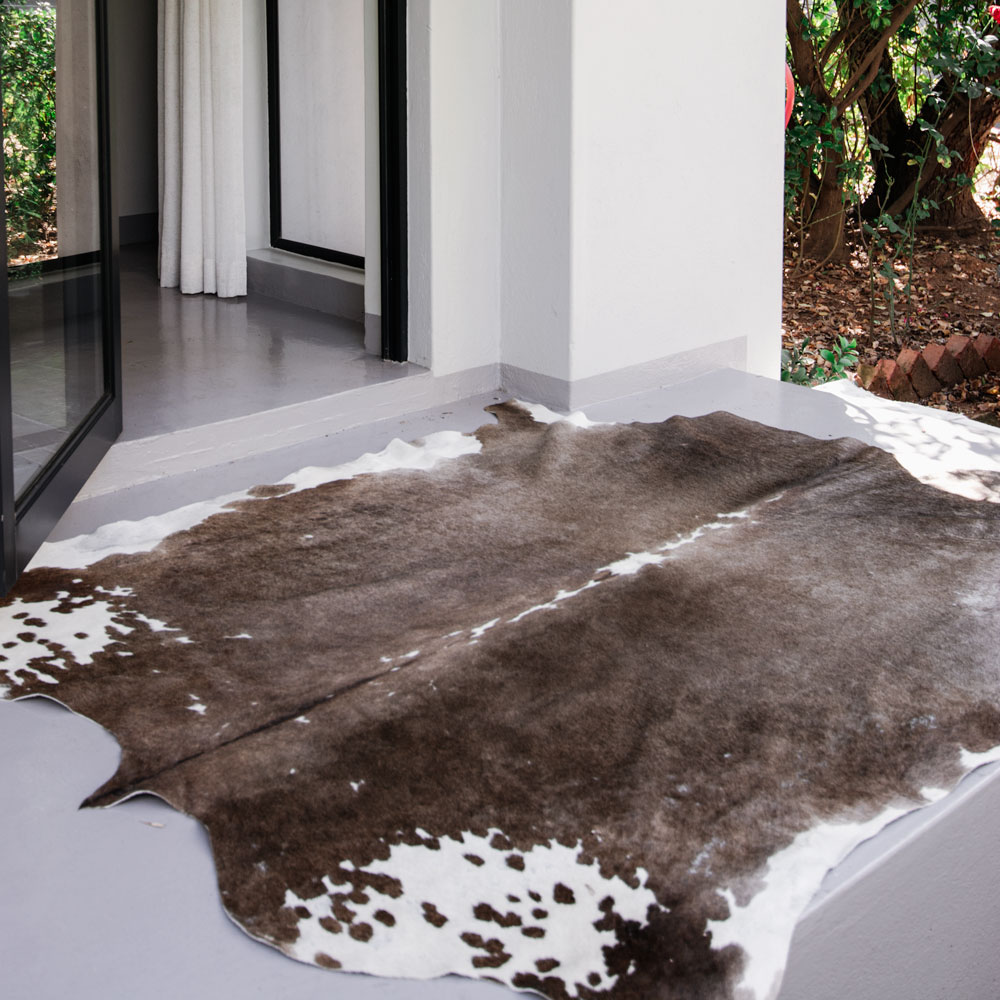
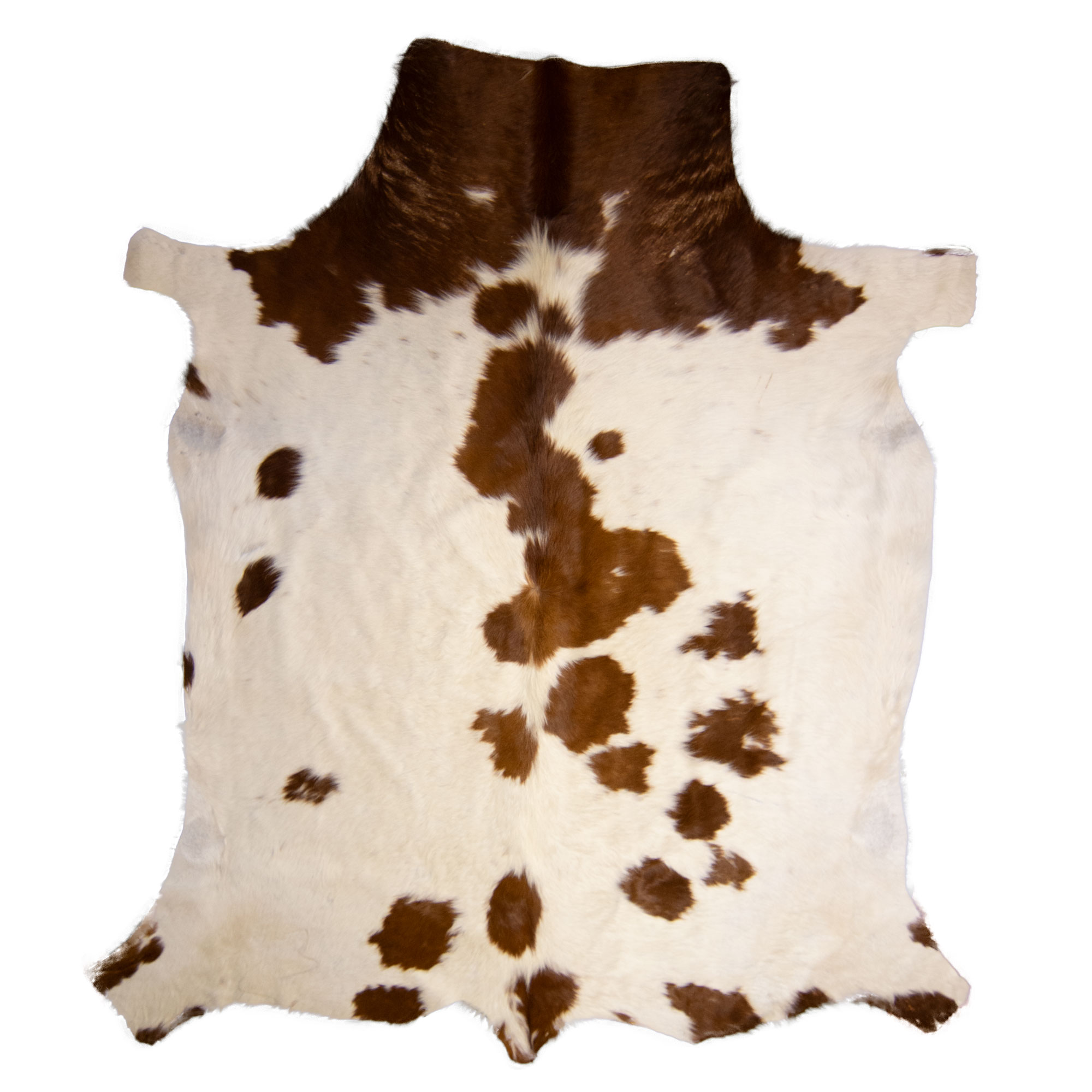
A black and white cowhide brings strong contrast, an organic outline and an individual natural pattern into a room. It can sharpen a pale interior, connect black metal with white upholstery or become wall art where floor space is limited. These seven styling ideas show how to position a genuine Nguni hide, balance its graphic markings and keep the rest of the scheme calm enough for the natural pattern to remain the feature.
Plan a black and white cowhide around contrast and breathing room
Before moving furniture, measure the exact hide and mark its widest outline with painter’s tape. Black-and-white patterns draw the eye quickly, so leave open floor or wall around the legs and edges. Compare available pieces in the Nguni hides collection and use current photographs when the balance of black and white matters.
The principles of interior design include proportion, balance and rhythm. With a high-contrast natural rug, those basics are more useful than trying to match every accessory. Repeat one black detail and one soft white or cream surface, then allow timber and neutral texture to bridge them.
1. Anchor a pale modern lounge
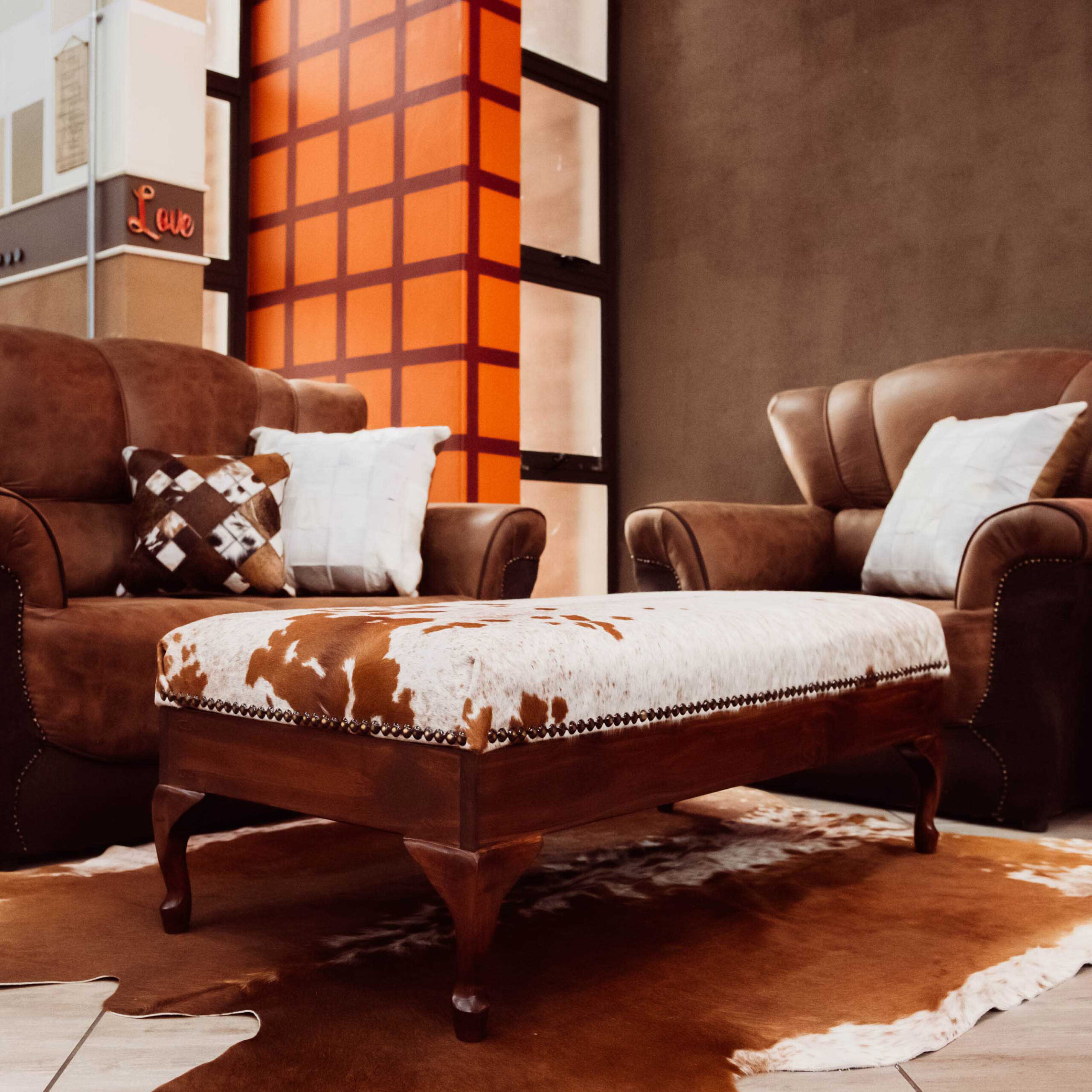
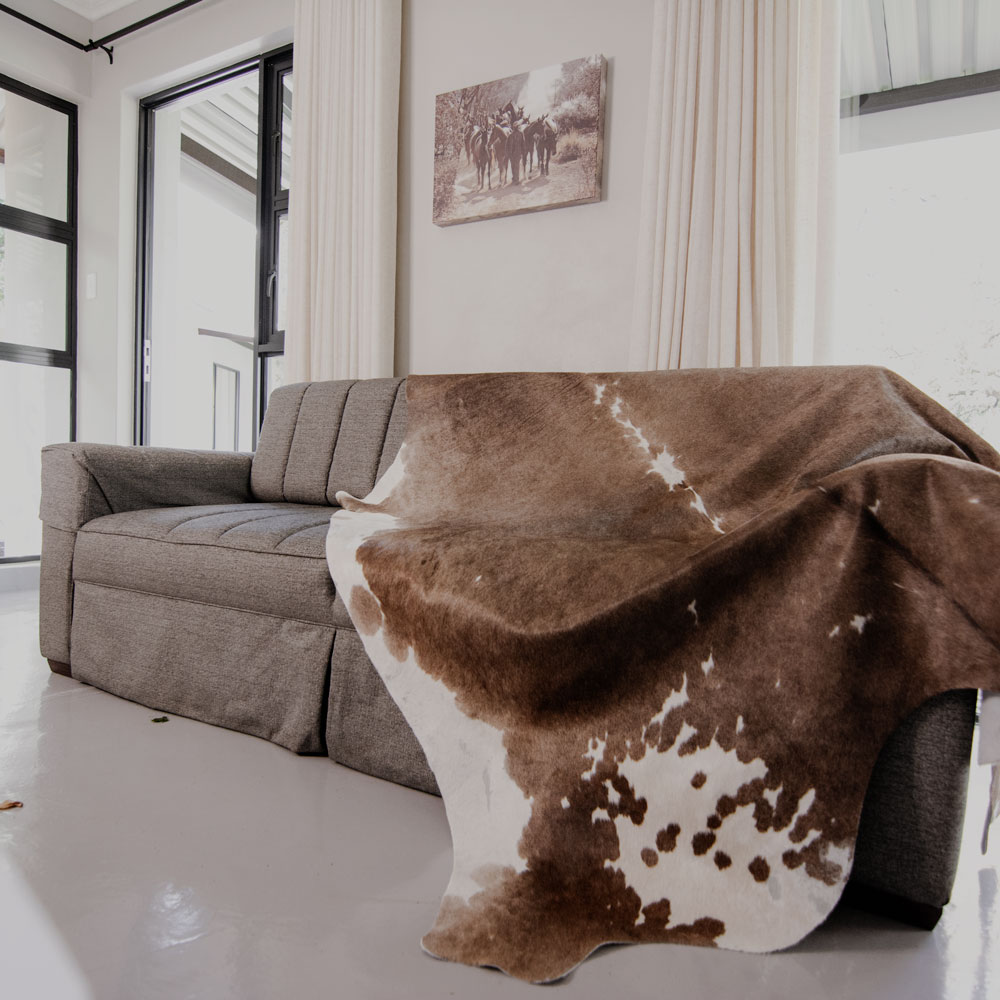
Place the hide partly beneath the front legs of a simple sofa, leaving most of the natural outline visible. A black frame, lamp or coffee-table base can repeat the dark markings without making the room monochrome. Choose plain cushions and a textured throw rather than adding another large animal or geometric print beside the rug.
2. Warm black and white with natural timber
Timber prevents a black and white cowhide scheme from feeling cold. Oak, ash and light pine keep the room airy, while walnut or darker stained wood adds depth. Repeat the timber in only a few substantial pieces. Small scattered brown ornaments can look accidental; one table, cabinet or bed frame creates a clearer visual bridge.
3. Create a calm focal point in a bedroom
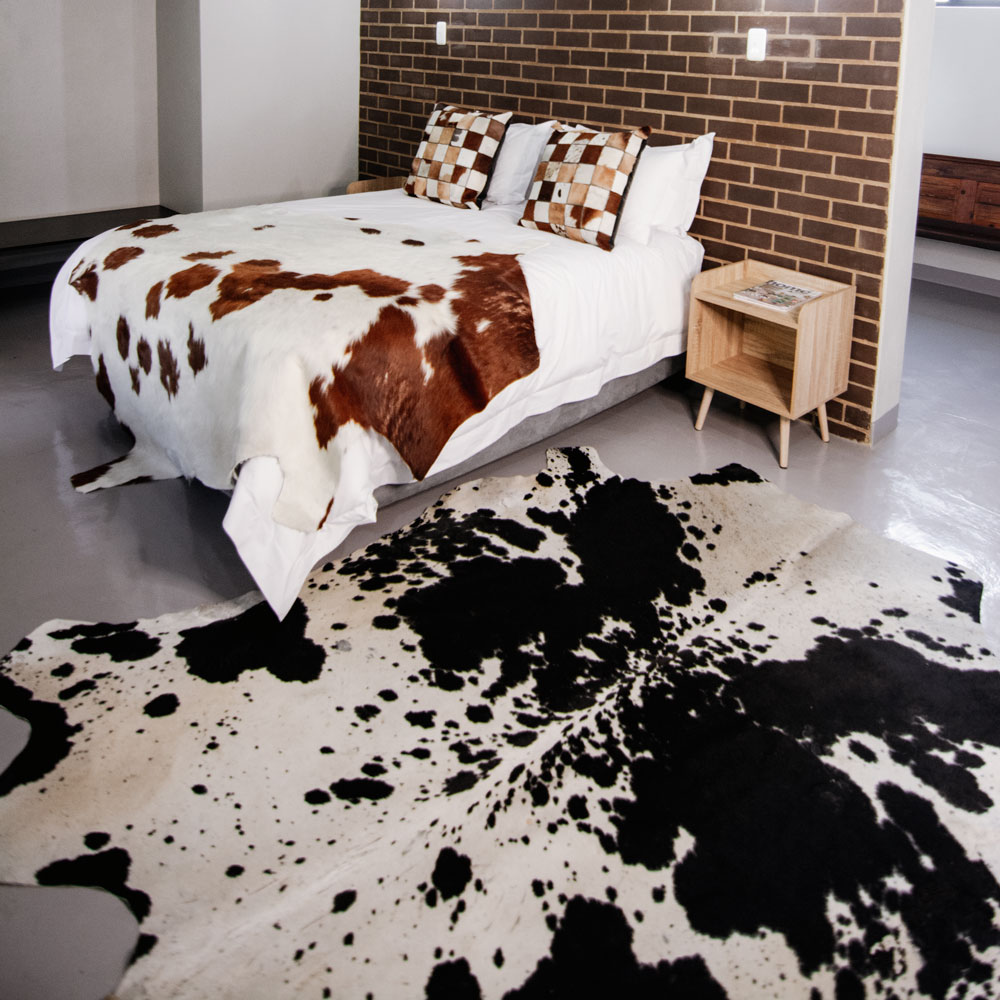
Use the hide beside the bed, at the foot of the bed or beneath a reading chair where it will not obstruct doors. Keep bedding mostly plain and layer cotton, linen or wool in off-white, charcoal and warm grey. The irregular outline softens the straight geometry of wardrobes and bed frames without requiring bright colour.
- Check wardrobe and bedroom-door clearance.
- Keep sharp bed-frame feet away from thin edges.
- Use low-suction cleaning in the hair direction.
- Rotate the hide if one route receives most foot traffic.
- Avoid prolonged direct sun from a nearby window.
4. Define an open-plan seating zone
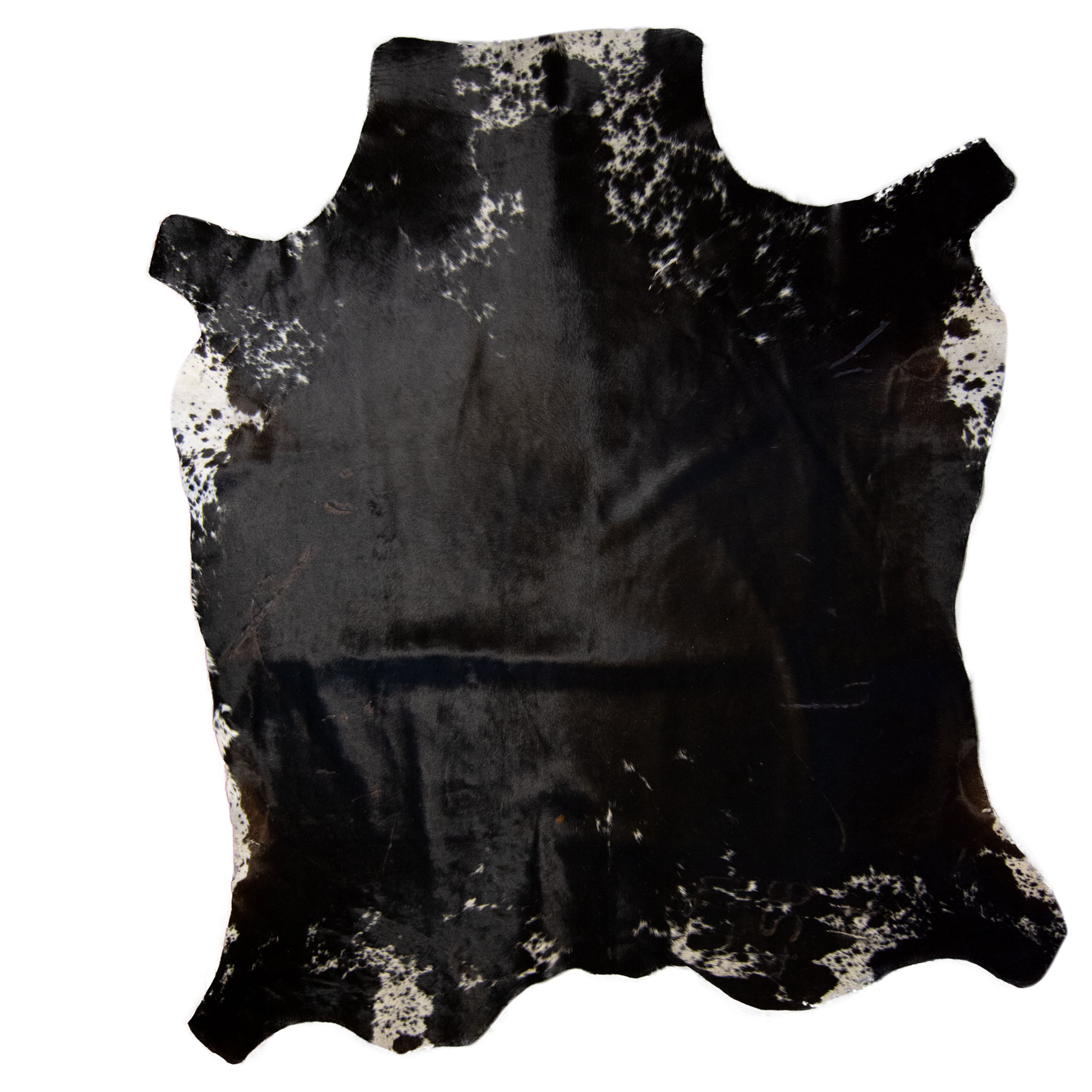
A bold hide can identify the lounge within a larger living and dining area. Align the broad body with the sofa and keep the narrow legs away from the busiest walkway. If another rug is used in the dining zone, choose a plain weave and a related neutral colour so the two floor pieces do not compete.
5. Use the hide as wall art
Wall display shows the complete pattern and protects the hide from floor traffic. Make a paper template, identify the wall construction and distribute support across several secure points. The guide to cowhide wall decor explains measurement, fixings and inspection in more detail. Avoid damp walls and positions above strong heat.
6. Pair it with colour in one controlled dose
Black and white can support almost any accent colour, but one clear family is usually enough. Deep green, rust, ochre or muted blue can appear in a chair, artwork or two cushions. Keep the largest background surfaces neutral. The aim is a room with one natural focal point, not a collection of equally loud statements.
7. Let the exact markings guide furniture placement
Rotate the hide before deciding which end faces the room entrance. One orientation may lead the eye towards the sofa, fireplace or view. Position a transparent or visually light table over the central body if needed, but avoid covering the most distinctive marking. Photograph two or three layouts before settling on one.
Black and white cowhide room guide
| Room | Best role | Balance with |
|---|---|---|
| Lounge | Graphic floor anchor | Plain sofa and timber |
| Bedroom | Soft organic shape | Layered neutral bedding |
| Dining area | Defined table zone | Simple chairs and clear dimensions |
| Entrance | Visible statement piece | Low traffic and dry conditions |
| Wall | Natural artwork | Professional fixings and open space |
Build the room in three simple layers
Begin with the background: floor, walls and the largest furniture. Add the black and white cowhide as the second layer, then repeat only two or three details from its palette. Finally, add softer texture through linen, wool, basketry or timber. This order keeps the hide connected to the room without turning the entire interior into a black-and-white theme.
Photograph the room in daylight and evening light. Black areas can become visually heavier after dark, while bright daylight may increase contrast. Adjust lamps, orientation and nearby textiles before buying more décor. The Nguni hide colours guide can help if a warmer brown or brindle piece may suit the room better.
- Measure the exact natural outline.
- Leave breathing room around the irregular edges.
- Repeat black and white in only a few details.
- Use timber or woven texture for warmth.
- Protect the hide from damp, heat and harsh sun.
- Keep the busiest walkway clear of narrow legs.
- Photograph several orientations before deciding.
Frequently asked questions
Does black and white cowhide suit a small room?
Yes, provided the exact hide fits the circulation space. Use simple furniture and allow visible floor around the outline.
What colours go with black and white cowhide?
Warm timber, cream, grey and one controlled accent such as green, rust, ochre or muted blue work well.
Can a cowhide be hung on a wall?
Yes, when it is supported at several points with fixings appropriate for the wall. Avoid damp and heat.
Should a coffee table cover the hide?
A visually light table can sit over the broad centre, but avoid hiding the most distinctive marking or catching narrow edges.
How do I stop the room looking too busy?
Keep neighbouring textiles mostly plain, repeat only a few colours and avoid another large competing print.
Use contrast with restraint
A black and white cowhide becomes most beautiful when the room gives its markings space. Measure the exact piece, connect it to a few black and light details, and add timber or natural texture for warmth. Whether it anchors a lounge, softens a bedroom or becomes wall art, thoughtful placement lets the genuine Nguni pattern lead the design.