
Nguni Hide Colours: 7 Beautiful Choices for Your Home
Nguni hide colours range from graphic black and white to warm brown, cream, tan, brindle and complex tricolour patterns. Because every genuine hide is naturally different, colour selection is not about ordering a perfectly repeated swatch. It is about choosing an individual pattern that works with the room’s floor, furniture, light and level of visual detail. This guide compares the main colour families and gives you a practical method for choosing with confidence.
Why genuine Nguni hide colours are unique
Natural colour variation is one of the defining qualities of Nguni cattle. Markings can include large patches, fine spots, soft gradients, streaks and mixed tones. Small differences in light and screen settings also change how a photograph appears, so it is wise to view the exact hide and ask for current photographs before buying.
Pattern is as important as colour. Two black-and-white hides may feel completely different if one has broad blocks and the other has many small speckles. Use our Nguni hide size guide alongside this colour guide because dimensions and pattern scale affect each other.
Black and white Nguni hide colours
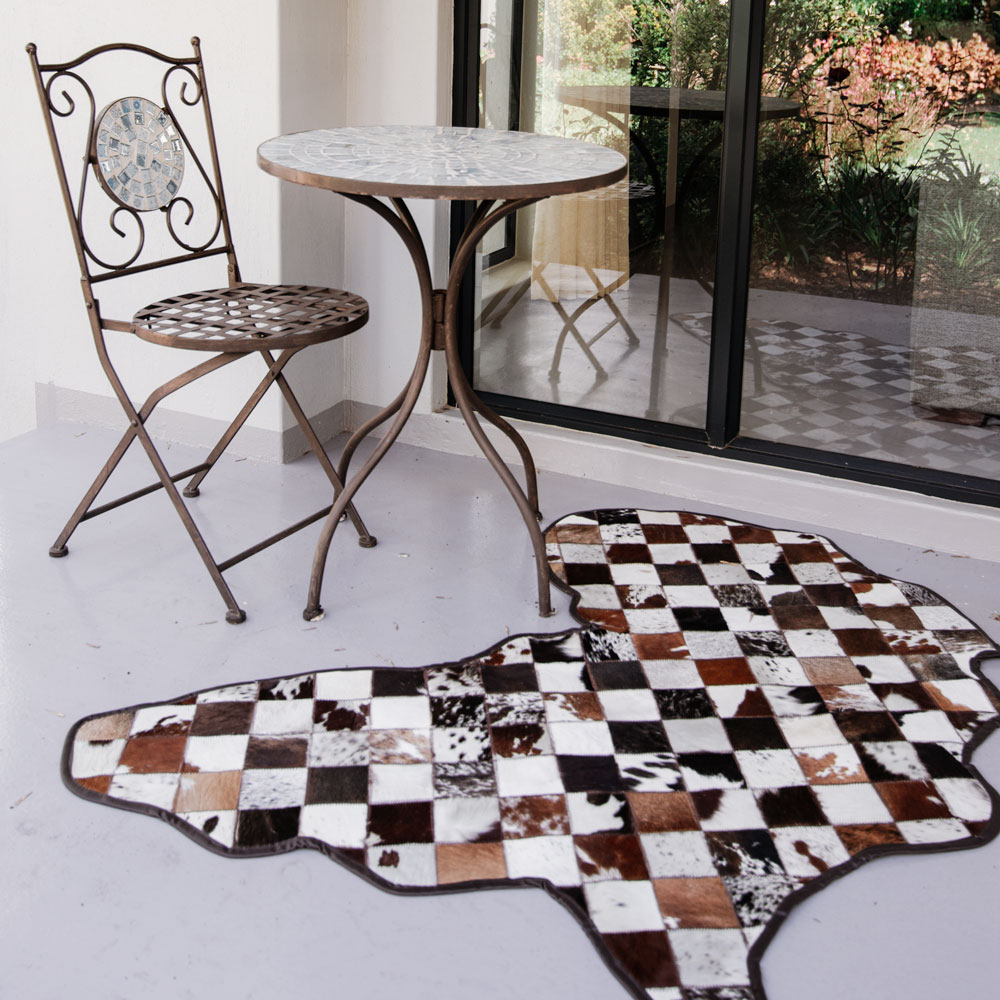
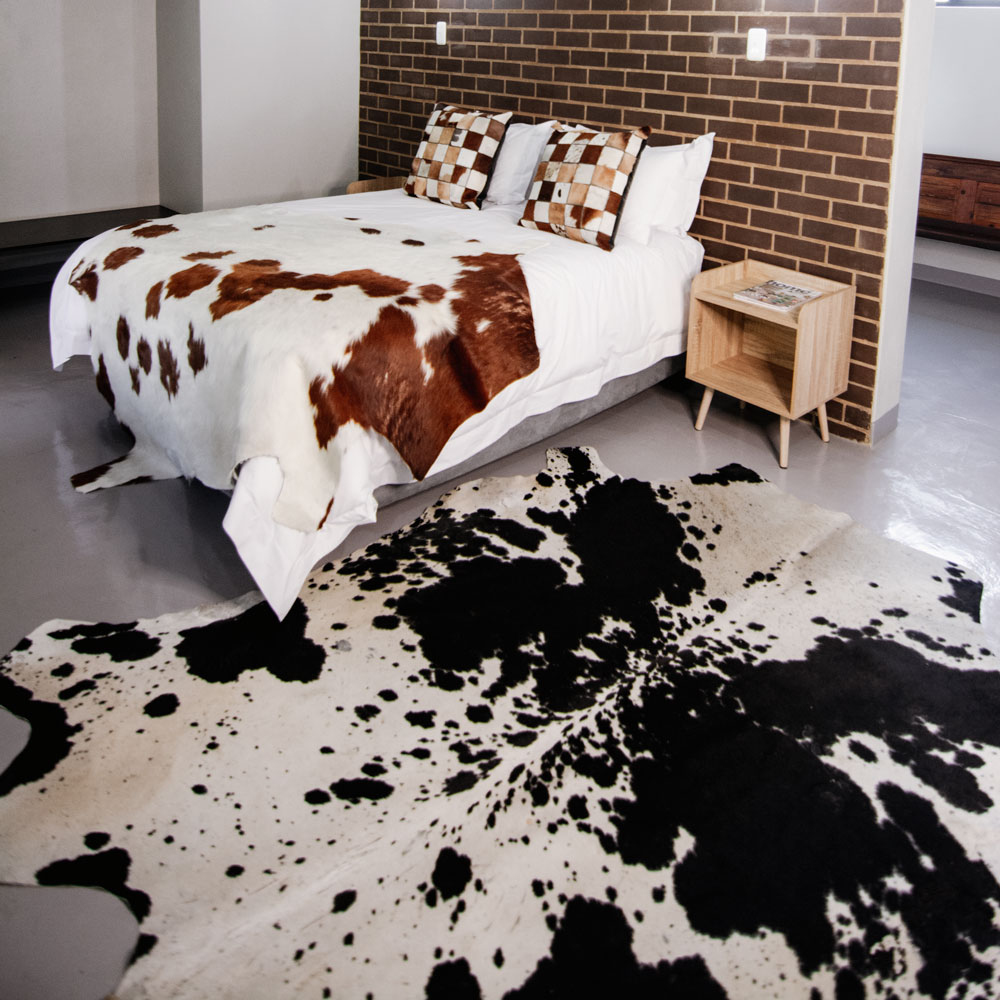
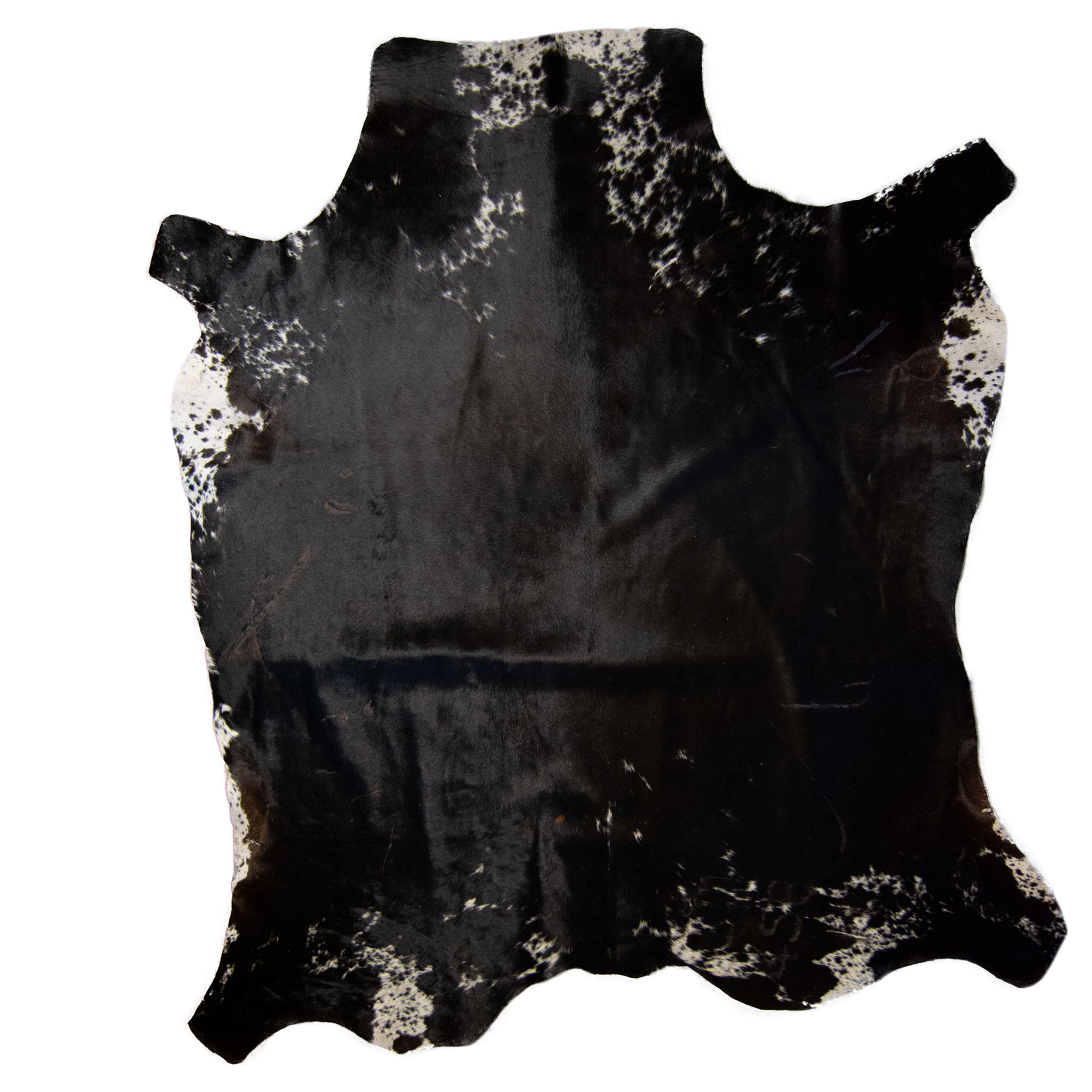
Black and white is the highest-contrast option. It suits contemporary, monochrome, industrial and modern farmhouse interiors where one organic shape can break up clean lines. On a pale floor, black markings become the visual anchor. On dark timber or charcoal tiles, the white sections define the outline.
- Best with simple furniture and controlled patterns.
- Connects easily to black frames, metal legs and pale upholstery.
- Creates a strong focal point in photographs and open-plan rooms.
- May feel busy when combined with many other bold prints.
- Needs considered placement so the full contrast remains visible.
Brown, tan and cream Nguni hide colours
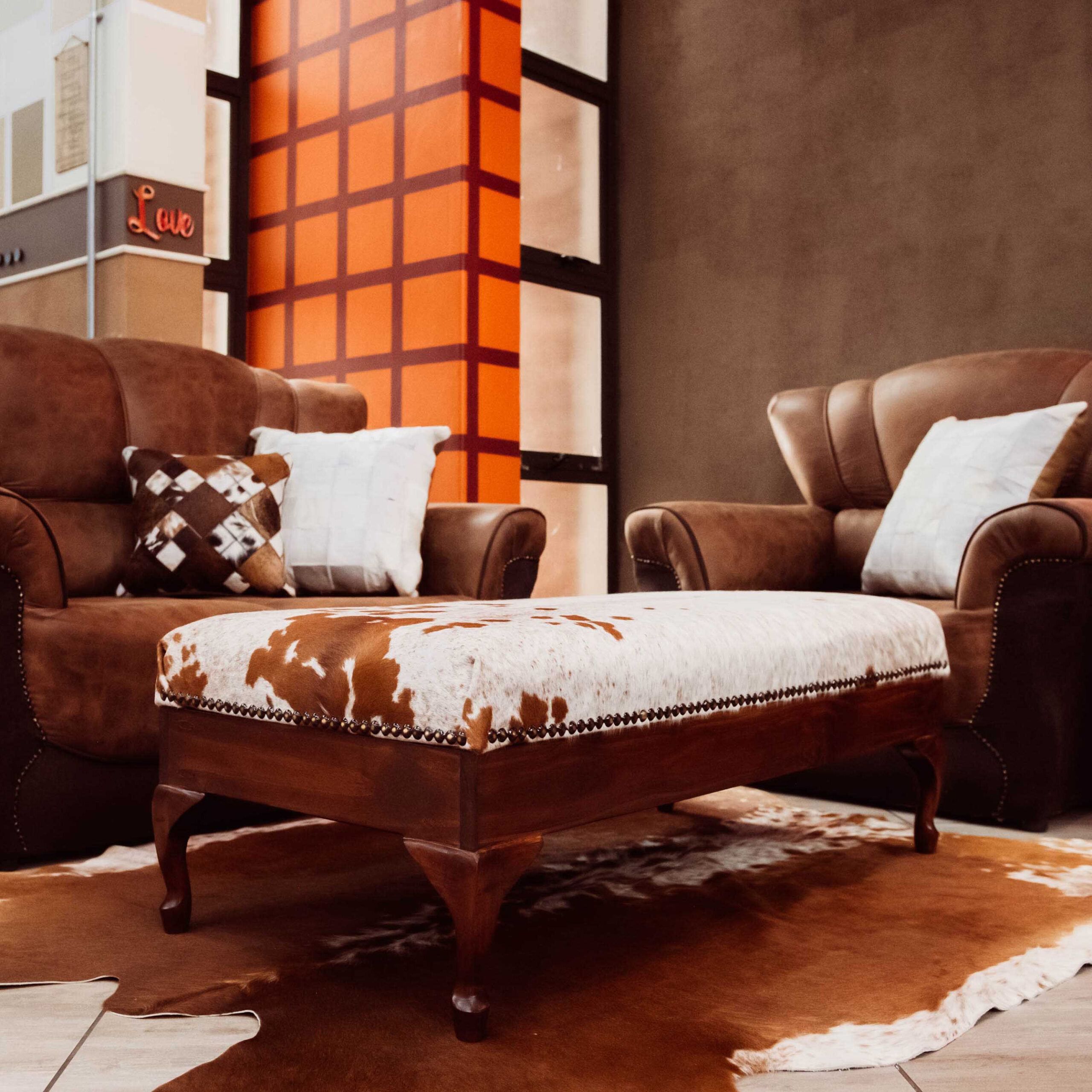
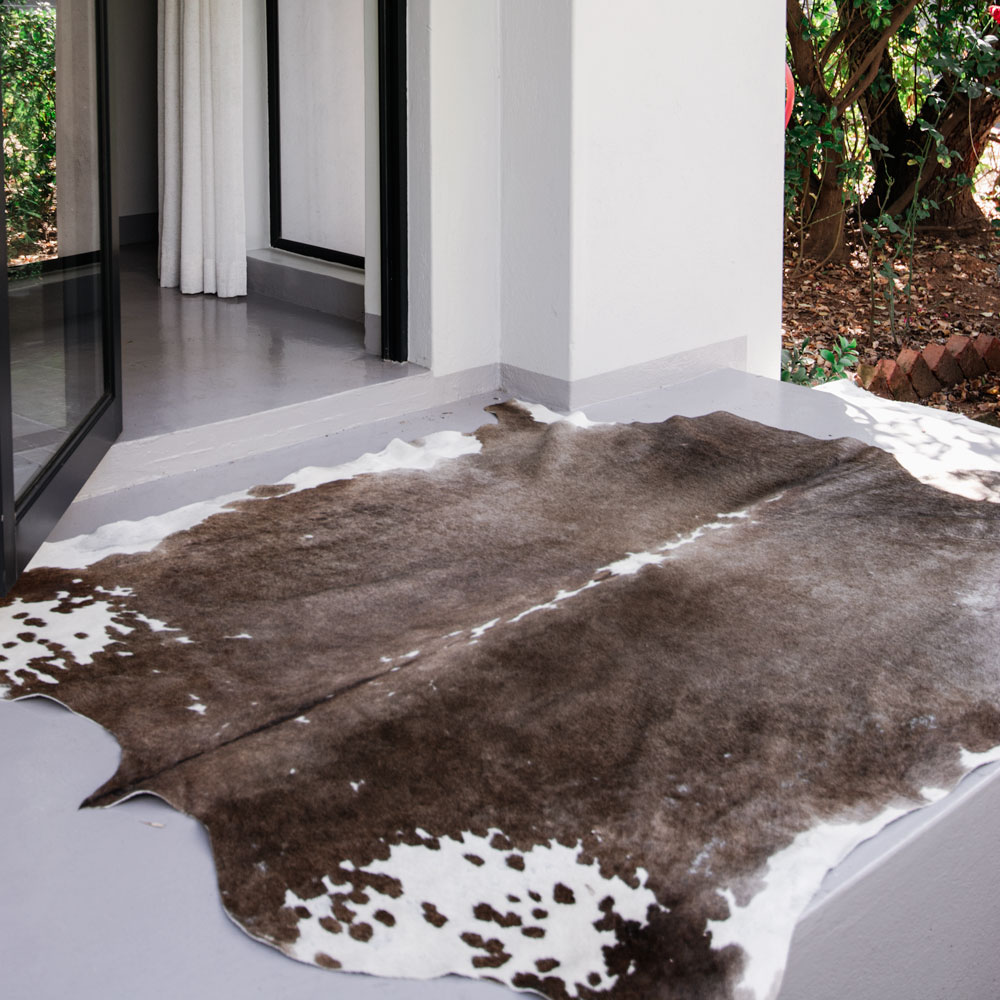
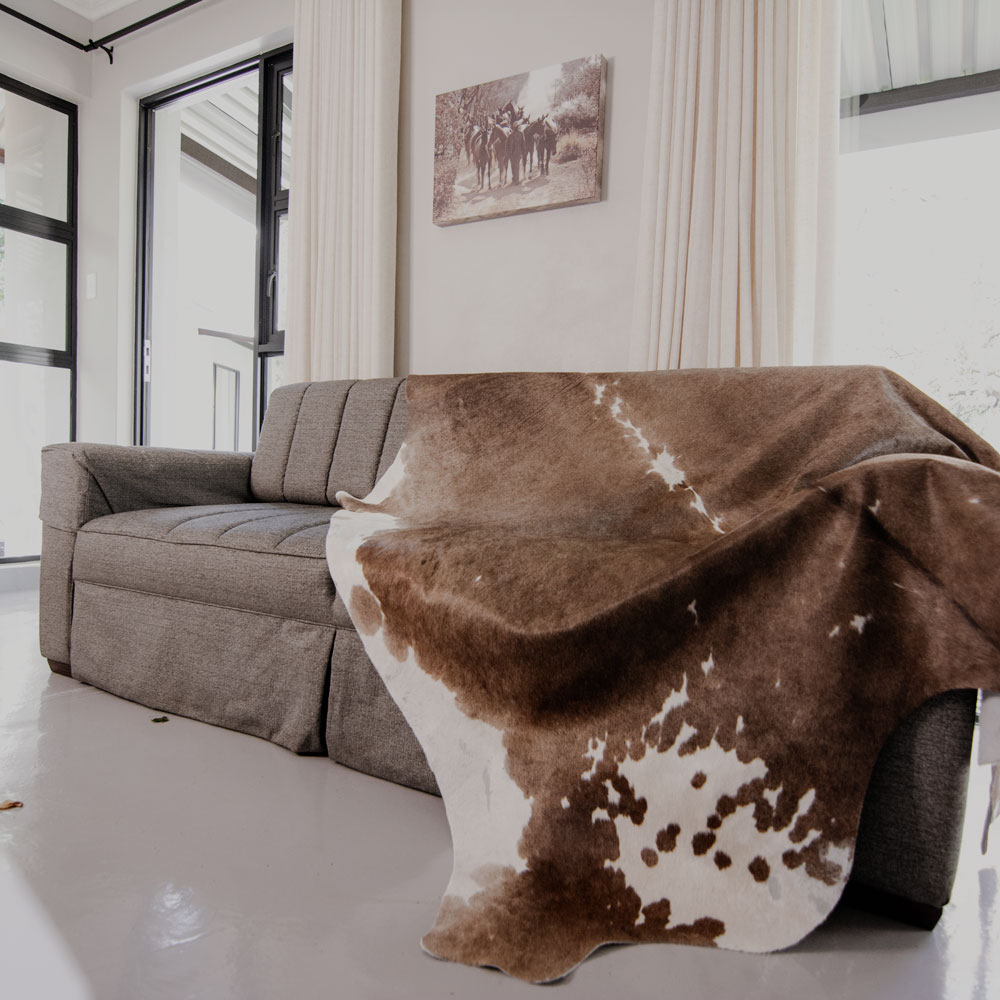
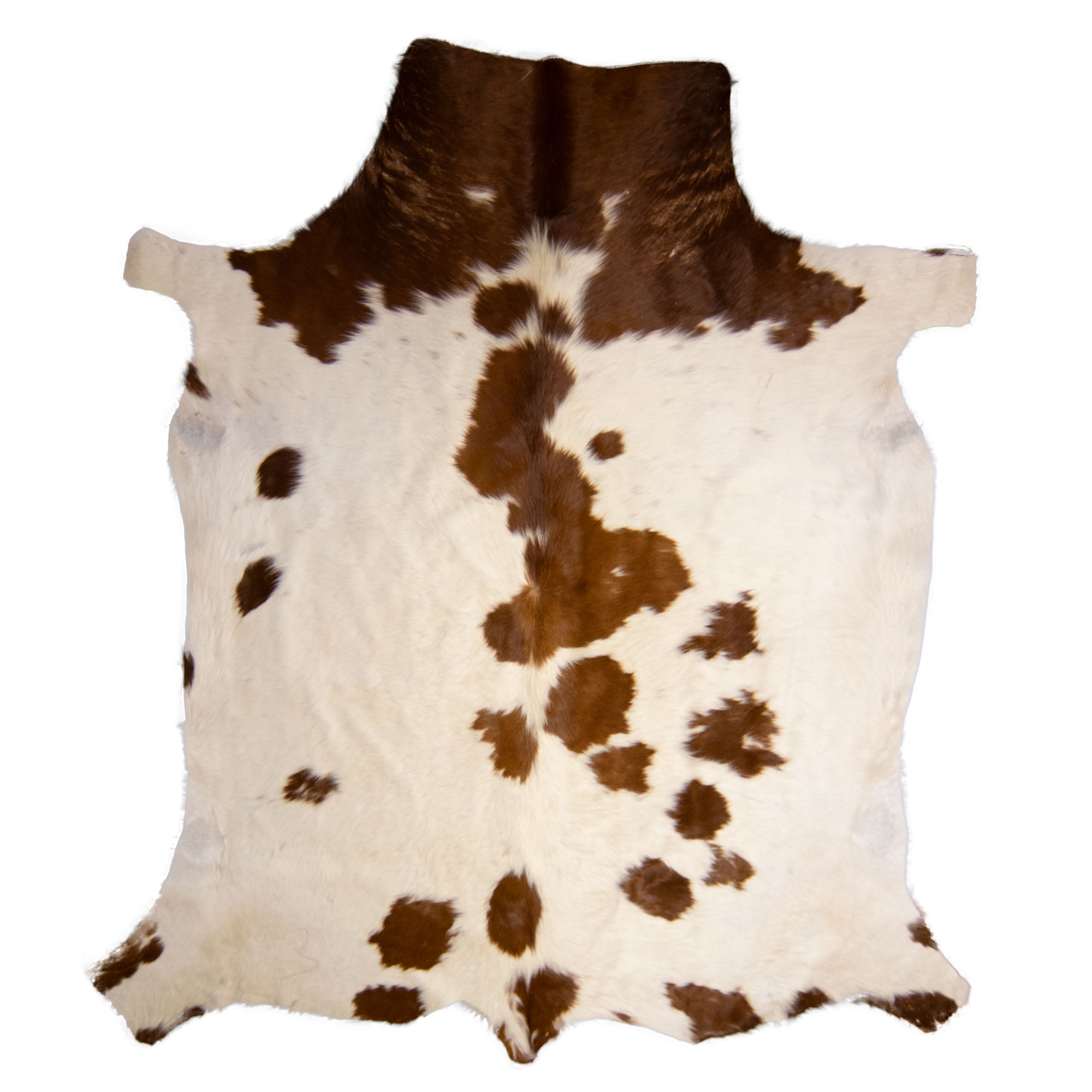
Warm brown, tan and cream Nguni hide colours blend naturally with timber, leather, linen, cane and woven baskets. They can soften a cool grey room or extend an existing earthy palette. Lighter tan and cream combinations suit airy bedrooms and relaxed lounges, while deeper brown patterns add weight beside pale sofas and stone floors.
Brown does not have to mean rustic. A clean-lined sofa, simple glass table and warm brown hide can feel refined and contemporary. Repeat only one or two tones elsewhere so the natural pattern remains the feature.
Brindle and tricolour Nguni hides
Brindle usually describes streaked or blended markings that create movement across the hide. Tricolour pieces combine three or more visible tones, often black, brown and white. These patterns work well in layered interiors because they can connect several existing colours at once.
A detailed cowhide colour guide similarly groups natural hides into black and white, brown and white, brindle and tricolour families. Genuine Nguni pieces retain their own South African character, so use those categories as a starting point rather than expecting uniformity.
| Colour family | Visual effect | Works well with |
|---|---|---|
| Black and white | Bold, graphic and high contrast | Monochrome rooms, pale floors, black metal |
| Brown and cream | Warm, relaxed and versatile | Timber, linen, tan leather, woven texture |
| Brindle | Textured movement with subtle variation | Rustic, lodge, bohemian and layered rooms |
| Tricolour | Complex and expressive | Mixed timber, eclectic décor and large open spaces |
| Light speckled | Airy with fine visual detail | Bedrooms, neutral lounges and compact rooms |
Match the hide to your floor first
The floor is the largest colour surface beneath a hide. On dark timber, choose enough light marking to prevent the outline disappearing. On pale tiles, medium and dark areas create definition. On highly patterned stone or timber, a hide with larger, calmer blocks may compete less than a densely speckled pattern.
Photograph the floor in daylight and send it to the Home of Nguni team through the contact page. Compare the photograph of the actual hide rather than relying on a colour name alone.
Use furniture and light to narrow the choice
Place the hide near your largest furniture piece in the planning photo. A cream sofa may benefit from darker markings, while a heavy brown leather sofa may need lighter sections for separation. South-facing rooms can make deep tones appear heavier, while bright north-facing light may amplify a black-and-white contrast.
- Photograph the floor and main furniture in natural light.
- Identify the two colours already occupying the most space.
- Choose whether the hide should contrast or blend.
- Compare large markings with fine speckles at the intended size.
- View the exact hide on more than one screen if possible.
- Ask for a current photograph and exact dimensions.
- Keep nearby cushions and artwork simpler if the hide is very bold.
Coordinate Nguni hide colours across the room
Repeat a small amount of one hide colour in two or three places. This may be a cushion, lamp base, picture frame or throw. Avoid repeating the full pattern everywhere. Natural hide has more impact when surrounding textiles give it visual space.
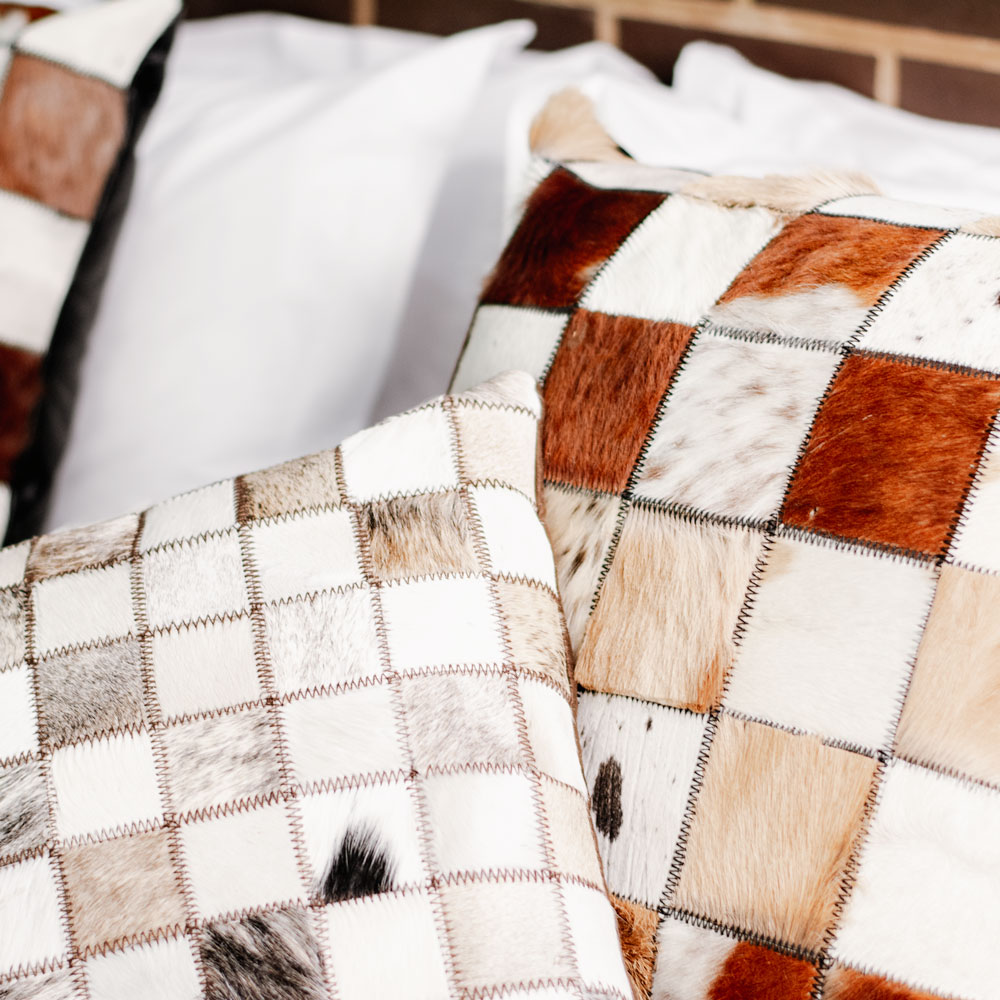
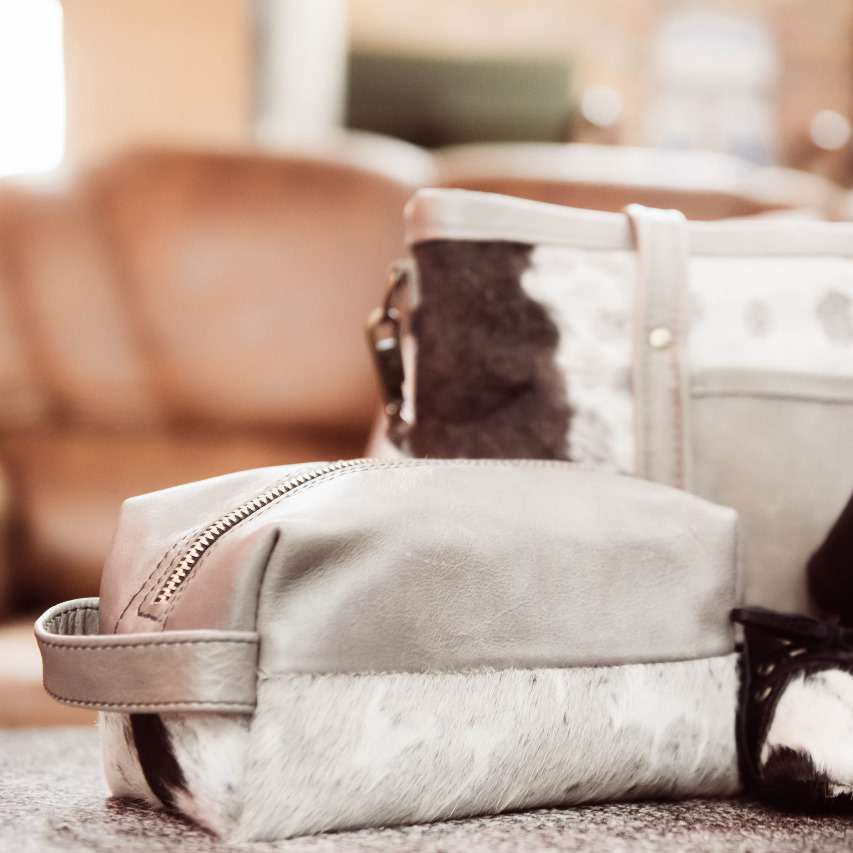
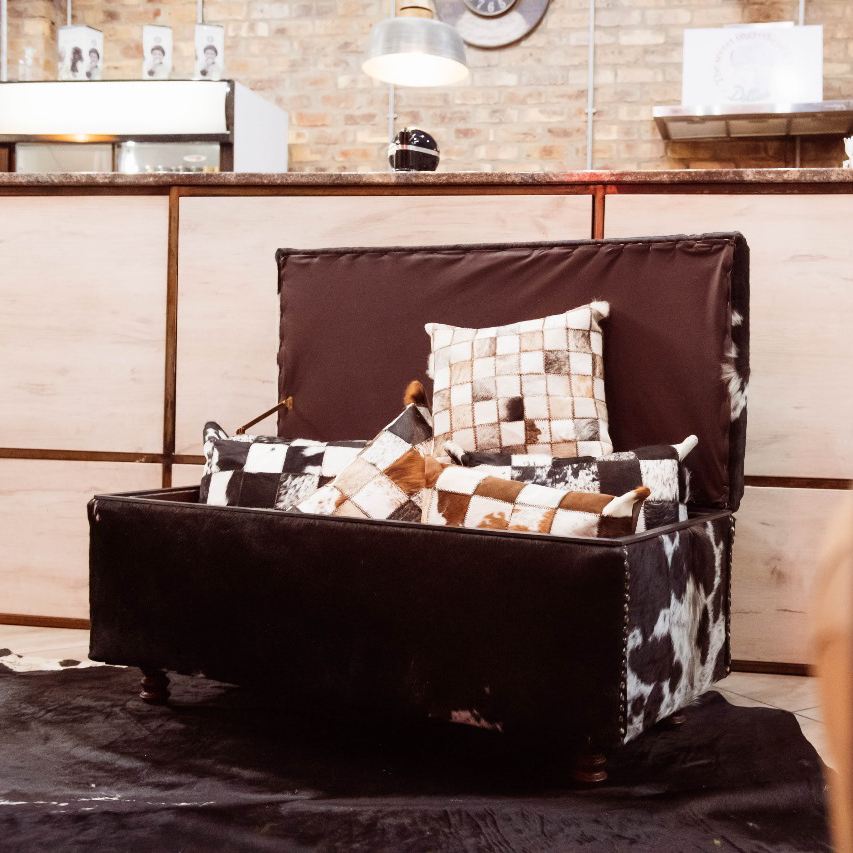
If a full hide feels too dominant, introduce the palette through Nguni cushions or an ottoman first. Smaller pieces help you test how black, brown, cream and brindle tones behave with the room.
Frequently asked questions
What colours do genuine Nguni hides come in?
Natural Nguni hides may include black, white, brown, tan, cream, brindle, speckled and tricolour combinations. Every genuine pattern is individual.
Which Nguni hide colour suits a modern room?
Black and white creates a graphic modern focal point, while brown and cream can bring natural warmth to a minimal room. Choose according to the floor and furniture.
What is a tricolour cowhide?
A tricolour hide displays three or more visible natural tones, commonly black, brown and white. The balance and markings differ on every hide.
Will the hide look exactly like the website photograph?
Ask whether the photograph shows the exact piece supplied. Screen settings and lighting also affect colour, so request current images when colour matching matters.
Should a cowhide match the sofa?
It does not need to match. A successful hide can contrast with the sofa or repeat one of its tones while introducing a different natural pattern.
Choose the individual hide, not only the colour label
The right Nguni hide colours connect the floor, furniture and light while preserving the individuality of the natural material. Decide whether you want contrast or warmth, compare pattern scale and request photographs of the exact piece. A thoughtful colour choice will make the hide feel intentional rather than added as an afterthought.