
Nguni Leather: What Makes It Unique? A South African Guide
Nguni leather is valued because no two pieces look exactly alike. The natural markings of the Nguni animal can move from crisp black and white to warm brown, brindle, speckled and richly mixed patterns. When that character is preserved in hair-on-hide leather, a practical item becomes an unmistakably South African statement piece. This guide explains what Nguni leather is, how it differs from ordinary smooth leather, what quality signs to look for and how to choose a piece that suits your home or wardrobe.
What is Nguni leather?
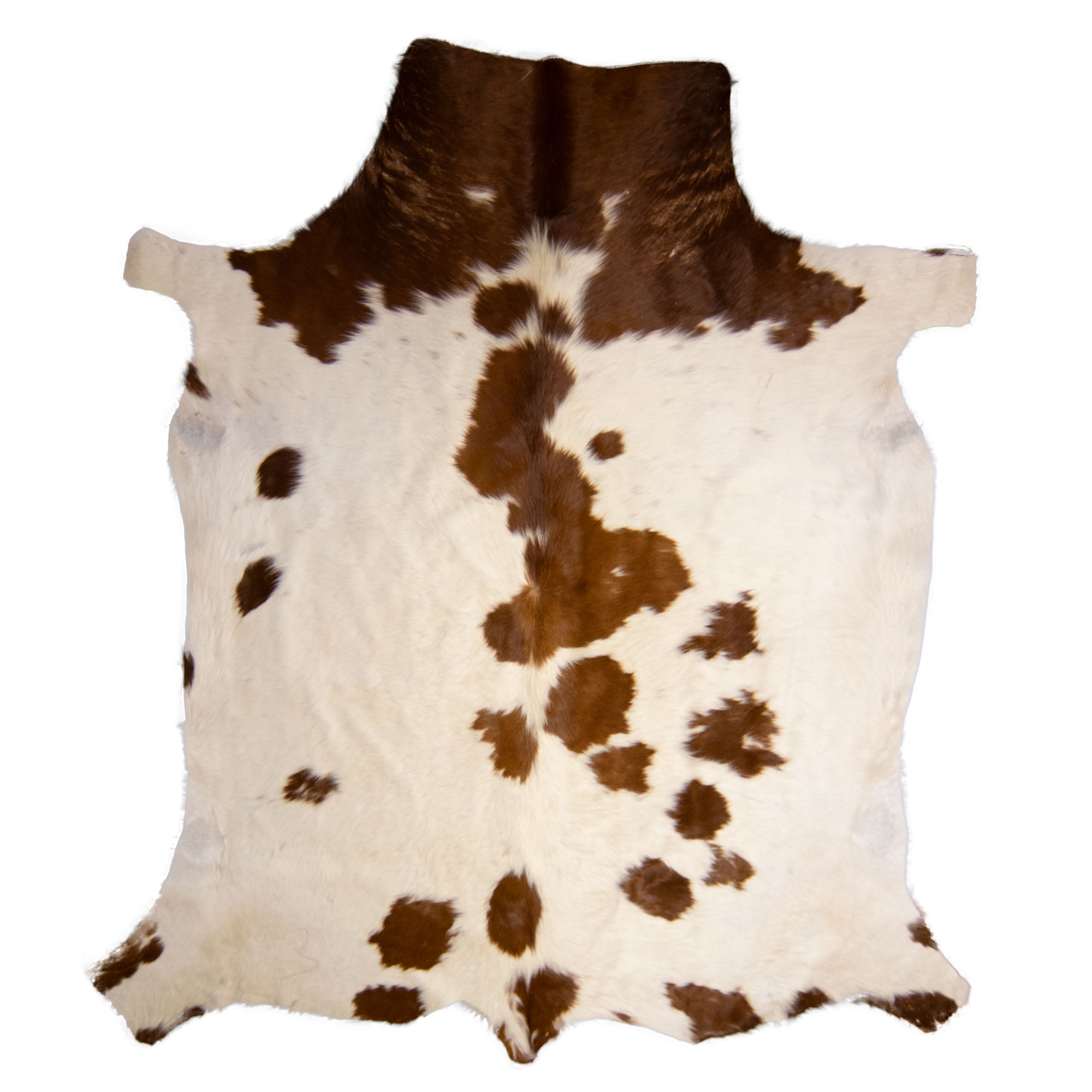
Nguni leather comes from the hide of Nguni cattle, a hardy indigenous breed associated with Southern Africa. The breed is recognised for its wide range of natural colours and markings. In a finished hide, those markings create the visual identity of the material; in crafted products, selected sections of hide are combined with smooth leather to balance character, structure and durability.
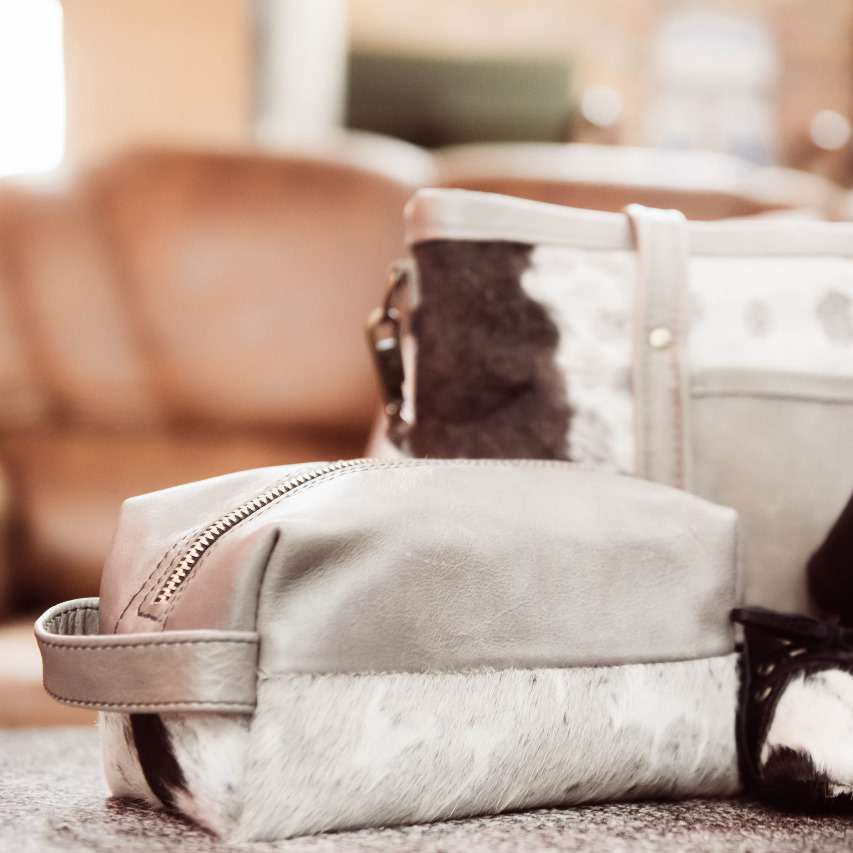
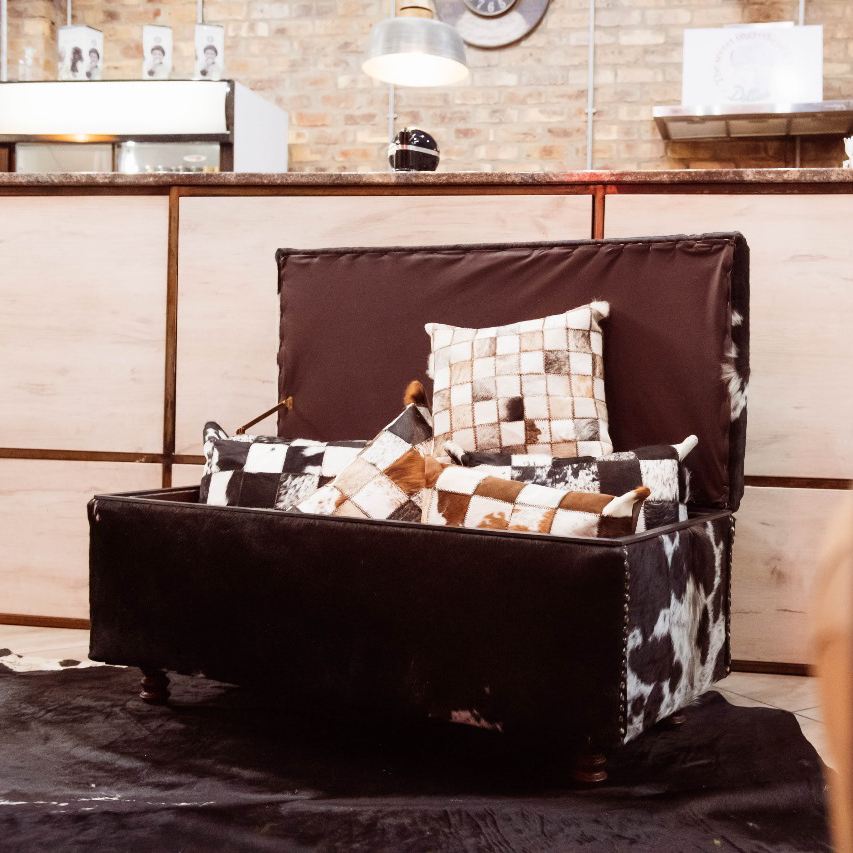
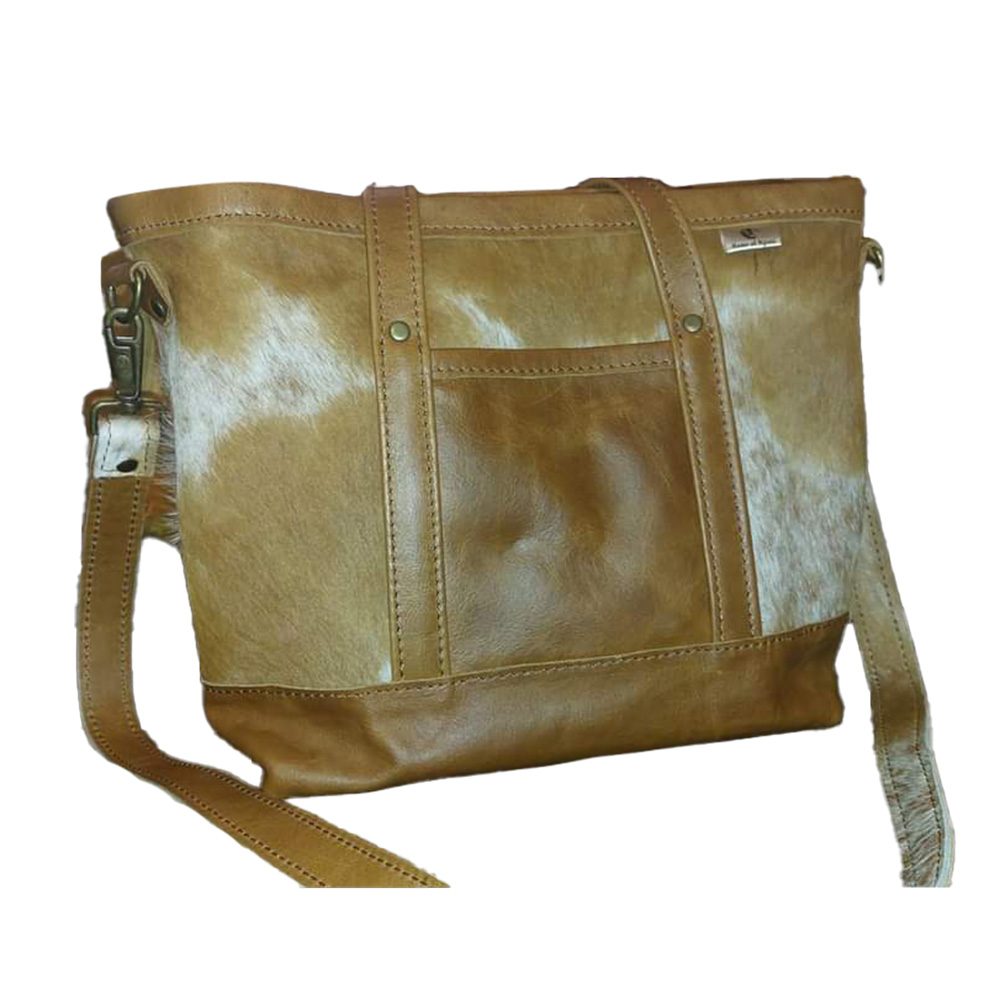
The term can describe two related finishes. Hair-on-hide Nguni leather keeps the hair and visible pattern intact. It is used for floor hides, feature panels, bags, footwear, cushions and upholstered pieces. Smooth leather has the hair removed and the surface finished for a more uniform appearance. Many Home of Nguni products use both: patterned hair-on-hide where individuality matters, and smooth leather where strength, flexibility or regular handling is important.
Why every Nguni leather piece is unique
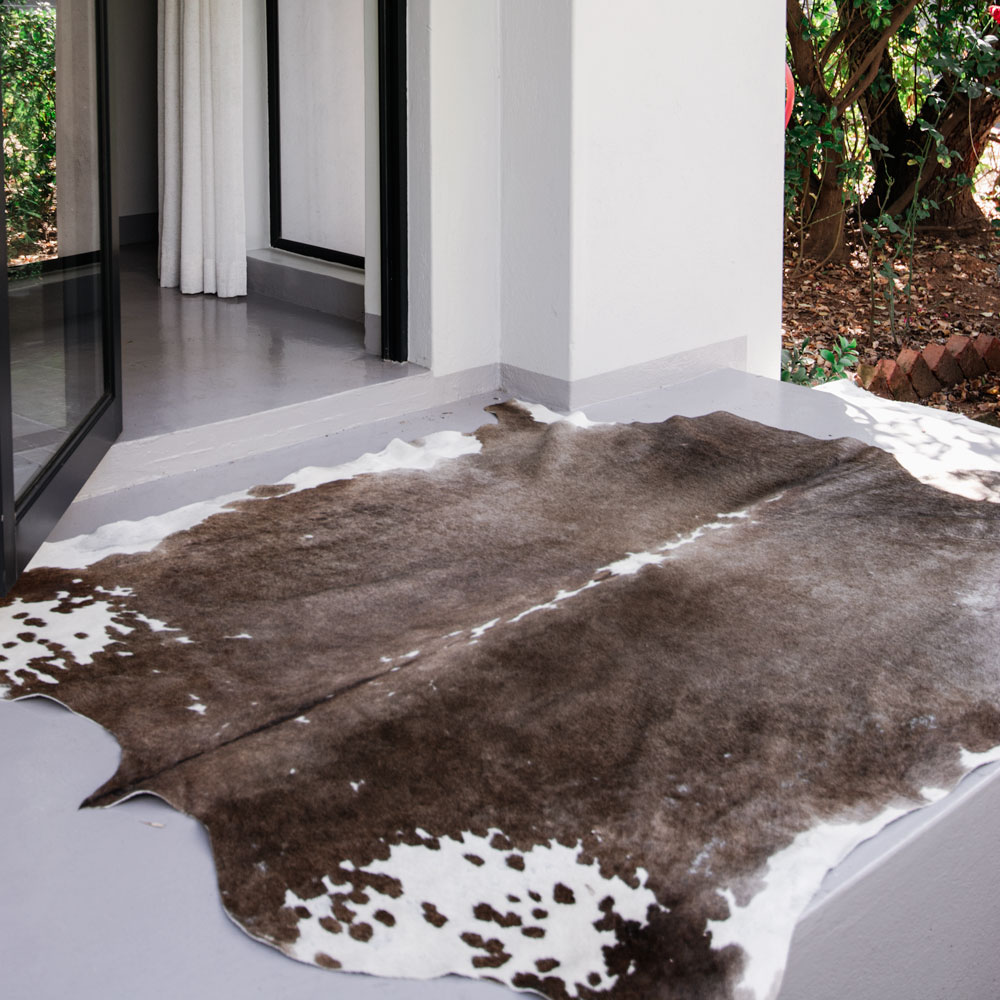
Printed fabric can repeat a pattern. A genuine hide cannot. Spots, colour boundaries, hair direction and tonal changes are natural, which means the exact piece photographed should matter when you buy a full hide. In a handcrafted bag or pair of vellies, the maker decides which part of the hide becomes the feature panel. That placement gives each finished item its own balance and personality.
Variation is not a defect. It is the material’s signature. Small natural marks can be part of the hide’s history, while poor tanning, loose hair, strong odours or weak construction are quality concerns. A reliable seller should help you understand that distinction and show the actual product whenever the pattern is central to the purchase.
A good Nguni leather purchase starts with the real item, not a generic pattern swatch. Ask to see the colour, markings, dimensions and finish you will actually receive.
Hair-on-hide versus smooth leather
Hair-on-hide brings the pattern
Hair-on-hide is the best choice when you want visible Nguni markings. It creates impact on a floor, ottoman, cushion, handbag panel or footwear detail. Because the hair is part of the surface, it should be treated differently from smooth leather: avoid soaking it, brush or vacuum in the direction of the hair and deal with spills promptly using a lightly damp cloth.
Smooth leather provides structure
Smooth leather is often used for straps, handles, soles, edging and high-contact sections. It can bend, carry weight and accept suitable leather conditioners. On a well-designed product, smooth leather should support rather than compete with the hair-on-hide feature. Look for clean edges, secure stitching and hardware that matches the intended load.
Seven quality checks before you buy
- Confirm authenticity. The seller should clearly identify the material as genuine hide or leather rather than synthetic “cow print”.
- Inspect the hair. It should sit securely and feel consistent. Excessive shedding, bald patches caused by damage or brittle areas deserve a closer look.
- Check the leather side. A full hide should feel supple rather than papery or cracked. Crafted products should have firm but flexible structural sections.
- Look at construction. Stitching should be even, stress points reinforced and edges neatly finished.
- Test the hardware. Zips, buckles, feet and clips should operate smoothly and suit the weight of the product.
- Ask for dimensions. Natural hides are irregular, so use the longest and widest measurements when planning placement.
- Understand care. Hair-on-hide and smooth leather require different cleaning methods. A seller should explain both.
Choosing a pattern for your space or style
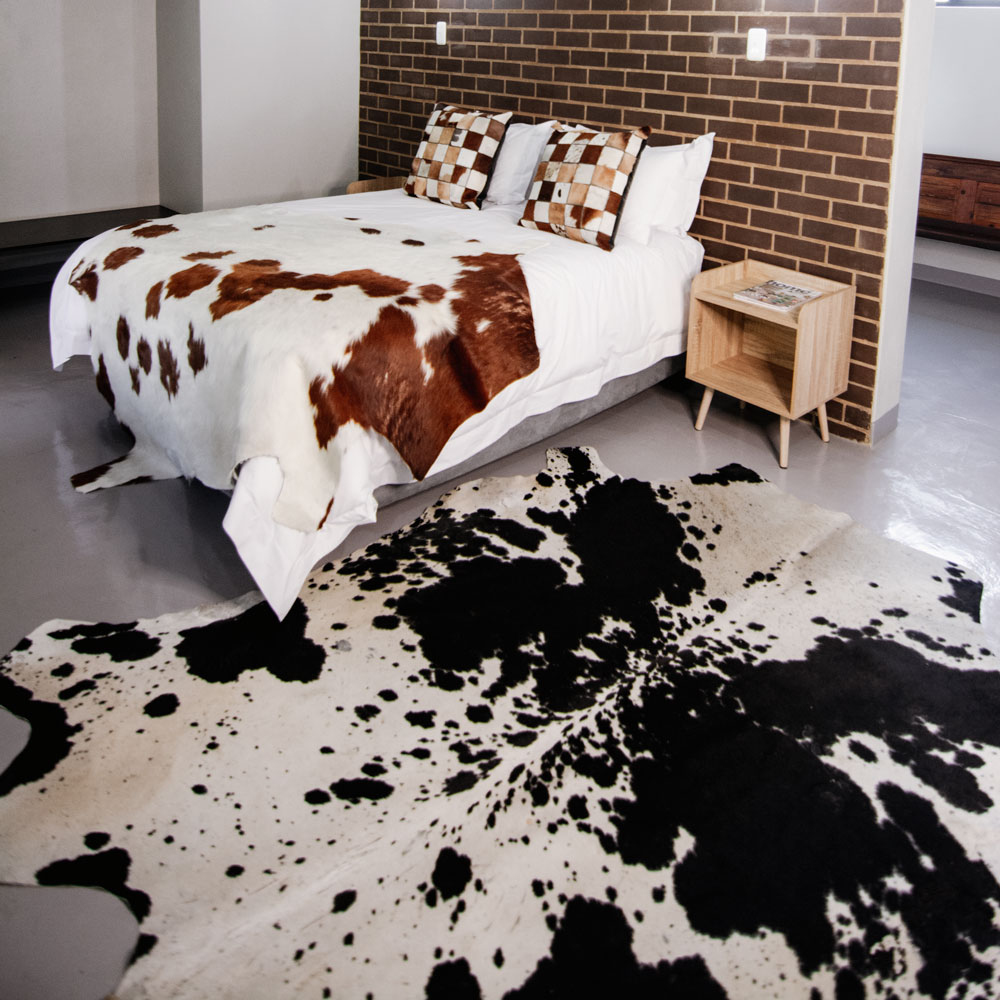
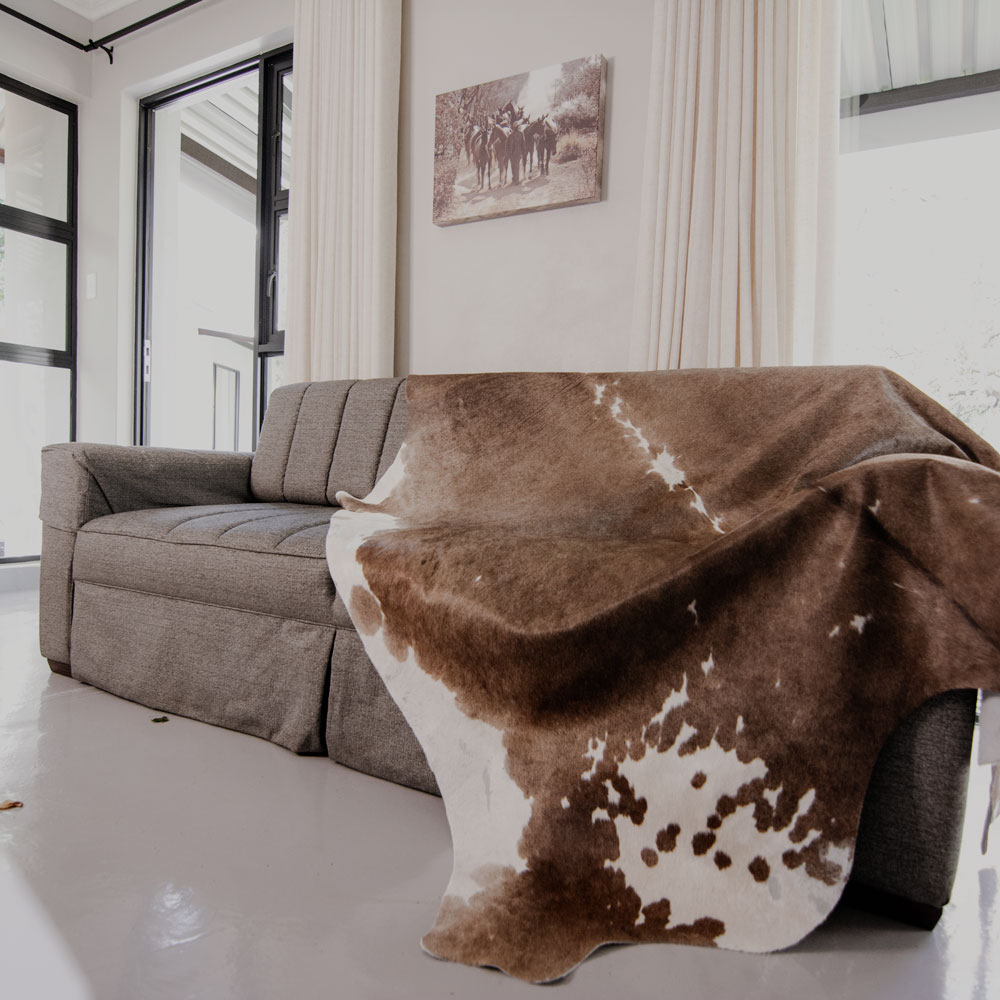
Start with the room or outfit rather than choosing by pattern alone. Black-and-white Nguni leather creates strong contrast and works well with clean contemporary interiors. Brown, cream and brindle patterns feel warmer beside timber, natural fibres and earthy colours. A densely speckled piece creates energy, while a broad two-tone pattern reads as calmer from a distance.
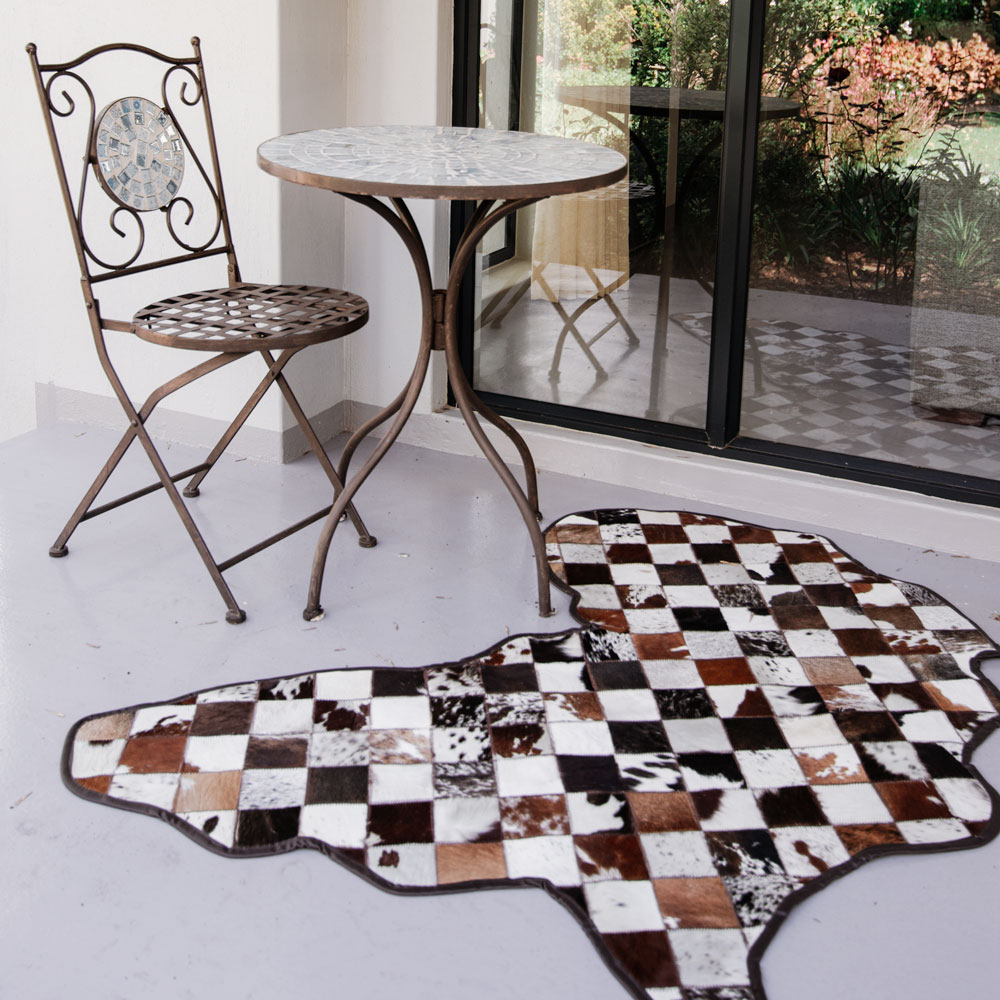
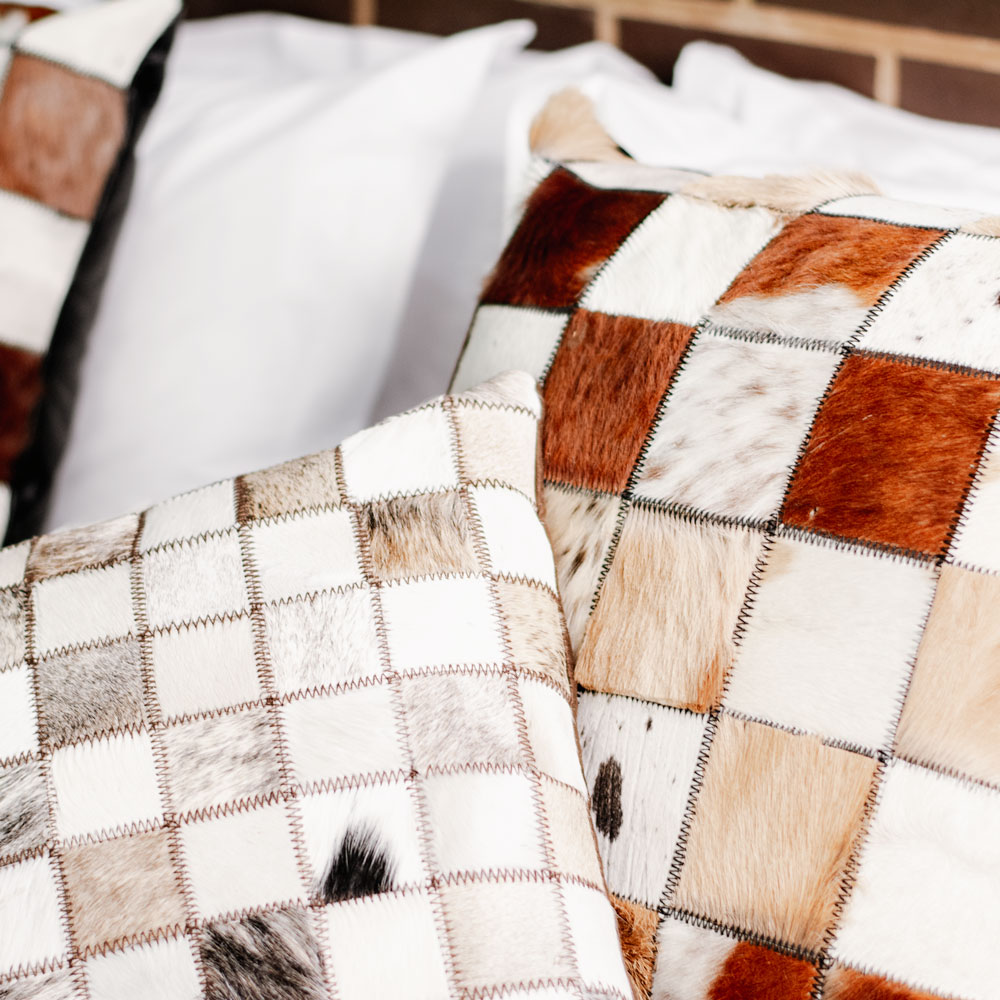
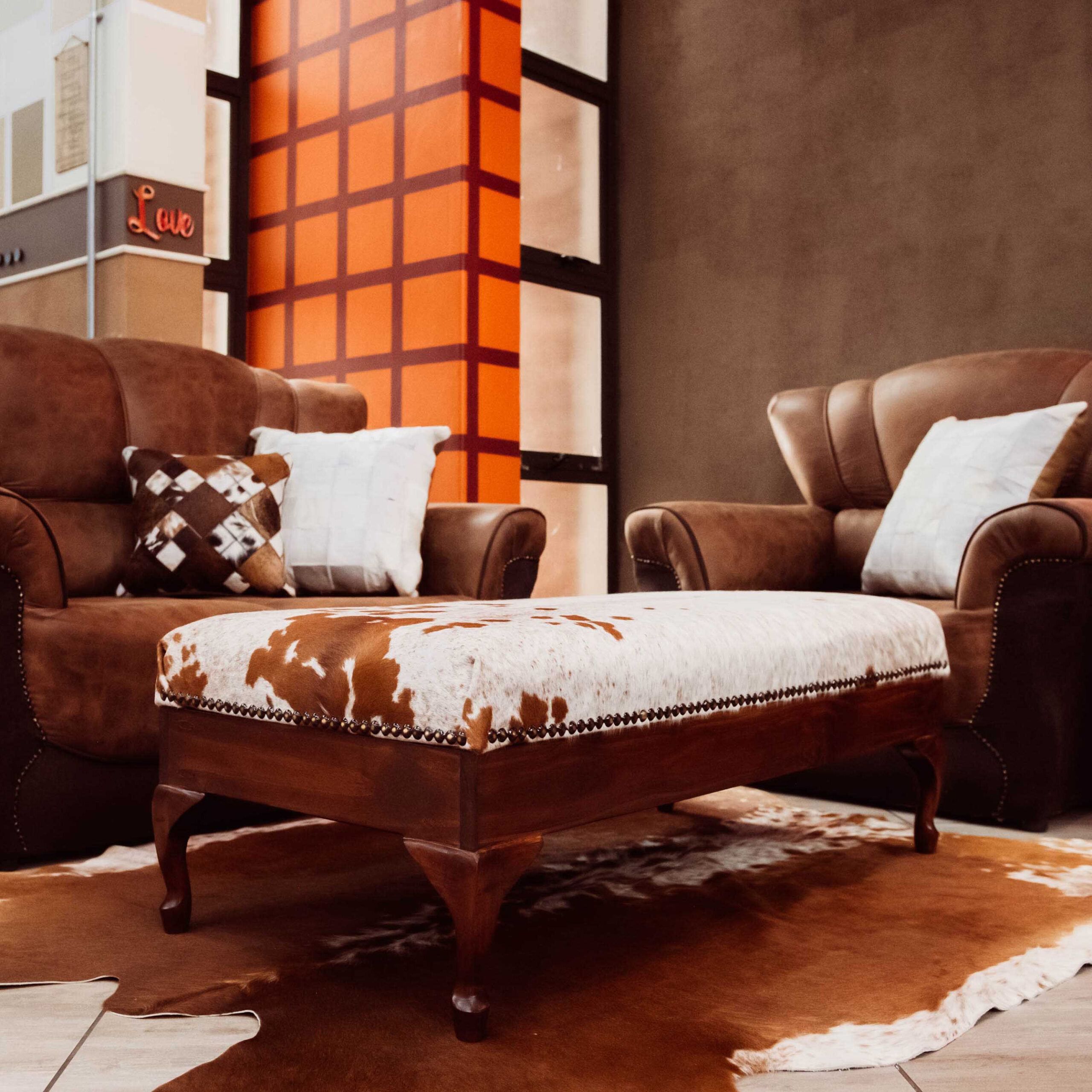
Scale matters too. A full hide can anchor a living room, bedroom or office without needing a conventional rectangular rug. Smaller patterned sections are effective on a Nguni ottoman, blocked cushions or a Nguni sling bag. If you already have a bold hide in the room, use smaller accessories as accents rather than trying to match every marking.
How to care for Nguni leather
For hair-on-hide, remove loose dust with a gentle shake, soft brush or low-suction vacuum used in the direction of the hair. Blot spills instead of rubbing them. Use as little moisture as possible, keep the hide away from prolonged damp and allow it to dry naturally. Rotate floor hides occasionally so that traffic and sunlight are distributed more evenly.
For smooth leather sections, wipe away surface dust with a soft cloth. Before applying any cleaner or conditioner, test a small hidden area and follow the product maker’s instructions. Do not apply smooth-leather conditioner to the hair-on-hide panel. Store bags supported and away from direct heat, and avoid crushing the patterned surface for long periods.
For a more detailed floor-care routine, read our guide on how to care for an Nguni carpet. The University of KwaZulu-Natal also provides useful background on the cultural and agricultural significance of Nguni cattle.
Where Nguni leather works best
- Interiors: full hides, carpets, ottomans and cushions add texture without needing a repeated motif.
- Work and travel: laptop bags, backpacks and totes combine everyday function with a recognisable South African material.
- Footwear: vellies and boots use hide panels to make each pair distinctive.
- Gifts: wallets, keychains, toiletry bags and accessories offer natural variation in a smaller format.
Frequently asked questions
Is Nguni leather the same as cowhide?
Nguni leather is cowhide from Nguni cattle. What makes it distinctive is the breed’s wide range of natural colours and patterns, especially when the hair-on-hide finish is preserved.
Does every Nguni leather product look different?
Yes. Genuine hide markings vary naturally, and the section selected for a crafted product changes its final appearance. Product photographs should be treated as an exact item or a pattern example depending on the seller’s description.
Can Nguni leather be used every day?
Yes, when the product is well made and suited to the job. Smooth leather should reinforce handles, straps and stress points, while hair-on-hide needs sensible care to reduce unnecessary rubbing and moisture.
How can I tell genuine hide from a printed imitation?
Genuine hair-on-hide has natural variation in hair direction, colour boundaries and texture. The reverse is leather rather than woven fabric. Ask the seller to confirm the material and show the actual product.
Choose genuine Nguni leather with confidence
The best Nguni leather piece is not simply the boldest pattern. It should combine authentic material, thoughtful construction, useful proportions and honest product information. Decide where the item will live, compare the actual markings, inspect the areas that carry weight and make sure you understand care before ordering.