
Cowhide Rugs South Africa: 9 Essential Buying Checks
Contents
Choosing cowhide rugs South Africa homes can live with for years means looking beyond a colour label. Genuine Nguni hides vary in outline, markings, size and backing, so the exact piece matters. These nine buying checks cover authenticity, room measurements, natural features, photography, delivery and routine care. They will help you compare a unique hide confidently without expecting the repeated pattern of a machine-made rug.
Why cowhide rugs South Africa shoppers see online are never identical
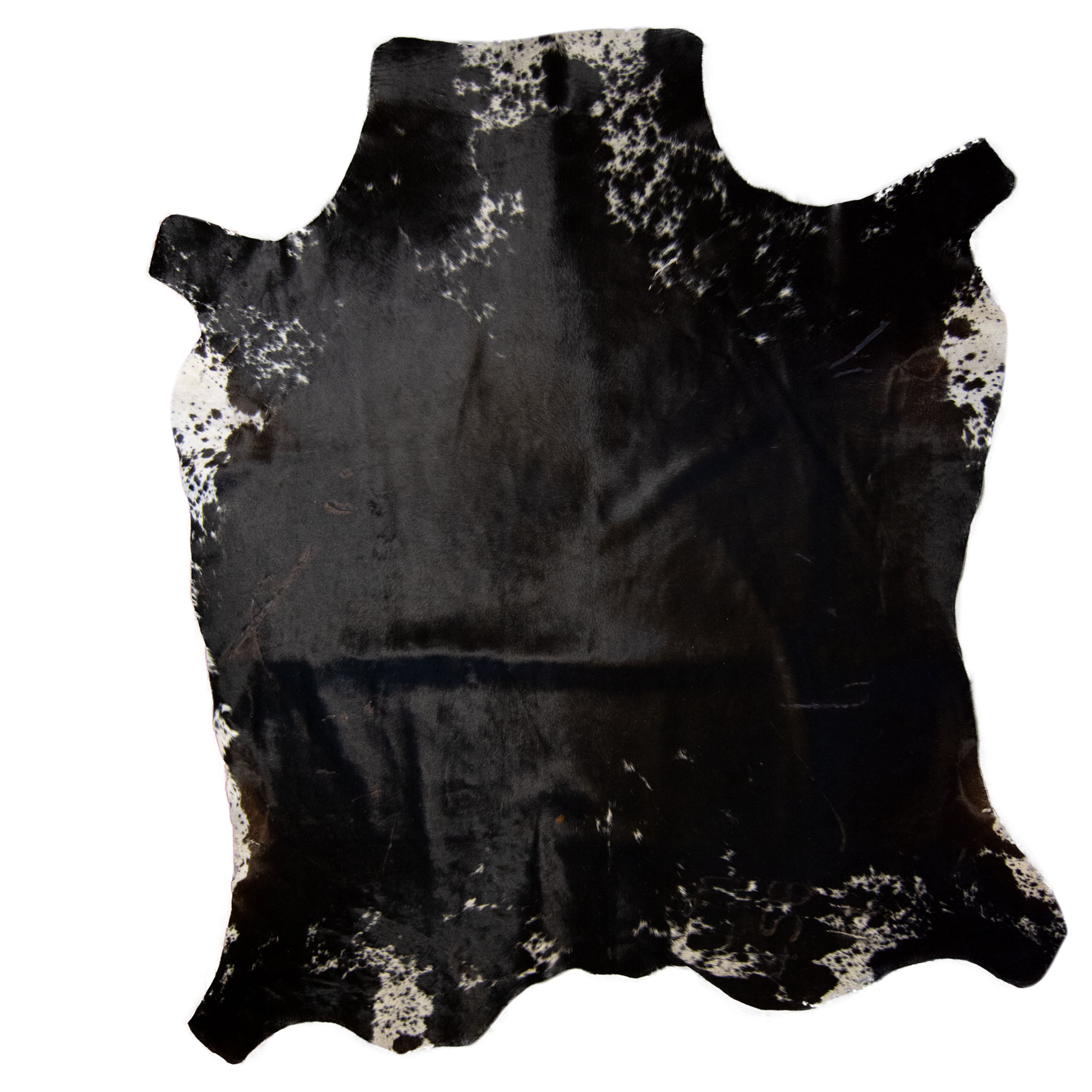
A genuine hide records the natural markings and body shape of one animal. That individuality is central to the appeal. Begin with the exact dimensions and current photographs, then decide whether the rug should create contrast or blend with existing floors and furniture. The Nguni hides collection is the practical starting point for available pieces.
Nguni cattle are associated with southern Africa and are recognised for their varied coat patterns. The general background on Nguni cattle helps explain why no two natural hides present the same markings. A product listing should still answer specific questions about the finished hide you will receive.
1. Confirm that the listing shows a genuine hide
Read the material description and ask what the backing, hair and edges should look like. Natural variation, small marks and an organic outline are expected. Be cautious when photographs repeat an identical pattern across many listings or when the description avoids saying whether the supplied piece is the one pictured. Our genuine Nguni hide guide gives six practical authenticity checks.
2. Measure the room and the furniture footprint
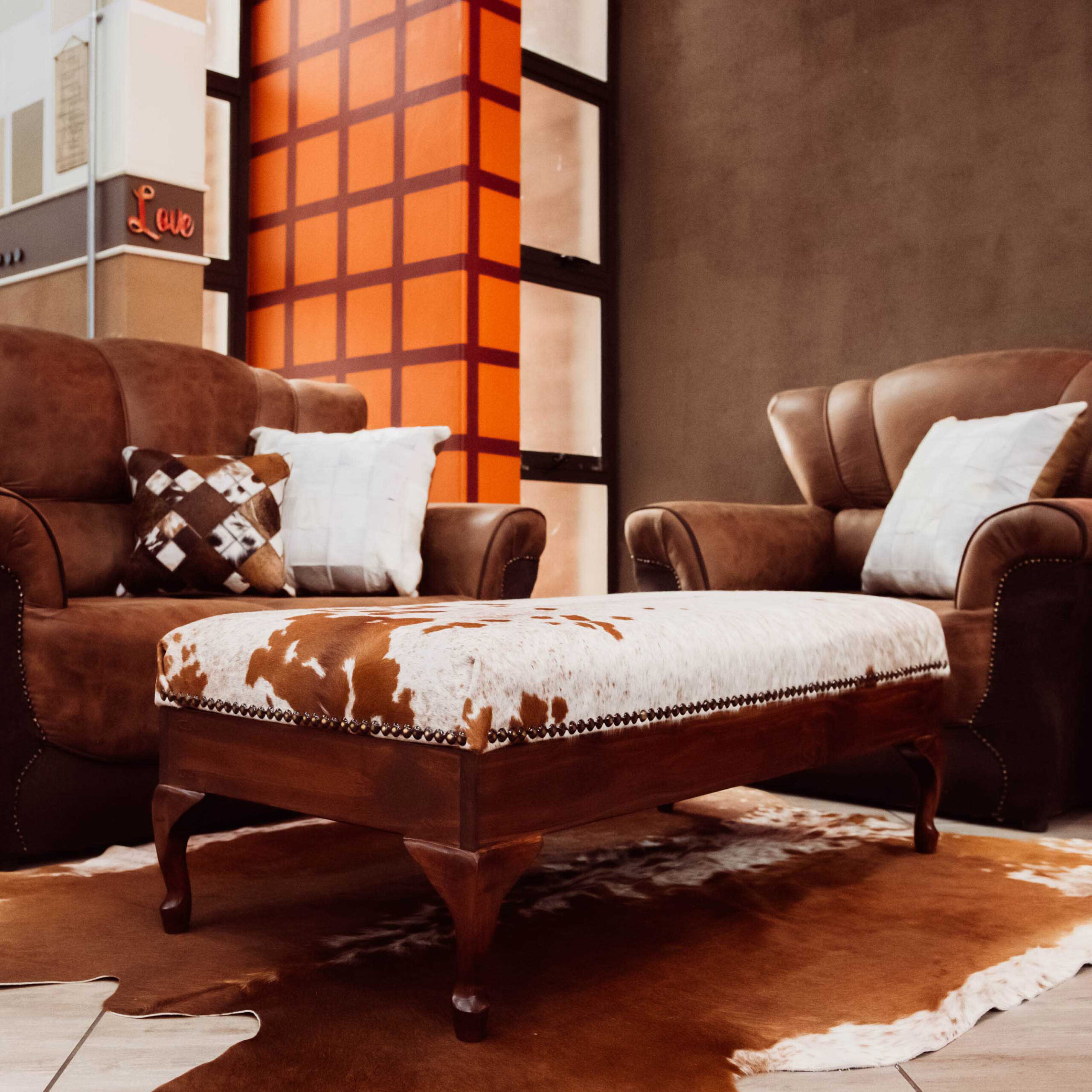
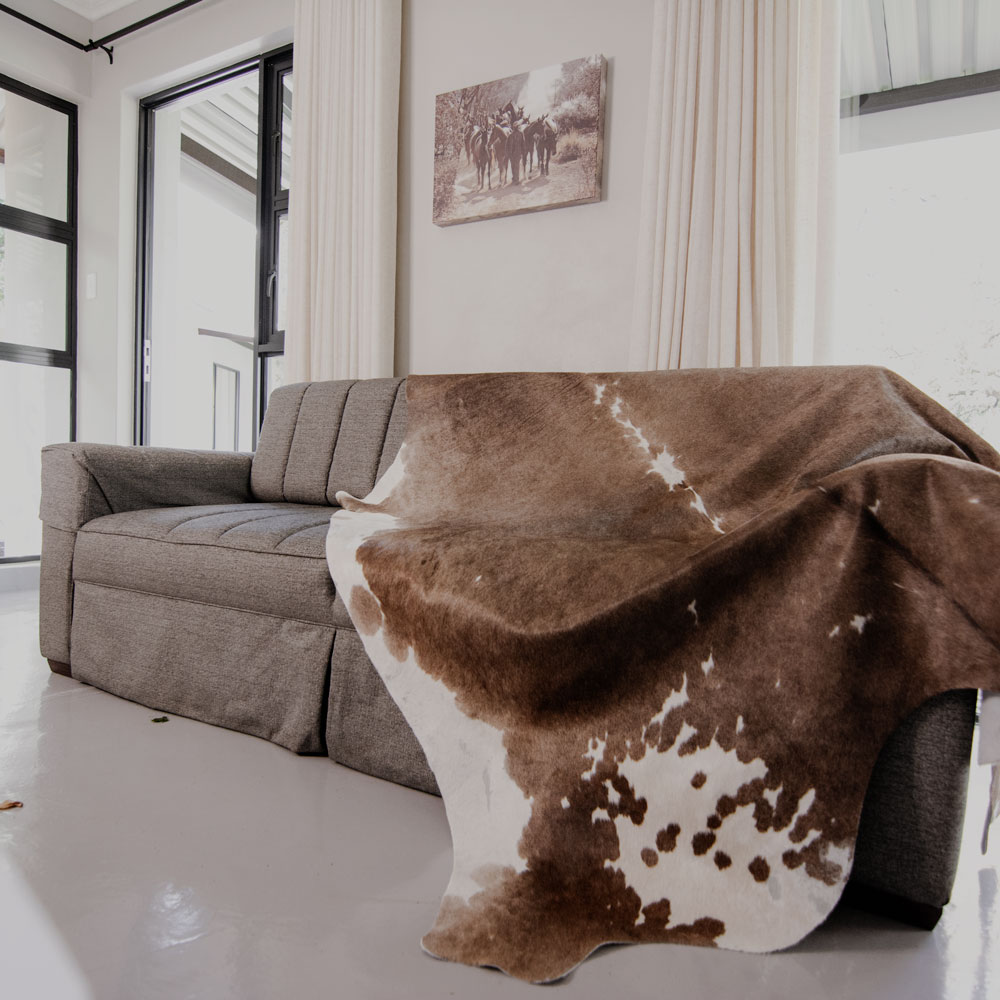
Record the greatest available length and width, not only the open floor area. Measure sofa fronts, coffee-table legs, doors and the main walking route. Use painter’s tape or newspaper to mark the likely footprint. Cowhide rugs South Africa lounges use successfully should sit deliberately in relation to furniture rather than floating in a leftover gap.
3. Compare the exact length, width and natural outline
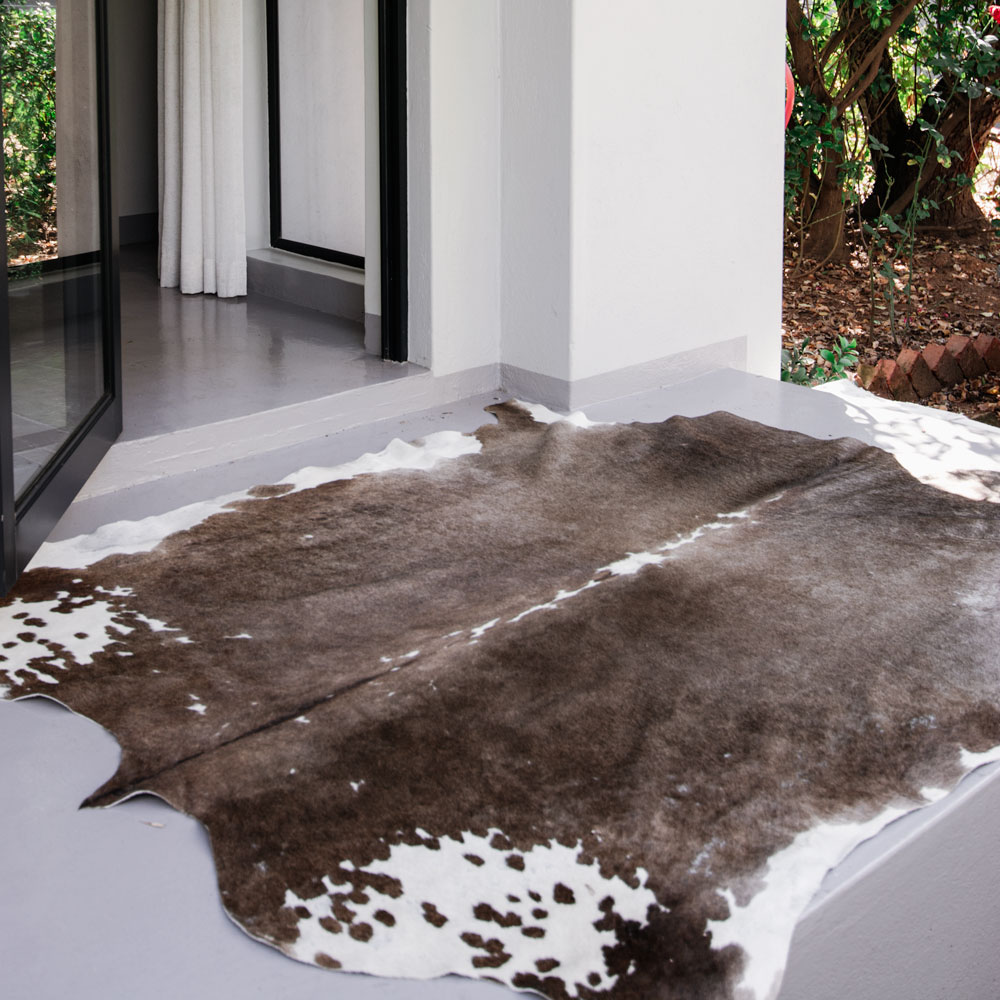
Because legs and edges create an irregular silhouette, two hides with the same maximum dimensions can occupy a room differently. Request the widest and tallest measurements and compare the product photograph to your taped outline. If the hide will sit under a table, check where the narrow waist falls so chair legs do not repeatedly catch an edge.
4. Choose markings for contrast or calm
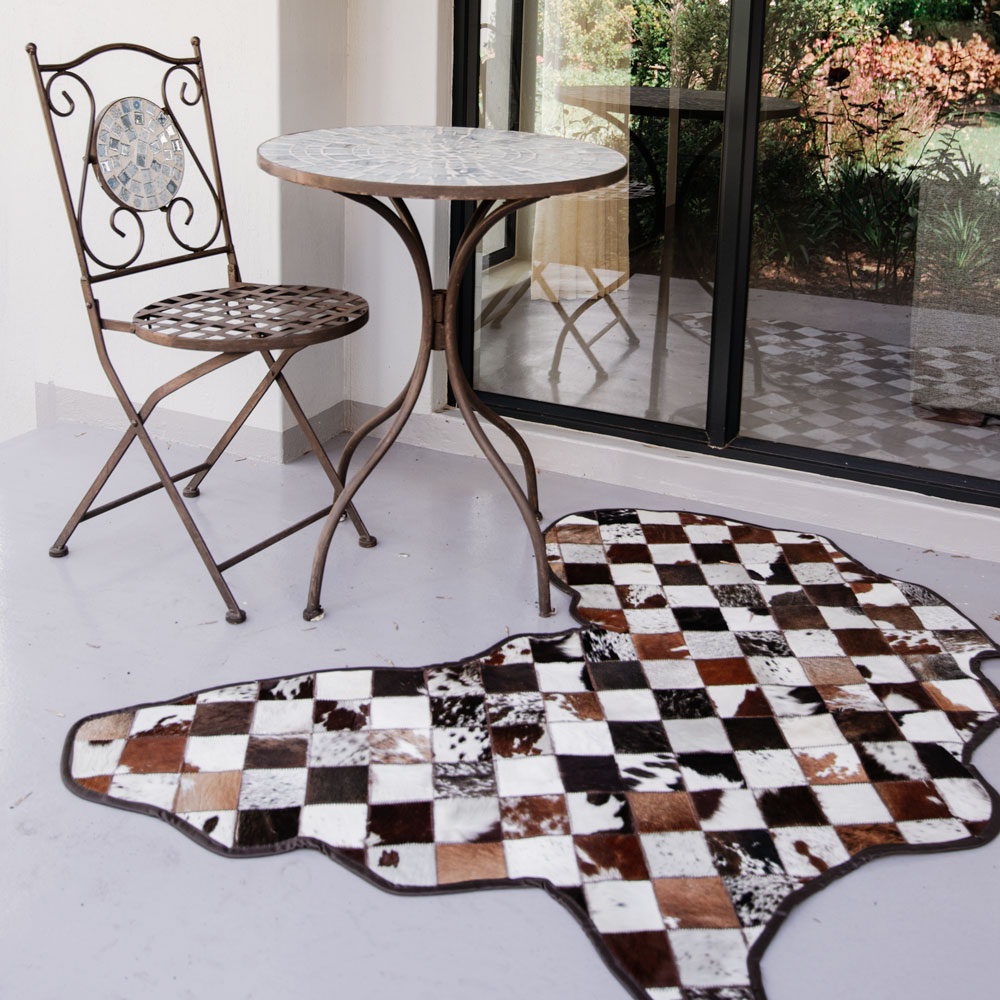
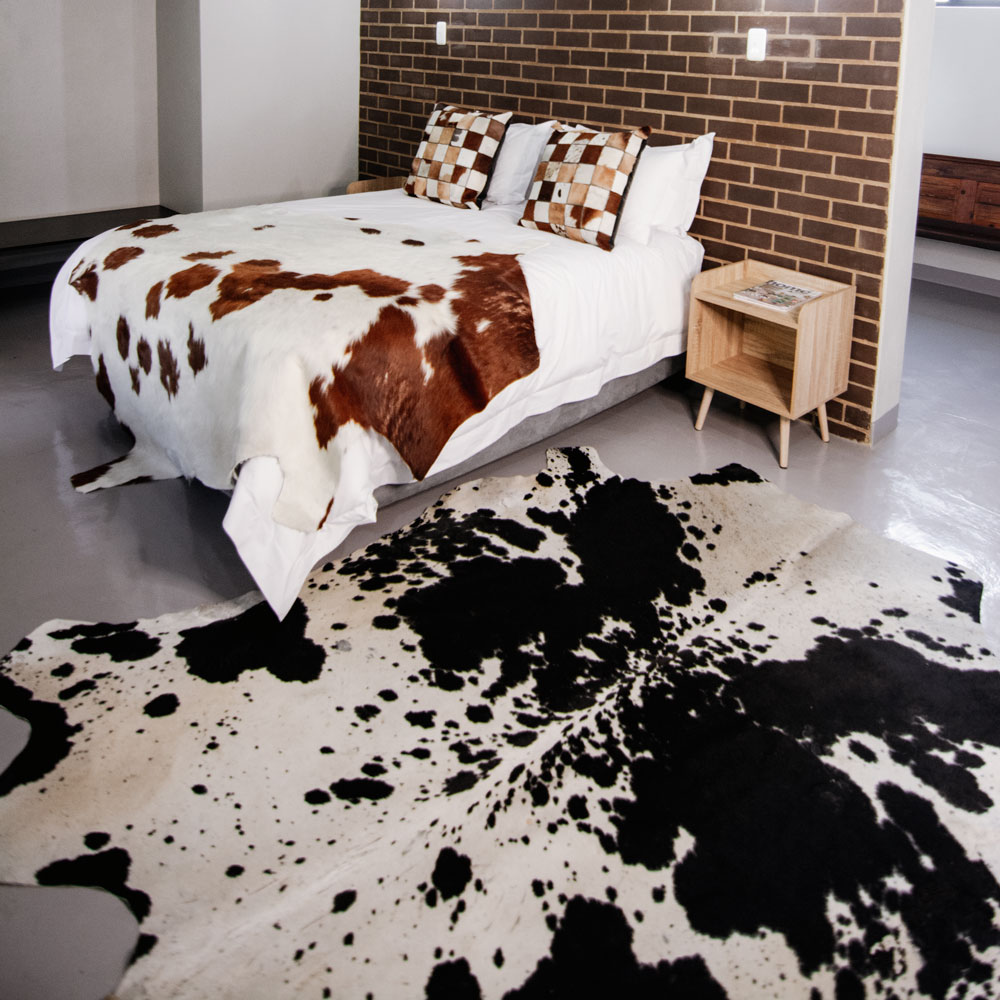
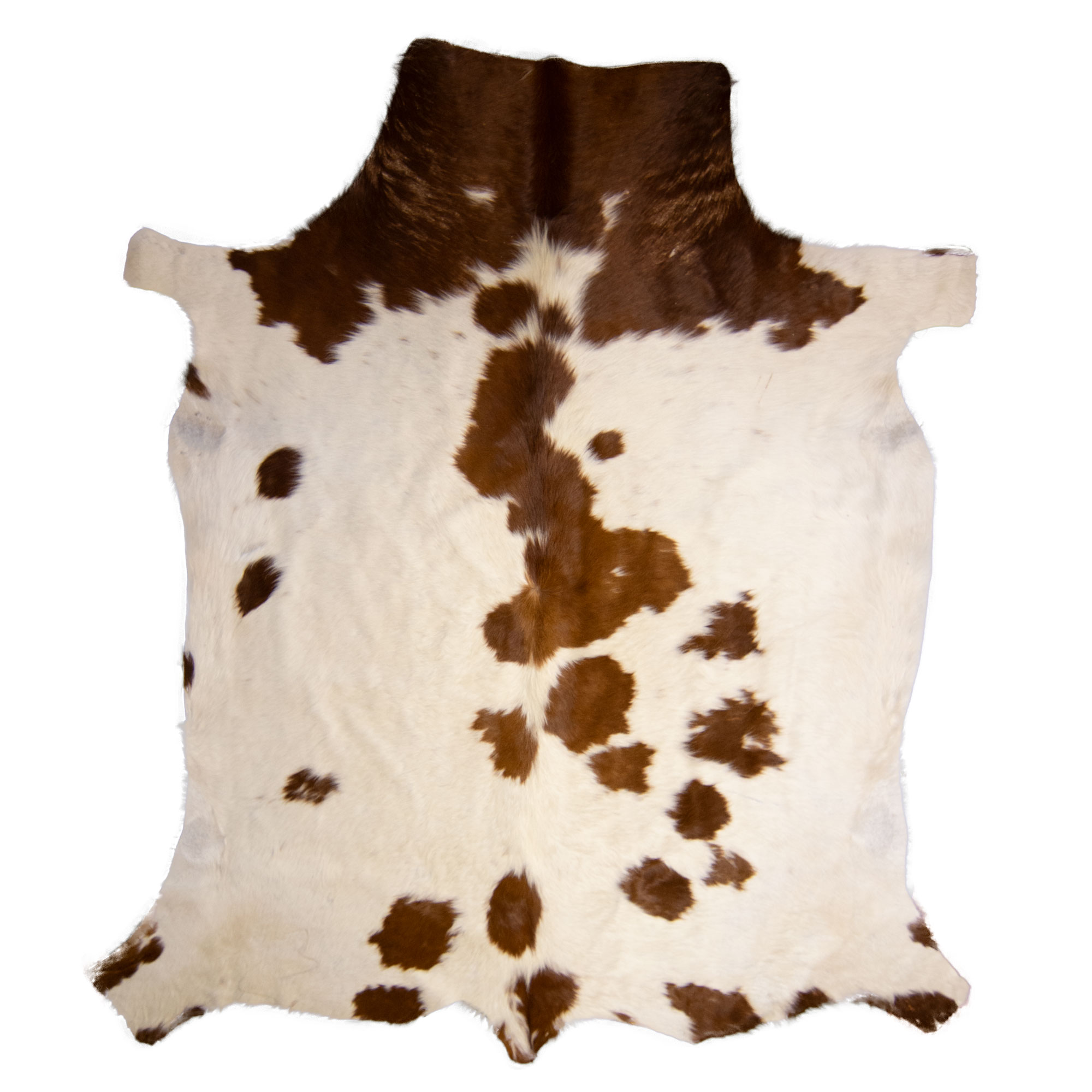
Black-and-white hides create a graphic focal point. Brown, cream and tan usually feel warmer, while brindle and tricolour patterns add layered movement. Decide which role the rug should play before shopping. The Nguni hide colour guide shows how floor colour, furniture and daylight affect the final choice.
- Use broad markings in already busy rooms.
- Choose strong contrast when the floor and furniture are plain.
- Repeat only one or two hide colours elsewhere.
- View current photographs on more than one screen.
- Ask whether the image shows the exact hide supplied.
5. Inspect the backing and edge condition
Ask for clear photographs of both sides. The backing should lie comfortably when the hide is relaxed, and the outer edge should follow the natural shape without avoidable loose damage. A rolled hide may need time to settle. Do not expect the perfectly square edge or factory-uniform thickness of a synthetic rug.
6. Plan for the room’s traffic and sunlight
A quiet bedroom and a busy family entrance place different demands on a natural hide. Keep it away from damp areas, strong heat and prolonged direct sun. Rotate floor placement periodically where practical so traffic and light do not concentrate on one section. Under a moving chair or rolling office chair, another floor covering may be more suitable.
7. Check delivery, packaging and return details
Before ordering cowhide rugs South Africa delivery must carry safely, confirm the dispatch method, tracking, expected packaging and what to do if the parcel arrives damaged. Keep packaging until you have inspected the exact hide. Photograph the parcel before opening if it shows crushing, tearing or moisture, and contact the seller promptly rather than trying to repair transit damage yourself.
8. Budget for the exact piece, not only the category
Price can reflect size, rarity of markings, finishing and the seller’s sourcing and service. Compare like with like: exact dimensions, photographs, delivery, support and return terms. The cheapest listing may not be the best fit if it leaves uncertainty about the supplied hide. A measured purchase is usually more valuable than buying twice.
9. Learn the care routine before the rug arrives
Vacuum with gentle suction in the hair direction, shake carefully where size allows and blot spills promptly according to the maker’s instructions. Do not soak the hide or scrub against the hair. Read how to clean Nguni rugs before choosing a high-traffic placement, especially in homes with children or pets.
Quick cowhide rug buying comparison
| Question | Good evidence | Warning sign |
|---|---|---|
| Is it genuine? | Clear material description and both-side photos | Vague or repeated stock imagery |
| Will it fit? | Maximum dimensions and an exact photograph | Only a generic size label |
| Is it the exact piece? | Seller confirms the pictured hide | Pattern may be substituted without notice |
| Can the room handle it? | Dry position with manageable traffic | Damp, harsh sun or rolling-chair use |
| Is delivery clear? | Tracking and inspection instructions | No process for transit damage |
Prepare the room before delivery
Clean and dry the floor, remove sharp debris and photograph the planned layout. When the hide arrives, inspect the parcel, unpack carefully and let the rug relax flat in a clean, ventilated room. Do not force a crease with heat or moisture. Position it only after the backing has settled.
Live with the first position for several days before adding heavy furniture. Watch door clearance, walking routes and how the pattern looks in morning and evening light. Small placement changes can make cowhide rugs South Africa interiors use feel better balanced.
- Confirm the exact material and supplied piece.
- Measure the maximum room and hide dimensions.
- Compare markings with the floor and furniture.
- Inspect backing and edges in clear photographs.
- Choose a dry position away from harsh light and heat.
- Read delivery and return terms before paying.
- Learn the safe care routine in advance.

Frequently asked questions
Are all Nguni cowhide rugs the same size?
No. Maximum length, width and natural outline vary, so compare the exact dimensions of the individual hide.
Will I receive the exact hide shown online?
Ask the seller directly. When pattern matching matters, request confirmation and current photographs of the supplied piece.
Can a cowhide rug go under a dining table?
It can work when the size and narrow points keep chair legs stable, but measure the complete pulled-out chair area first.
How do I flatten a rolled hide?
Let it relax naturally on a clean, dry floor. Avoid heat, soaking or aggressive reverse folding.
Can a genuine hide be used in direct sun?
Prolonged direct sunlight may change natural colour and dry material. Choose a protected position and follow the seller’s guidance.
Buy the individual hide with the room in mind
The best cowhide rugs South Africa buyers choose are measured for the real room, photographed as the exact piece and supported by clear care and delivery information. Confirm authenticity, compare the natural outline and decide how the markings should work with the floor. Those nine checks turn an attractive online image into a confident long-term choice.