
Ottoman Coffee Table Ideas: 7 Stylish Nguni Setups
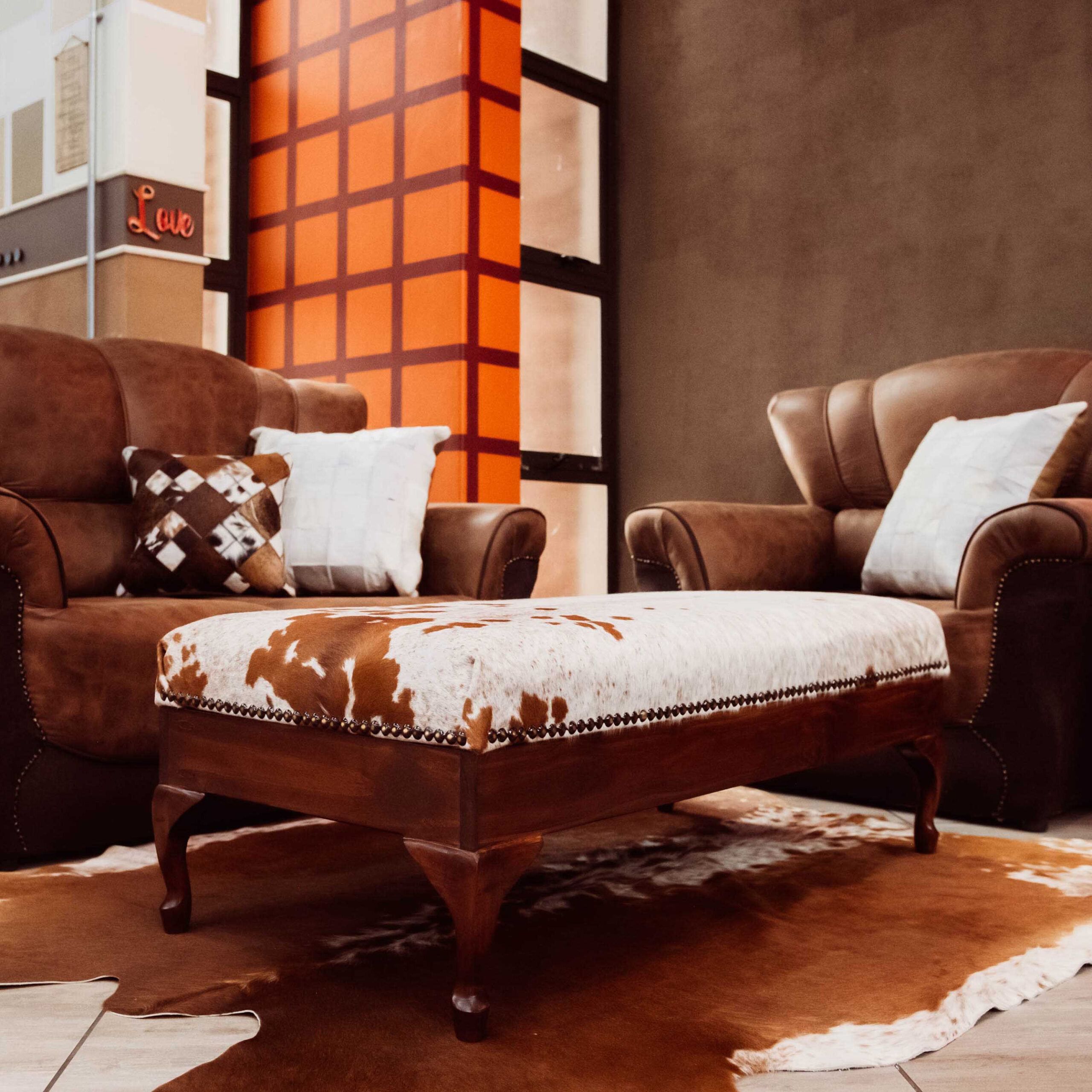
Ottoman coffee table ideas are useful when a living room needs comfort, flexibility and a strong visual centre. A genuine Nguni ottoman can serve as a footrest, occasional seat and soft coffee-table alternative while introducing natural South African pattern. The key is to choose the right scale, add a stable tray when needed and keep enough space around the piece for everyday movement. These seven setups work in compact lounges, family rooms and open-plan interiors.

Ottoman coffee table ideas: can it replace a table?
Yes, when the ottoman suits the seating arrangement and you plan for drinks, books and décor. A broad, firm top works best. Place a flat tray on the surface whenever you need stability, and remove it when the ottoman becomes a footrest or extra seat. This adaptability is especially valuable in South African homes designed for relaxed family living and entertaining.
A conventional coffee table is better for heavy daily storage, hot serving dishes or a permanently hard work surface. An ottoman is better when softness and multiple uses matter. The South African ottoman styling guide from Zorora also highlights trays, flexible seating and proportion as practical starting points.
1. Ottoman coffee table ideas for facing sofas
In a conversation area with two sofas or a sofa and two chairs, place one square Nguni ottoman at the centre. Its sides should relate to the seating width without filling every open centimetre. Leave a comfortable route around all four sides and test whether seated guests can reach a tray without leaning too far.
A square piece gives the natural pattern a clear frame. If the sofas are plain, choose a stronger black-and-white or speckled hide. If the room already contains patterned textiles, a warmer brown-and-cream panel may feel calmer.
2. Ottoman coffee table ideas using two pieces
Two smaller ottomans can sit together as one coffee-table zone, then separate into extra seats when guests arrive. Match the dimensions and construction, but allow the genuine hide patterns to differ. Shared colours will connect the pair without pretending that natural markings repeat.
| Layout | Best for | Practical detail |
|---|---|---|
| One square ottoman | Balanced sofa-and-chair settings | Use one large removable tray |
| Two small ottomans | Flexible family rooms | Separate them for extra seating |
| Long storage ottoman | Narrow rooms or sofa fronts | Keep the lid easy to open |
| Ottoman beside a table | Large or layered lounges | Let the hard table handle drinks |
3. Ottoman coffee table ideas with a stable tray
Choose a tray with a broad, flat base and raised edge. It should be large enough for a mug and a few useful objects, but small enough to leave part of the Nguni hide visible. Timber complements warm brown markings; black metal sharpens a monochrome hide; woven natural material creates a relaxed lodge-inspired look.
- Use coasters and wipe the tray before returning it to the hide.
- Do not place very hot items directly on the tray or upholstery.
- Keep liquids away from seams and natural hair-on-hide surfaces.
- Remove the tray before anyone uses the ottoman as a seat or footrest.
- Avoid overloading the top with tall décor that can tip easily.
4. Ottoman coffee table ideas and sofa spacing
The ottoman should feel reachable without blocking knees or circulation. Mark its footprint with tape before ordering, then sit in every seat and walk around the room. Check recliners, sliding doors and the path to the television or patio. In a compact lounge, a slightly smaller ottoman often works harder because it can move easily.
For an open-plan area, use a genuine Nguni hide or larger carpet beneath the furniture zone, then centre the ottoman above it. Keep the rug pattern quieter when the ottoman is the main feature.
5. Ottoman coffee table ideas with hidden storage
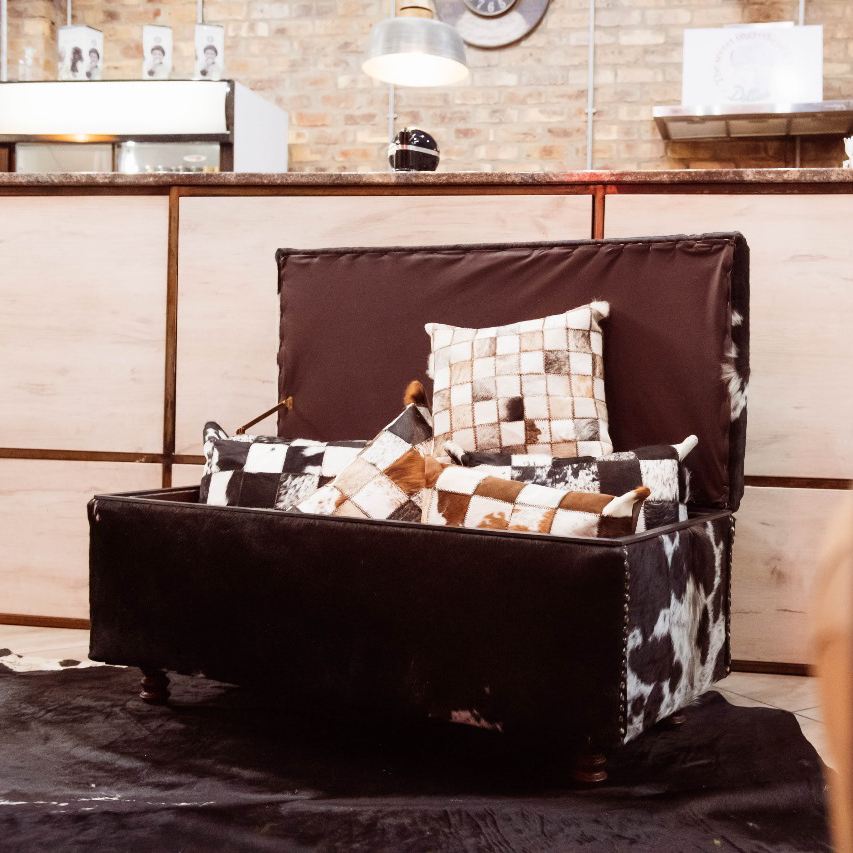
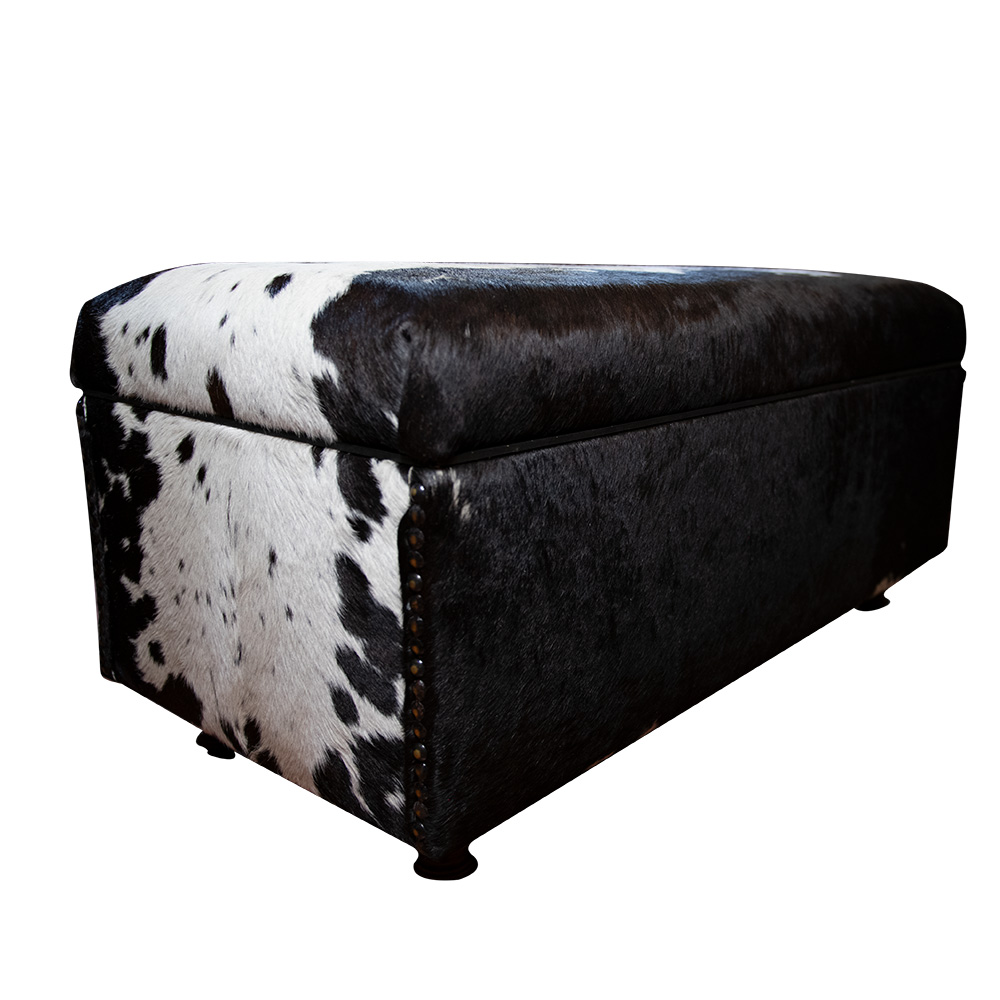
A blanket-box ottoman combines surface, seating and hidden storage. It works well in a family room where throws, games or spare cushions need a home. Before placing a large tray on top, make sure it can be lifted quickly when the storage compartment is needed.
Do not overfill the box or force the lid. Keep heavier items low and follow the maker’s guidance for hinges, weight limits and safe opening. Browse the Home of Nguni ottoman collection to compare standard and storage designs.
6. Ottoman coffee table ideas with a side table
Not every drink needs to sit on the ottoman. Add a compact side table beside the sofa for lamps, hot drinks and devices, then keep the ottoman mostly clear for feet and seating. This layered approach protects the natural surface and makes the room more adaptable.
Repeat one material between the pieces. Timber table legs can echo an ottoman frame; black metal can connect to lighting; a woven basket can repeat other natural textures. The aim is coordination without a fully matched furniture suite.
7. Style the tray without hiding the hide
The most successful ottoman coffee table ideas leave the genuine material visible. Use two or three low objects: a small stack of books, a ceramic bowl and one compact plant or candle. Group them on the tray rather than spreading décor across the hair-on-hide surface. The arrangement should move as one unit when the ottoman changes function.
How to care for these ottoman coffee table ideas
Brush or wipe gently in the direction of the hair, remove loose dust regularly and blot spills immediately. Avoid soaking the hide, scrubbing against the hair or using an unknown household cleaner. Rotate loose ottomans occasionally so light and everyday use are distributed. For related advice, read our Nguni hair-on-hide care guide.
Before choosing between these ottoman coffee table ideas, consider how the piece will be used every day. An ottoman designed as occasional seating is not automatically a step, workbench or play platform. Check castors, legs, hinges and seams periodically, especially on a storage design.
Frequently asked questions
Which ottoman coffee table ideas work in a small lounge?
Choose one compact piece or two small movable ottomans, leave a clear walking route and use a removable tray only when a hard surface is needed.
Can you put drinks on an ottoman?
Use a stable tray with a flat base and coasters. Never place drinks directly on genuine hide upholstery, and blot any spill immediately.
How high should an ottoman coffee table be?
A height close to or slightly below the sofa seat is generally comfortable. Confirm the actual dimensions against your seating before ordering.
Should an ottoman match the sofa?
No. A Nguni ottoman can act as a statement accent. Repeat one colour or material elsewhere so the room still feels connected.
Is a storage ottoman suitable as a coffee table?
Yes, if the top is firm enough for a tray and the tray can be moved easily when the storage compartment is opened.
Choose flexibility with authentic character
These ottoman coffee table ideas work because they respect both function and material. Measure the seating zone, choose a useful proportion, add a removable tray and keep the styling simple enough for the natural Nguni pattern to remain visible. One well-chosen piece can make a lounge more comfortable, more flexible and distinctly South African.